The 2021 presidential elections were held in the midst of the COVID-19 pandemic. The electoral process was relatively short due to the state of emergency and restrictions on public gatherings, especially political rallies.
Alfredo Barnechea, the presidential candidate from the Popular Action party, revived the “bread with pork crackling” strategy that years earlier had contributed to the loss of his presidential bid. This time, he visited several informal settlements, but the strategy failed to generate significant public support.
Andrés Alcántara, the presidential candidate for the Direct Democracy party, joined members of FONAVI and organized several marches through different districts, but these efforts produced little impact.
Verónika Mendoza, leader of the Together for Peru party, once again ran for the presidency. Like in her previous campaign, she was unable to gain sufficient support from the country’s voters.
César Acuña, owner of César Vallejo University and former regional governor of La Libertad, once again traveled across Peru seeking popular support for the presidency. However, after a few months, his approval ratings declined, leaving him out of the electoral race.
Daniel Urresti, the former Minister of the Interior, initially enjoyed strong public approval because of his efforts to combat crime while serving as minister. Nevertheless, his campaign was affected by the legal proceedings he faced in connection with the murder of journalist Hugo Bustíos during the period of terrorism.
Former football player George Forsyth resigned as mayor of La Victoria in order to run for president. He toured several areas of Lima, but his campaign failed to attract enough support.
After the first-round voting, the results were extremely close, making it uncertain who would become Peru’s next president. Yonhy Lescano, representing the Popular Action party, emerged as one of the surprise candidates, but he did not receive enough votes to advance. The same happened to Rafael López Aliaga of the Popular Renewal party. Both candidates campaigned throughout different parts of the country and held numerous political rallies, but their competitors ultimately received more votes.
The runoff election came down to two candidates: Keiko Fujimori of the Popular Force party, who was running for the presidency for the third time, and Pedro Castillo of Peru Libre.
Keiko Fujimori traveled throughout the country seeking electoral support, but she struggled to gain approval from voters in southern Peru. In contrast, Pedro Castillo enjoyed strong support in the southern regions, the northeastern part of the country, and several other departments across Peru.
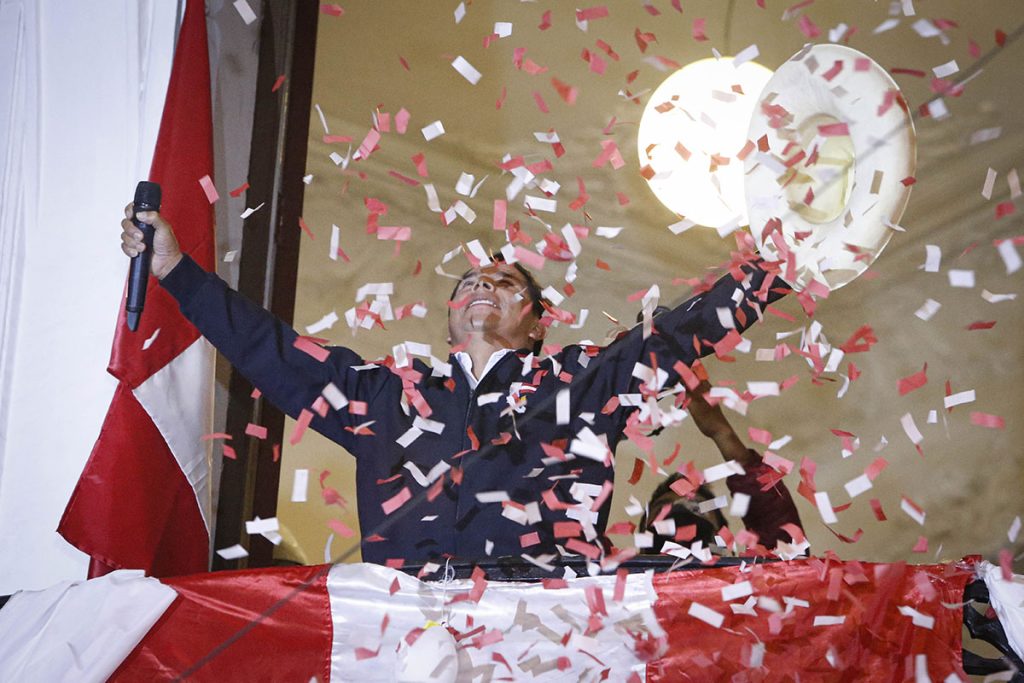
Finally, after a closely contested second round, the National Office of Electoral Processes (ONPE) announced the official results. Pedro Castillo won with 50.126% of the vote, while Keiko Fujimori received 49.874%. Castillo was declared the winner of the presidency. He appeared on a balcony with his arms outstretched in celebration before thousands of supporters, unaware of the events that would unfold during his presidency.