
Commissions

coca leaf

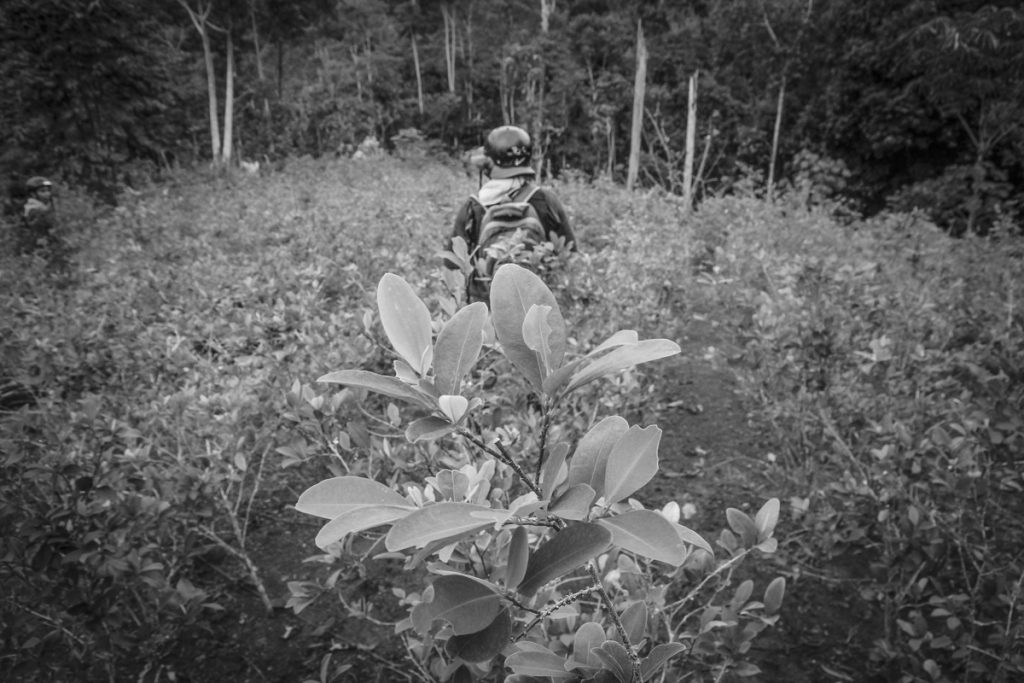
A group of volunteer men from the village of Aguaytia (Ucayali) have an impossible mission: to eradicate as much of the illegal coca leaf cultivation as possible in this part of the central-eastern jungle. The latest report from the United Nations Office on Drugs and Crime (UNODC) reported the existence of 40,300 hectares of coca leaf in Peru. The government has begun to eliminate this illegal activity. But like a boomerang returning, more coca leaf fields reappear; this is known as “replanting.” With fertilizer, the coca leaves grow back rapidly, and drug traffickers take advantage of this to transport them to other countries where they fetch a higher price. These volunteer men, mostly local residents, patrol and eradicate the coca leaves, often risking their lives. They use helmets, shovels, picks, and even bulletproof vests to protect themselves from the lethal weapons used by the mafias involved in the illegal coca leaf trade. These anonymous men work silently and hide in the plains far from the Aguaytia jungle. They are protected by soldiers in the area. Three daily routines, long walks, stealthy in each thicket, eradicate illegal crops with shovels and picks, and then return to rest in the middle of the coca forest.
coca leaf Read More »

The triumph of the young

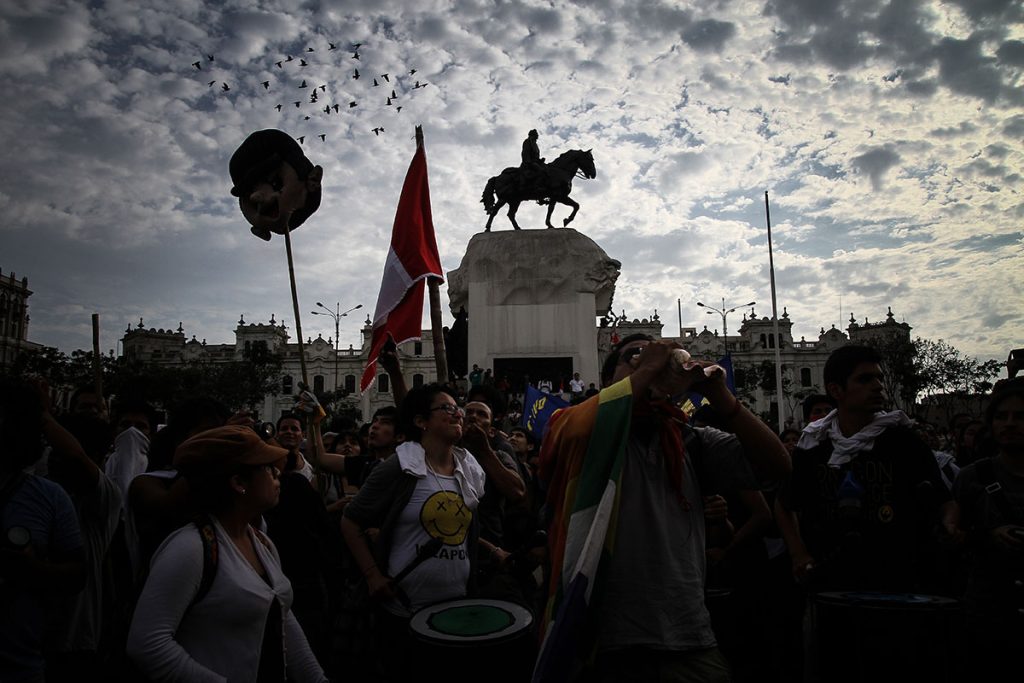
Everyone took to the streets. Law No. 30288, better known as the “Pulpín Law,” established a limited labor regime for young workers aged 18 to 24. This generated widespread discontent, as it was considered unconstitutional because it proposed the elimination of bonuses and life insurance, and violated the labor rights of young people, among other things. Large marches were held in Lima and other cities throughout Peru, with the main objective of fighting for social justice and respect for labor and economic rights. The Pulpín Law was enacted by President Ollanta Humala on December 15, 2014, and published on December 16 in the official gazette, El Peruano. The marches were supported by various public figures, including members of Congress, journalists, and activists, as well as the General Confederation of Workers of Peru (CGTP). During the months of massive marches, there were several clashes with police officers. Arbitrary arrests and abuses of power were reported. Social pressure and the growing voice of youth marches led Congress to repeal the law on January 26, 2015, marking a victory for the citizens. The law’s abolition was a resounding victory for the Peruvian youth movement, demonstrating the effectiveness of protest, social organization, and the jubilation of the citizens. Years later, in 2017, the debate resurfaced with the so-called “Pulpín Law 2.0,” highlighting ongoing concerns about labor market deregulation and the rights of young people.

The triumph of the young Read More »

My classroom, my cell

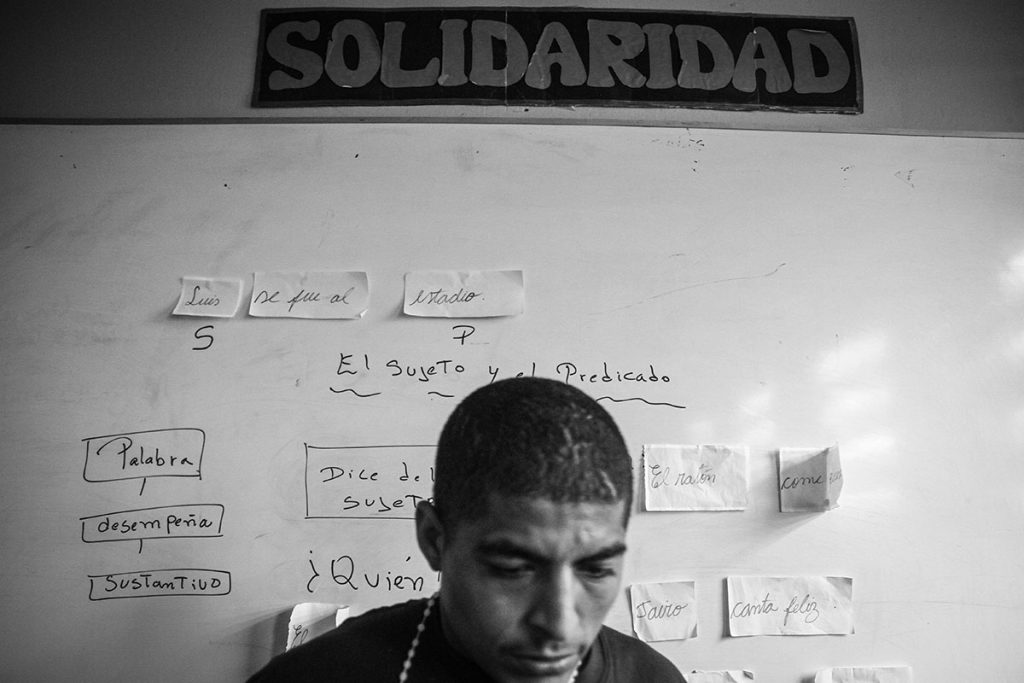
People who strayed from the path of society and chose an easier life. The criminal underworld proved anything but favorable to them. Their crimes landed them in prison. Some have served years, others arrive as new inmates with the same criminal tendencies, and some are repentant for their misdeeds. “Nothing is lost,” as the saying goes. At the Sarita Colonia prison, behavioral rehabilitation courses are offered to inmates who wish to reintegrate into society. They start from scratch, learning to read, do basic math, participate, speak, and help others. The instructors are responsible for this, though it is a long-term process. Interaction is crucial. The inmates begin to form alliances, not based on rivalry, but on faith. The rehabilitation program begins when the prisoners set aside their internal conflicts and start building friendships. This creates a chain of solidarity among them. A shared laugh seals the success of the rehabilitation program. The efforts of educators toward inmates bear fruit over the years, or the duration of their sentences, so to speak. Some inmates begin to see the light. A new beginning, a chance to return to their families and reintegrate into society. Whether we are good or bad citizens, freedom will depend on the internal struggle of each one of us.

My classroom, my cell Read More »