Stories

The Exaltation of the Lord of Qoyllority 2019

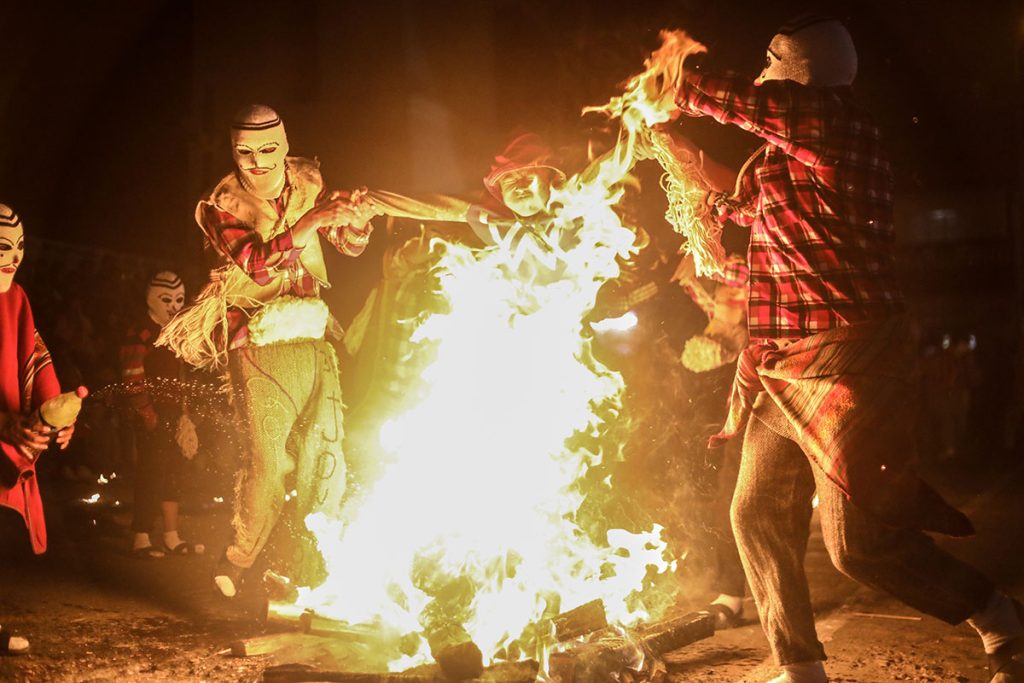
A person braves the heights of the mountains and prays atop the snow-capped Qolqe Punku, offering their wish: well-being for loved ones and good fortune for the coming year. This scene of fervor at high altitude is known as the Exaltation of the Lord of Qoyllur Riti (the Lord of the Shining Snow). While the celebration takes place in June throughout the southern provinces, from September 12th to 15th, in the town of Ocongate and surrounding areas, the ancestral pilgrimage is more intimate and private. Amidst dances and prayers, the Qhapaq Qolla (priests) make their way over fire as a display of courage before their Apus (mountain spirits). They prepare themselves spiritually and physically for the pilgrimage to the high peaks. On the main day, each group and every inhabitant of Ocongate ventures to the summit of the Sinakara valley, a place surrounded by snow-capped mountains. There stands the temple of the Lord of Qoyllur Riti. The fusion of ancestral faith in the Apus (mountain spirits) and the blessing of the Catholic religion makes this festival, considered a National Cultural Heritage, truly special. However, with climate change, the snow-capped mountains have lost their whiteness. Currently, it is forbidden to extract ice as an offering to each village. The Nations of Qoyllur Riti are aware of the danger and only go to the foot of the glacier to make their respective offerings. Prayers are transformed into hopes that the snow-capped mountains will not recede. This climatic phenomenon is a constant threat to each ancestral Apu. Faith is not lost; the sustainable change for our world—that is, our Andean worldview—will depend on each one of us.

The Exaltation of the Lord of Qoyllority 2019 Read More »

The Lord of Qoyllority 2017

“TAYTACHA QOYLLURIT’I”—which in Quechua means Lord of the Snows—is what can be heard in the high hills surrounding the Sinakara Valley, at 4,800 meters above sea level in the province of Quispicanchis, south of Cusco. Thousands of devotees from various regions of the country, especially Cusco, walk for hours toward the heights of the Sinakara temple. Meanwhile, large groups of traditional dancers (Asunto de Nacimientos) ascend the snow-capped peaks carrying heavy crosses. Their faith is the only source of strength they possess to withstand the freezing temperatures. Throughout the night, these faithful make their way, displaying their flags and festive masks. They demonstrate their devotion to the Lord of Quyllurit’i, who is associated with the mountain spirits (apus) of the snow-capped peaks. The local people pray throughout the frigid night, hoping for a miracle. At sunrise, groups of people from different nations descend from the snow-capped peaks, celebrating their respective offerings to their sacred mountains (apus), and with them, the jubilation of the people, represented by the cross. Considered an Intangible Cultural Heritage of Humanity since 2011, the Qoyllur Rit’i festival, created in ancient times, is a tradition where religious devotion and the Andean apus are united by the bonds of belief and the power of Mother Earth. This is done with the sacred objective of giving life to the miracles experienced by the thousands of faithful who come on this great pilgrimage.

The Lord of Qoyllority 2017 Read More »

Giancarlo Alva, the canine rehabilitation specialist

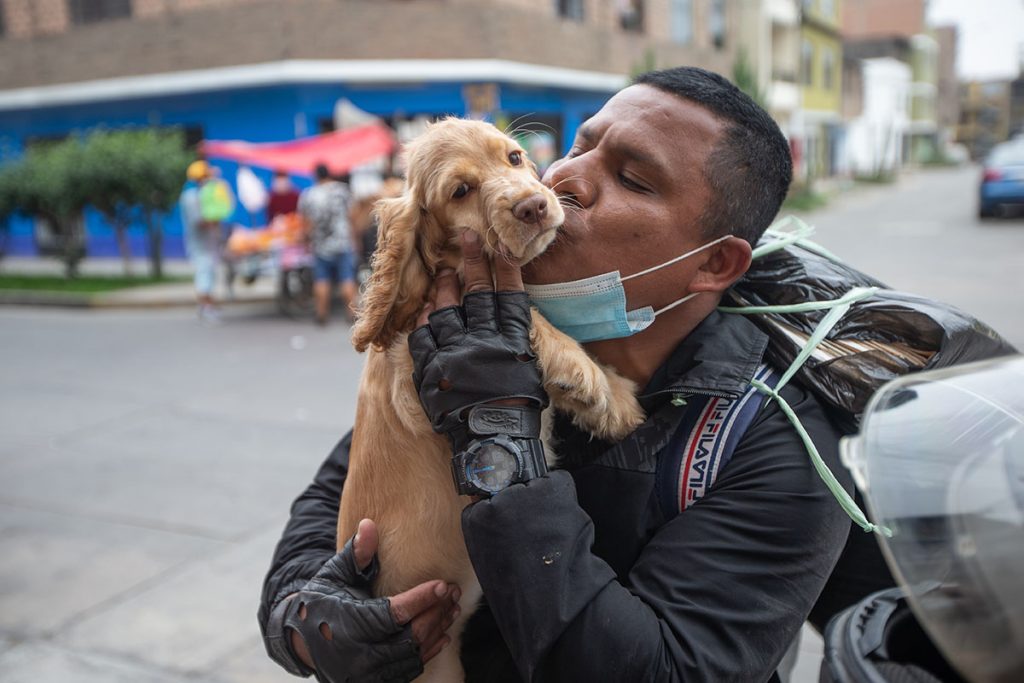
For Giancarlo Alva, a 38-year-old former soldier and father, his love for dogs knows no bounds. For some time now, he has dedicated himself to a vital mission: rehabilitating dogs with aggressive behavior. Giancarlo suffered a car accident and lost a leg. This has not been an obstacle. Supported by his crutches, he walks and even climbs hills to carry out his work. For him, despite being disabled, this is not a hindrance to his work; on the contrary, he does it with the utmost commitment to helping families facing these challenges. Before entering a family’s home to assess the dog’s condition, Giancarlo speaks with them first. “How long has the dog exhibited this behavior?” “Has it suffered any aggression before?” These are fundamental questions before seeing the dog and beginning rehabilitation. To accomplish this difficult task, he uses methods to calm the dog. He establishes his presence in its territory and, through his firm voice, uses words and tactical movements to help the dog freeze and relax. Mostly when Giancarlo begins this process, the dog makes abrupt movements that are initially difficult to control. He records the dog’s rehabilitation process to raise awareness that dogs with aggressive behavior are not a danger, but rather that they undergo a rehabilitation process and can become sociable animals. After the car accident that caused him to lose a leg, Giancarlo had a difficult recovery process, but he didn’t give up and kept going. His prosthetic leg is a clear example of this. In his depression over what happened, Giancarlo heard the word of God. God guided him and gave him the strength to undertake this humanitarian mission: to help rehabilitate dogs and give them a better life. Postscript: Giancarlo has a canine rehabilitation center called “Happy Paws” in Ancón. He works there with his children, who also share a passion for caring for dogs.

Giancarlo Alva, the canine rehabilitation specialist Read More »

Love in the time of Coronavirus

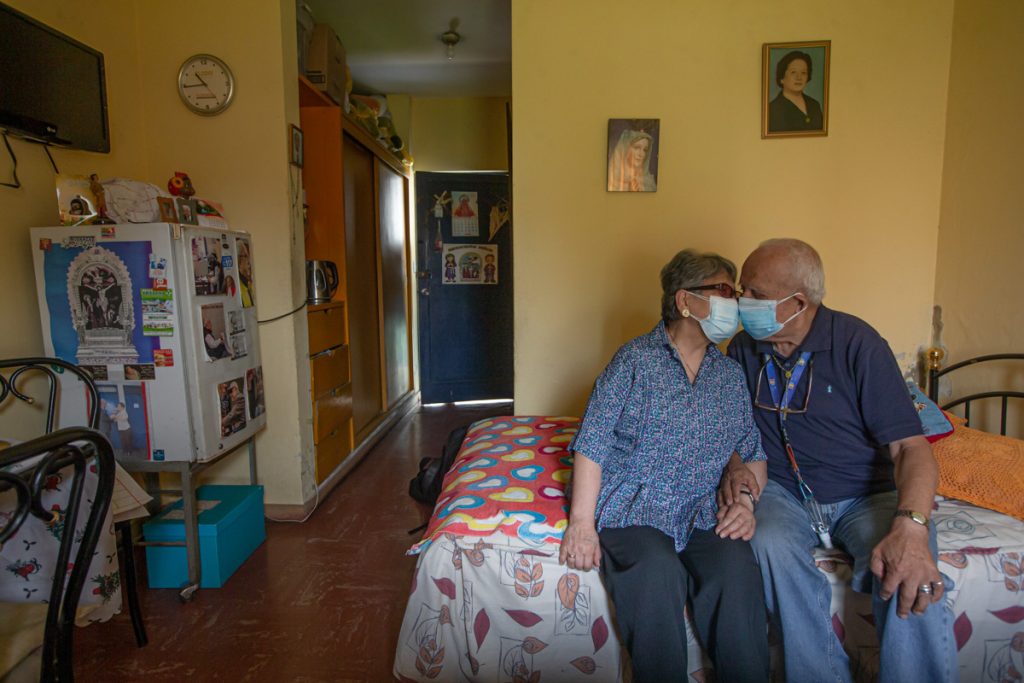
The Canevaro Home holds countless stories to tell. Within each room are preserved memories of the past, memories that have endured to this day. For Carlos Enrique del Busto Ezeta, 83, and Lucrecia Vásquez Maqueira, 84, both from Lima, true love means trust, patience, and forgiveness—words that strengthen their bond of love each day. They have been married for over 50 years and have lived in the Canevaro Home for the last eight, a decision they made together until their final days. They were unable to have children due to circumstances beyond their control. As a young man, Don Carlos had an accident in which he lost his leg and spent a year hospitalized. During those difficult times, Doña Lucrecia cared for him, and they married the following year. Every February 14th, they renew their wedding vows as a symbol of eternal love. Before the arrival of the coronavirus, they held a ceremony at the Canevaro Home. She would dress in white and he in a suit, and they would renew their vows, vowing eternal love with a kiss. During these two years of the pandemic, their wedding vows ceremony couldn’t take place. Carlos and Lucrecia eagerly await the end of this Coronavirus phase so they can seal their vows, as they do every year. They managed to get through the difficult times of COVID-19. Now vaccinated, each with their respective dose, they live with much more peace of mind. With a kiss on the forehead and surrounded by countless photos in their room, they spend their days together.

Love in the time of Coronavirus Read More »

Moisés Paredes, the Mantis boy

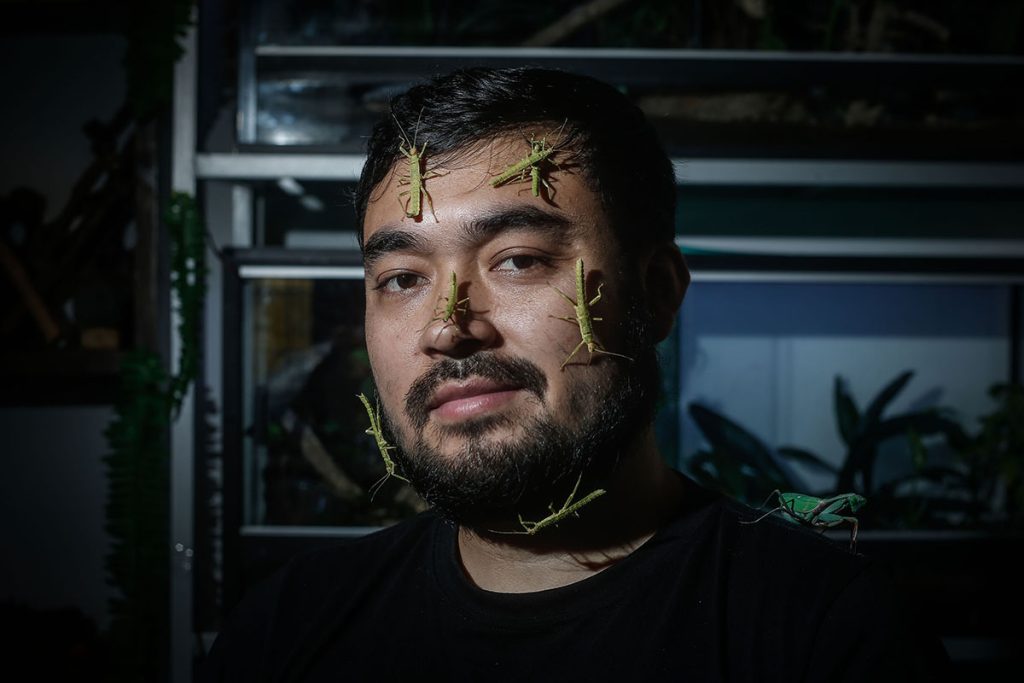
From a very young age, Moisés Paredes had a great fascination with insects. Through in-depth study, he connected with the unique lives of these exotic animals. Many years ago, Moisés suffered a serious accident, which led to a deep depression. During this difficult period of recovery, he met someone who bred mantises. This reinforced his determination to turn his passion—collecting and breeding mantises and other insects—into a way of life. Over time, his dream transformed into a solid business called Team Peruvian Mantis. Moisés, the group’s founder, teaches about the value of these insects in the ecosystem and their sustainable breeding practices. He and his team maintain a mini-zoo at his home. This space houses a wide variety of mantises and other fascinating insects. This brings him great satisfaction, as it allows people to learn about these valuable creatures. Thanks to Moisés’s perseverance and that of the Team Peruvian Mantis group, more people have joined the responsible insect collecting community. The conservation of these species is a crucial factor in these times, where the destruction of nature is extremely constant. Postscript: Moisés has several tattoos that represent the meaning of his perseverance throughout the time he has been building his project. A praying mantis climbing a leaf symbolizes perseverance over these years. He believed in himself, but he also remembers the words of encouragement from a special person, for which he feels very grateful and blessed.

Moisés Paredes, the Mantis boy Read More »

Arantxa

“Ara,” as her friends call her, is a rhythmic gymnastics champion. She has been dancing for 11 years, and in that time she has developed a persevering character. Her mother, as strong-willed as “Ara,” encourages her in her development and constant work in gymnastics.

Arantxa Read More »

Ephemeral pilgrim

Memories of a Journey. Let’s define the word “path.” Perhaps there are many answers to this simple term that evokes infinite thoughts. Each person constructs it according to their perception and their way of seeing space. Escaping common comfort, breaking the routine of a bustling city, and leaving the borders of your home is quite a risk. To explore is simply to challenge destiny and not remain in the limbo of doubt. My visual record is one of the many routes I took, and I continue on this path, which in some cases brings surprises. I record how small we are in this world. There is so much to see and to do. History is part of our journey, and we sign it with a visual stamp: our own world.

Ephemeral pilgrim Read More »

Mestiza Qoyacha

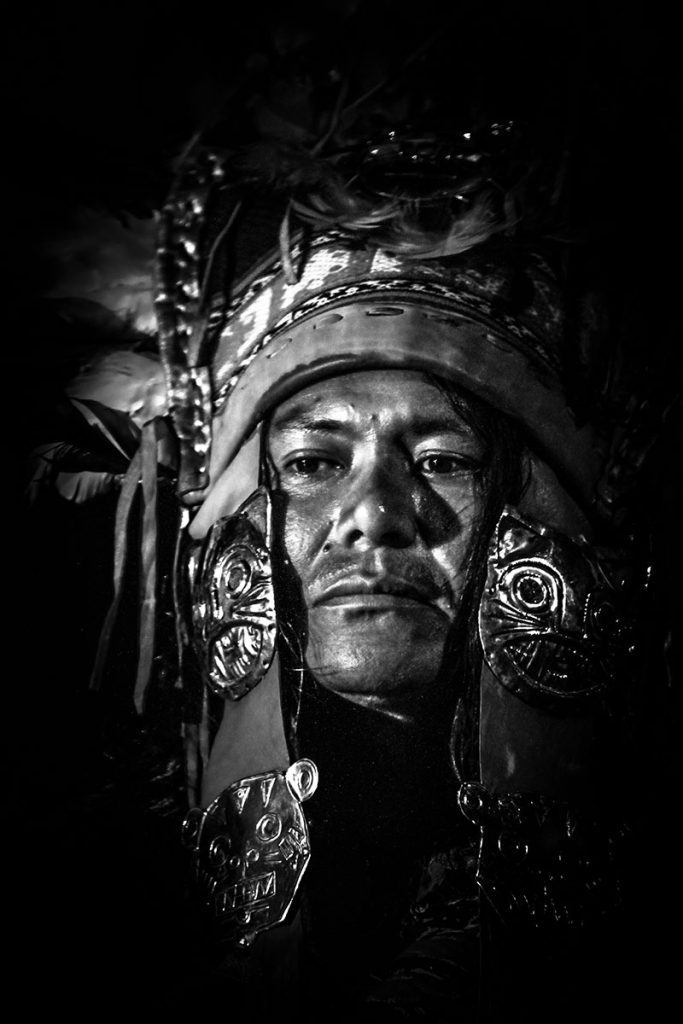
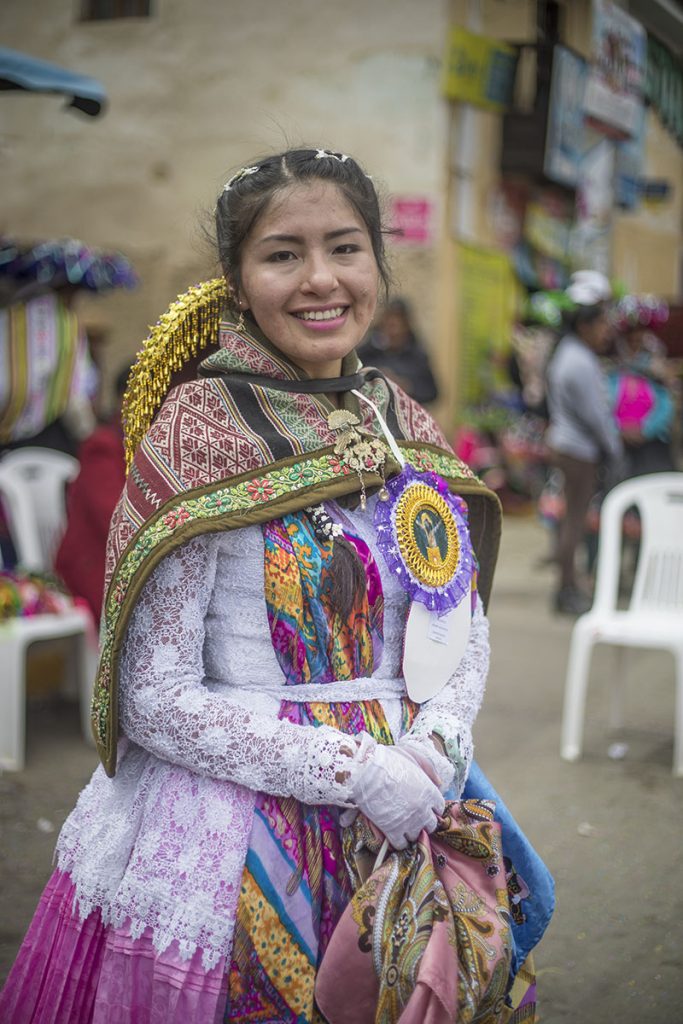
Mestiza Qoyacha is a dance of republican origin that evokes the courtship between waynas (young Spaniards) and Qoyachas (young women of Inca lineage). It represents the mestizo joy of young people with romantic intentions, from which new marriages are born. Qoyacha translates as “Little Queen” or “Little Sovereign.” In choreography and costumes, this dance is very similar to the previously described contradance and is also considered to be linked to agriculture. The characters lead each line, forming well-defined couples. The choreography has a variation called Waylllash, whose movements are derived from the peasant dance of the same name and which is also related to the worship of Pachamama and the pursuit of romantic relationships among young people. This photograph, taken on September 15, 2019, was made possible thanks to the group who entrusted me with photographing them. I hope to see them again at the celebration of the Lord of Qoyllur Riti.

Mestiza Qoyacha Read More »

Hugo

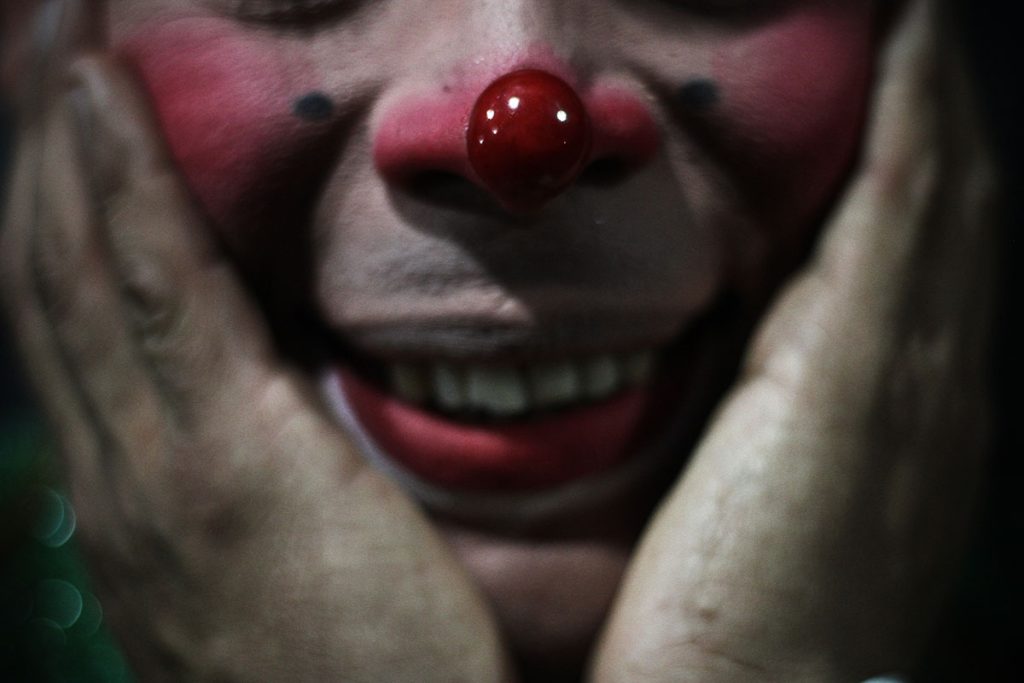
It’s 4:30 in the afternoon, and Hugo Muñoz, with the patience and charisma of a true artist, has about half an hour to get ready. He prepares in good spirits, launching into improvised songs that elicit genuine laughter. He tells us calmly, “Clowns are born by mistake or chance. That was my case, and from that moment I began on this path full of joviality.” The opening song of his performance begins, he emerges from the dressing room, steps through the curtain, and the audience welcomes Pitillo the Clown, his alter ego, with enthusiastic applause. In 2015, he published his book “A Clown’s Manifesto,” a declaration of principles reflecting on circus arts in Peru. The following year, Hugo Muñoz released his first children’s book, “A Clown’s Story.” Pitillo continues to bring joy to people of all ages, and not only that, in recent years, “The Circus of Joy,” which he owns, has toured various districts of Lima and throughout Peru. This is with the aim of continuing to spread joy to all social classes in our country. He lives happily with his wife and children. Notes from 2014 /JC.

Hugo Read More »