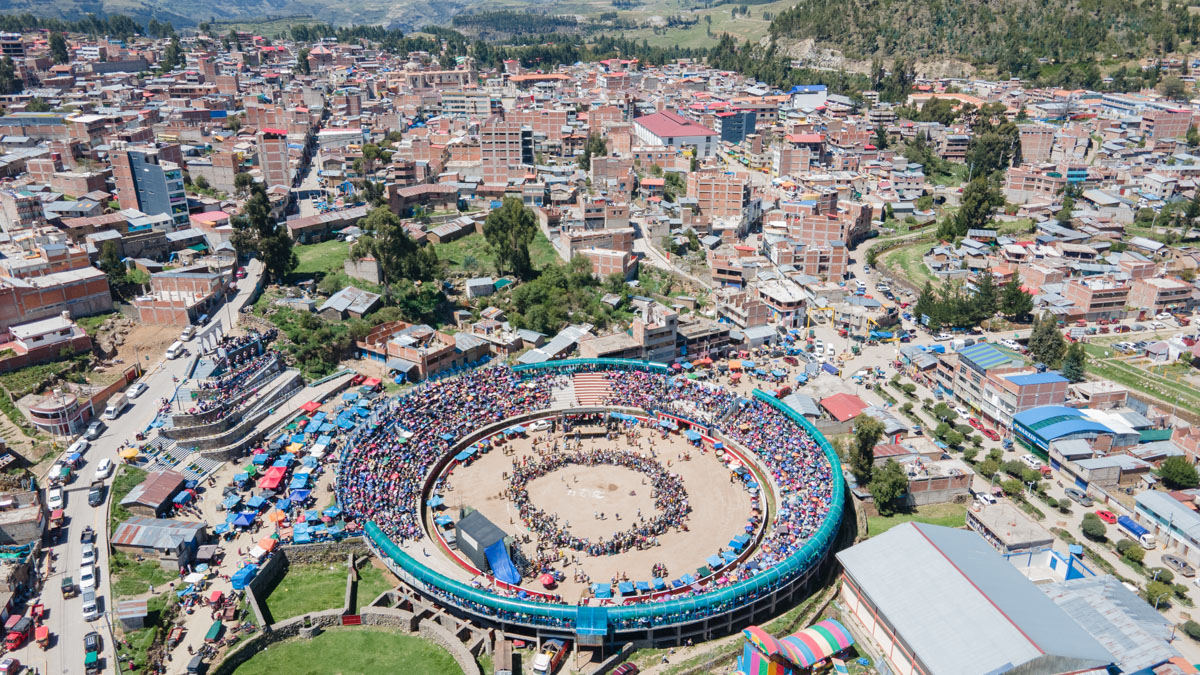
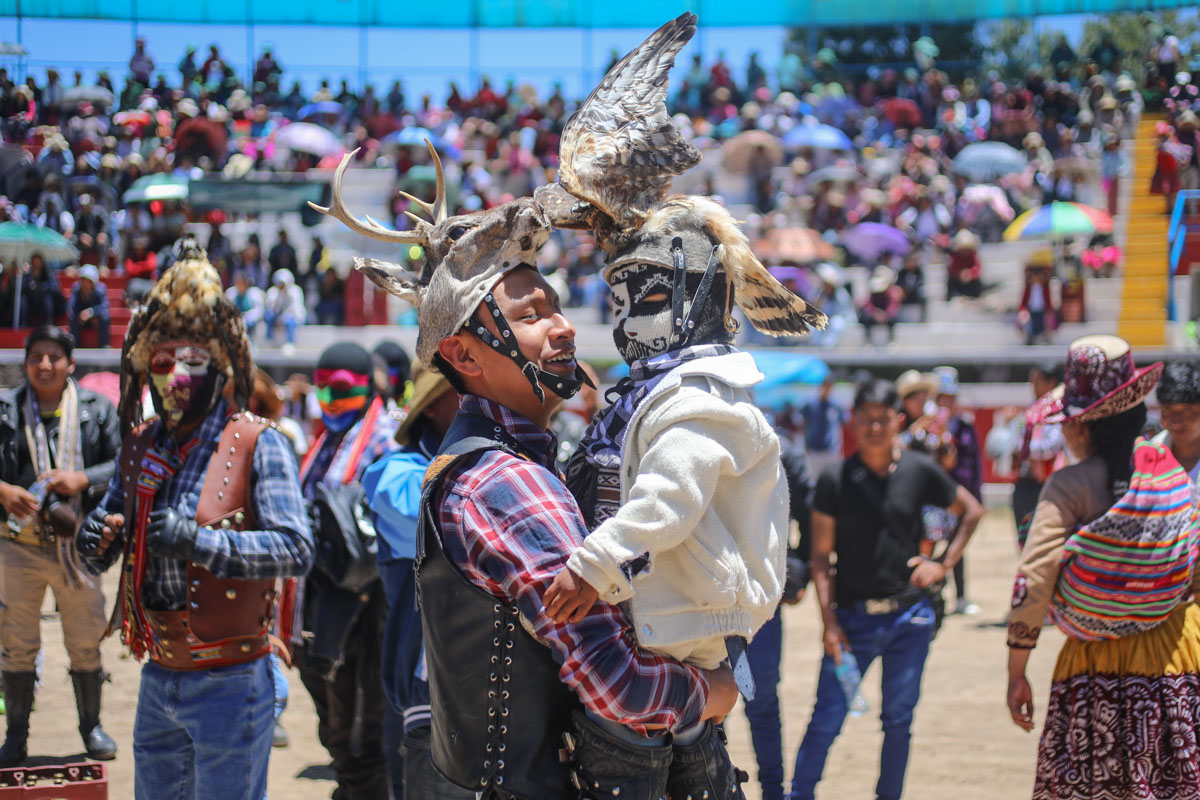
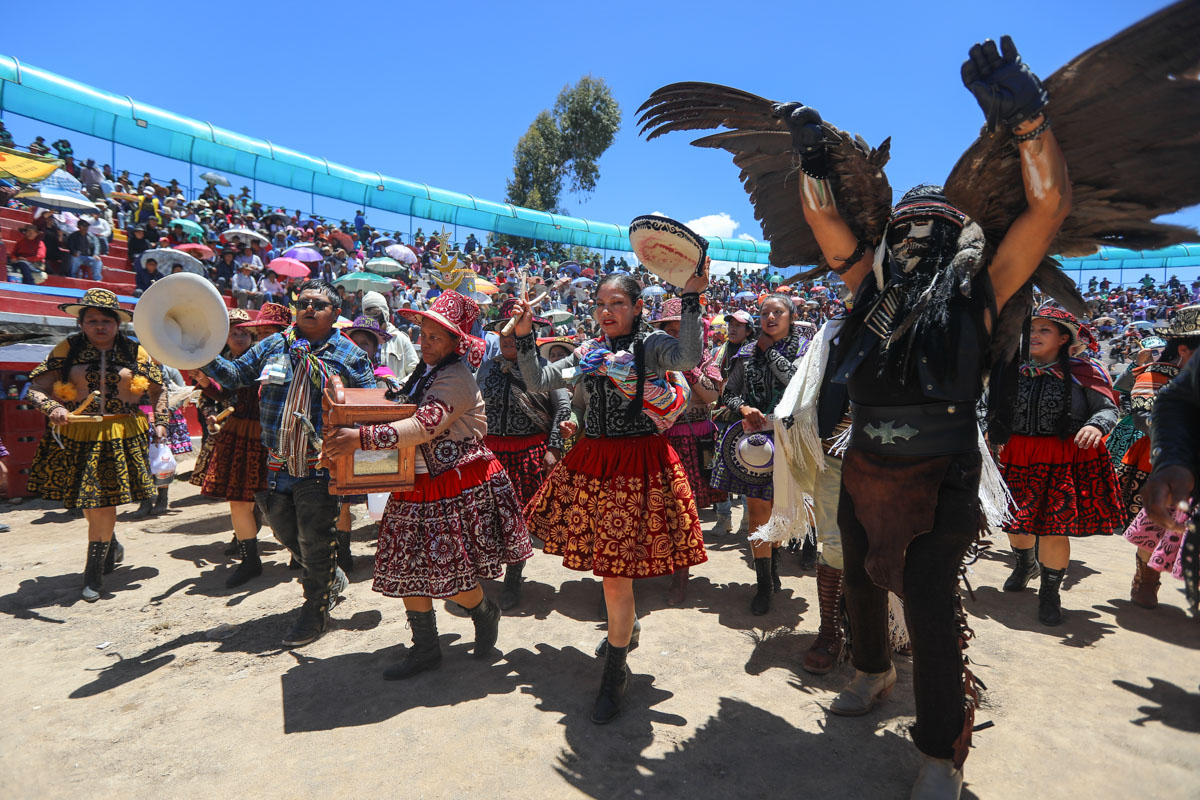
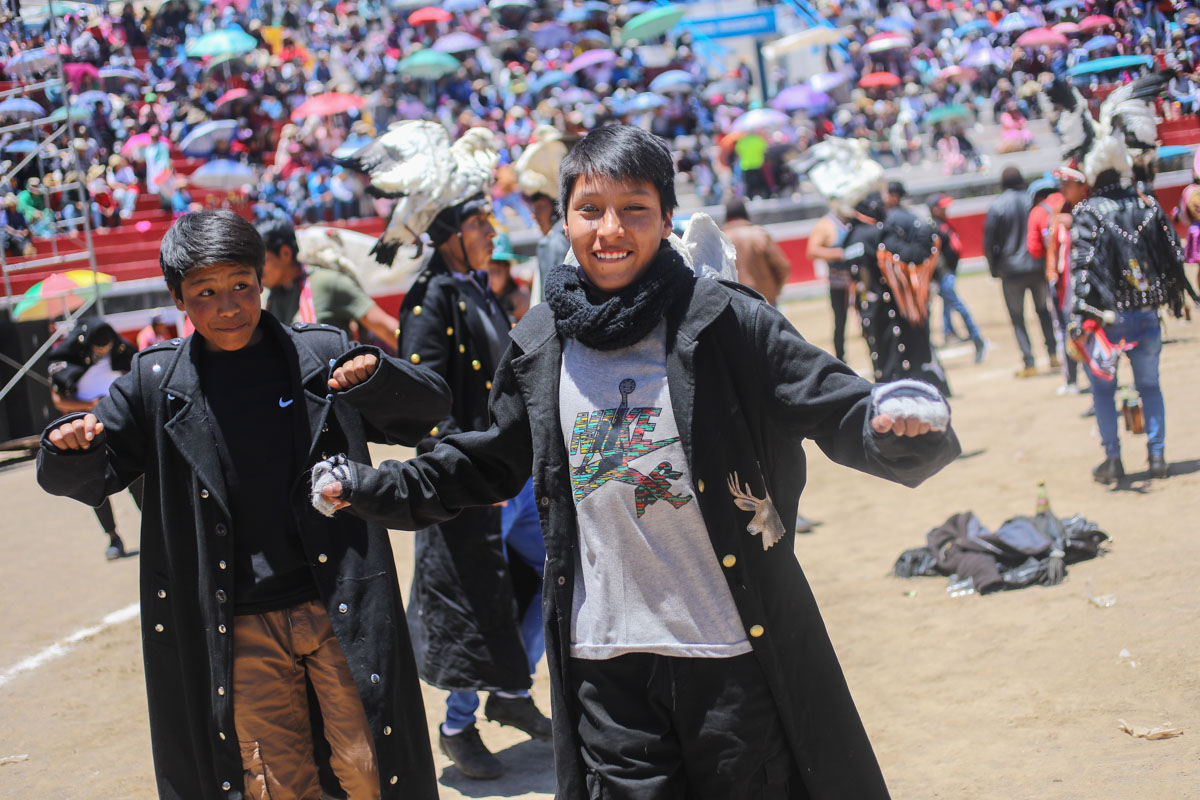
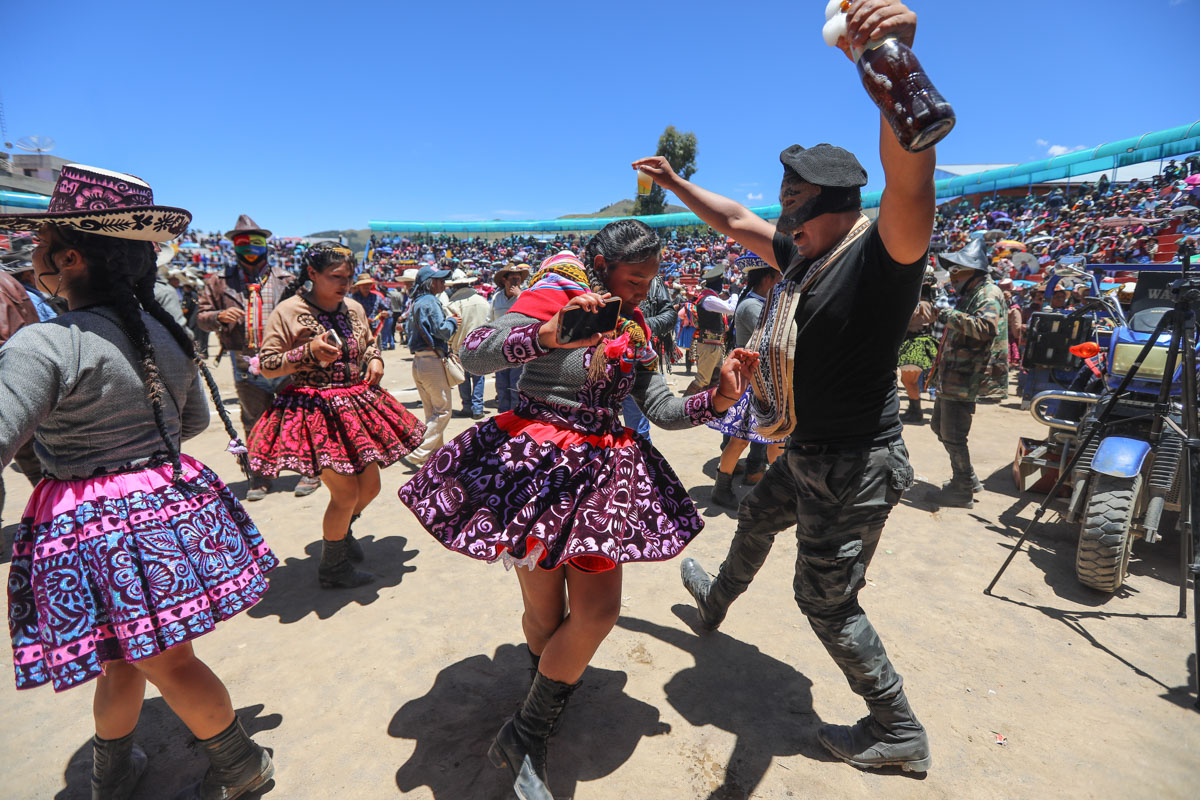
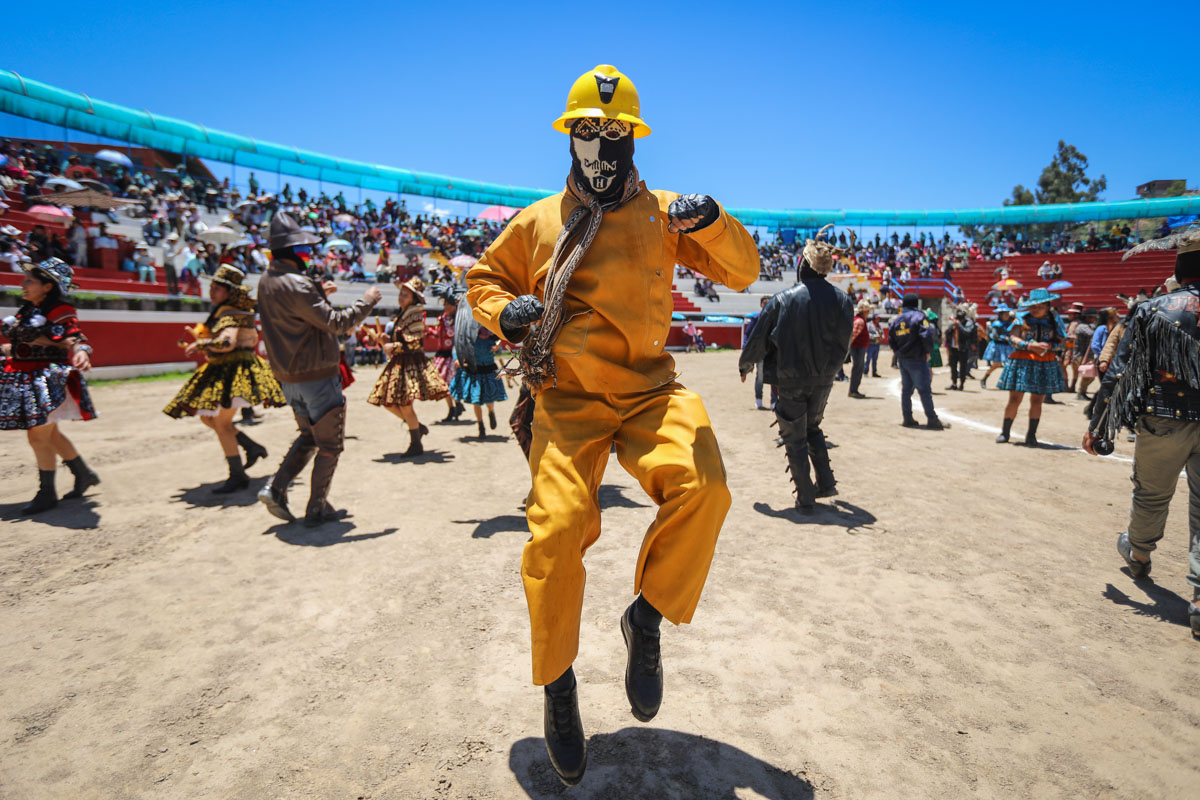
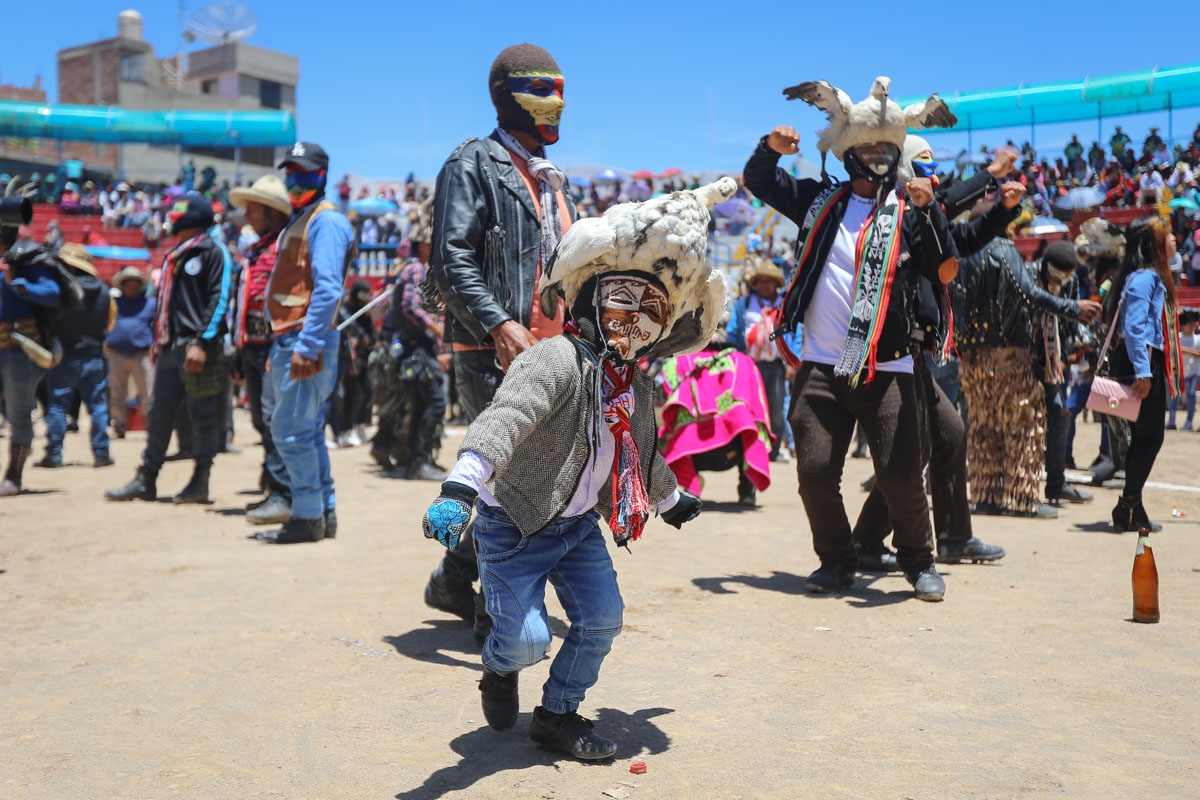
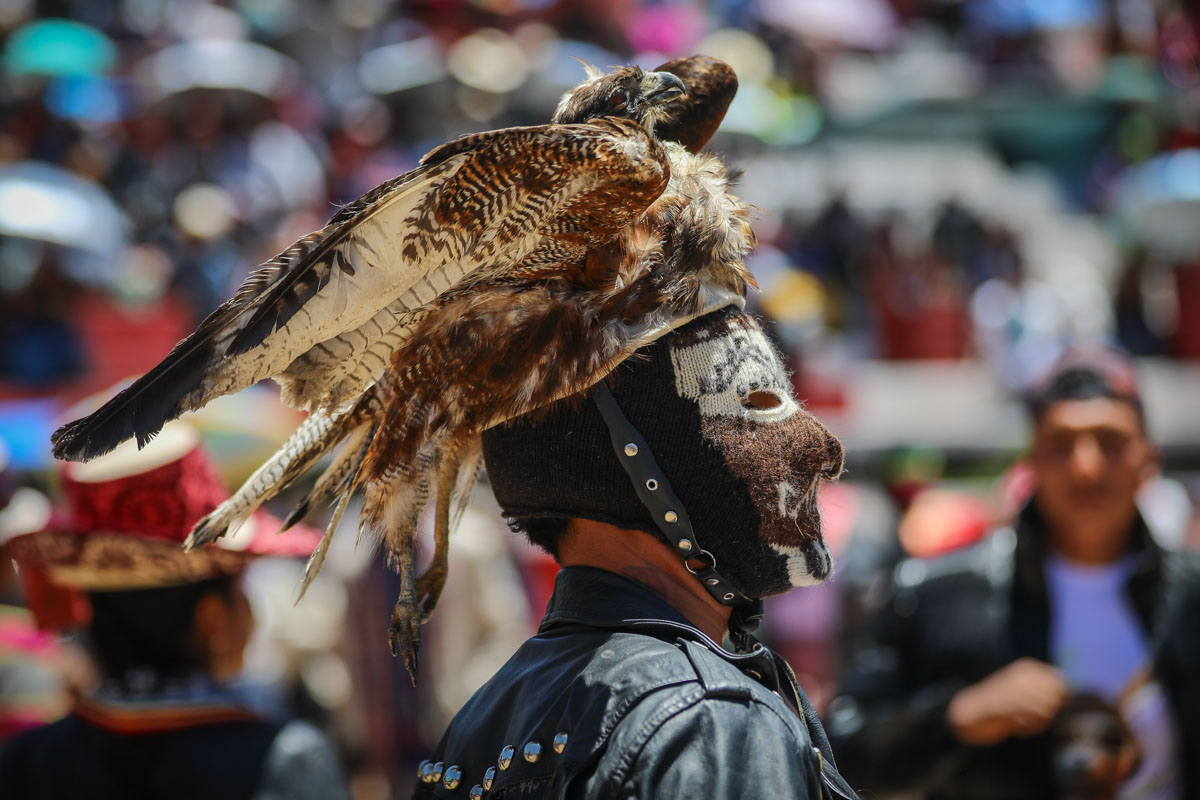
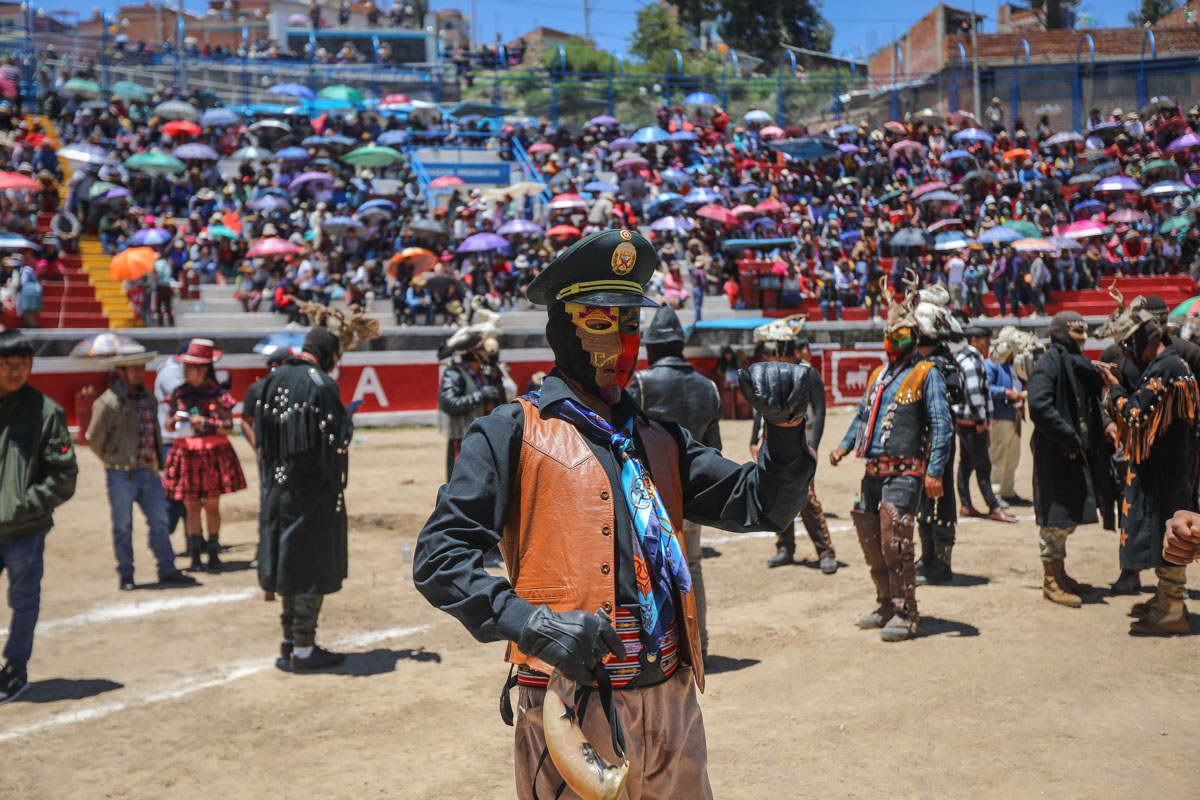
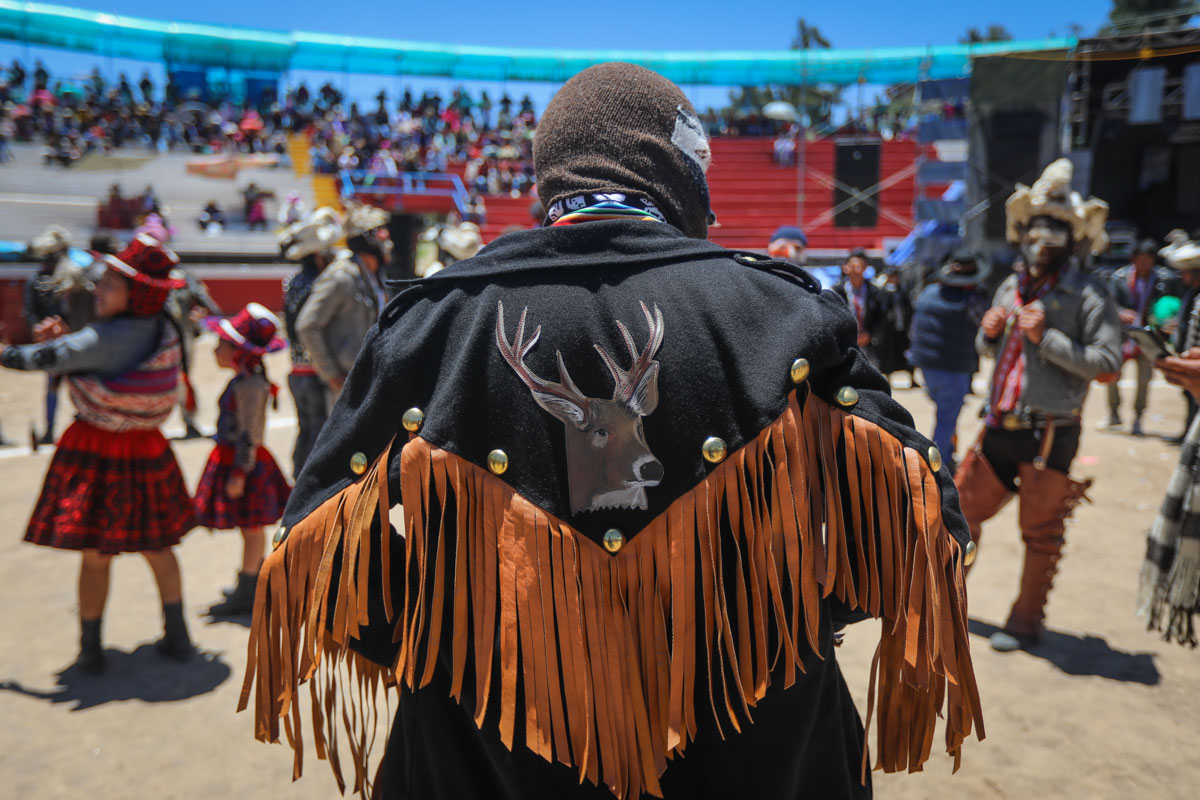
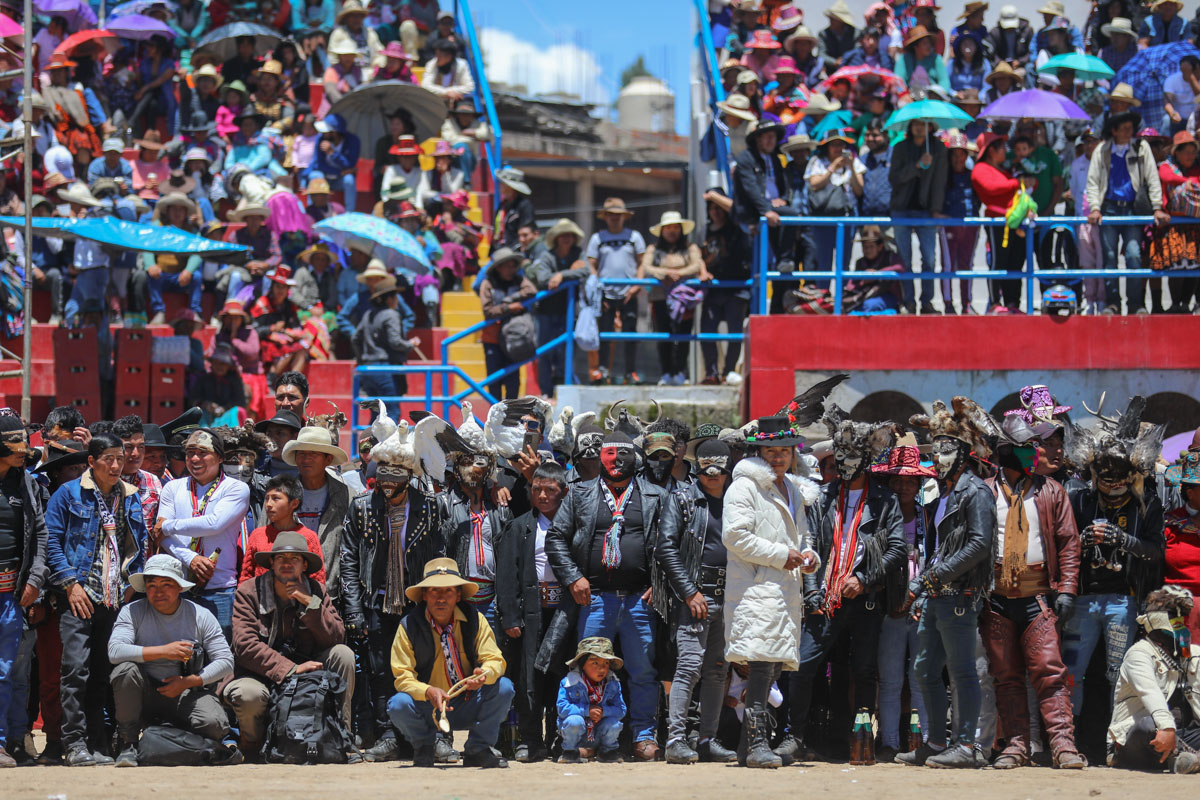
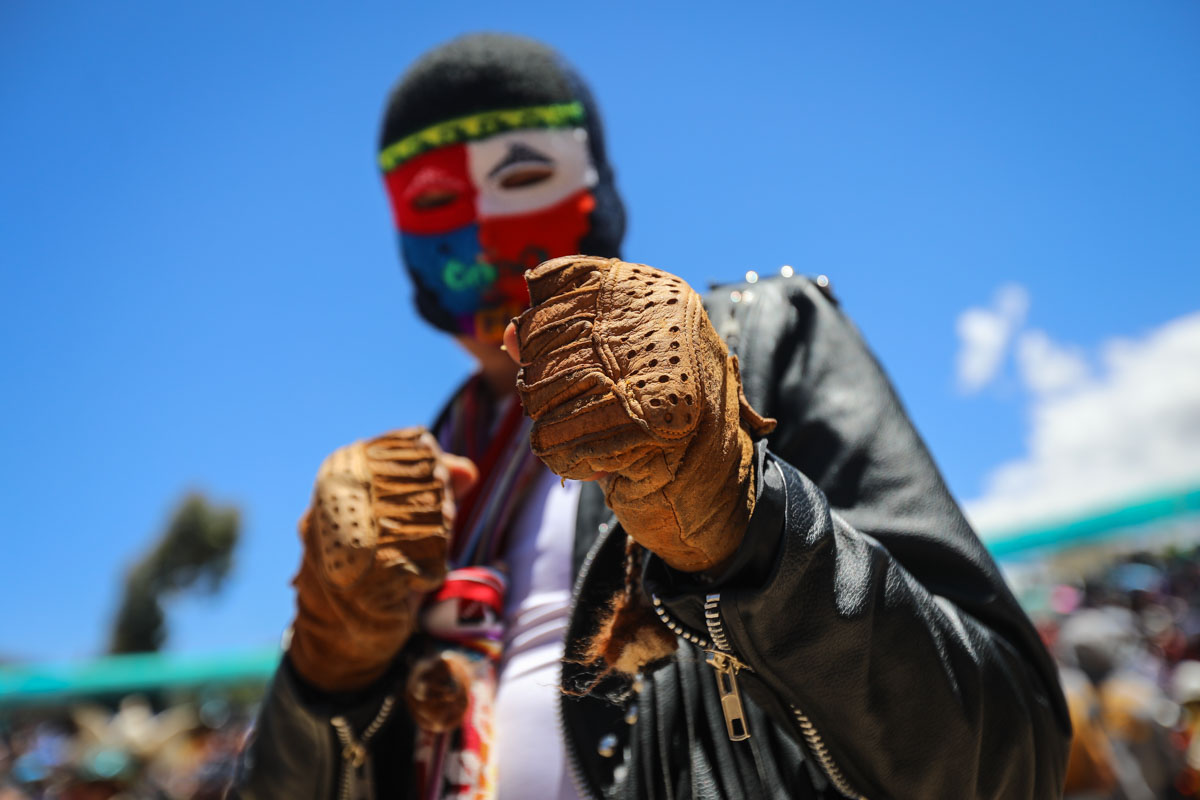
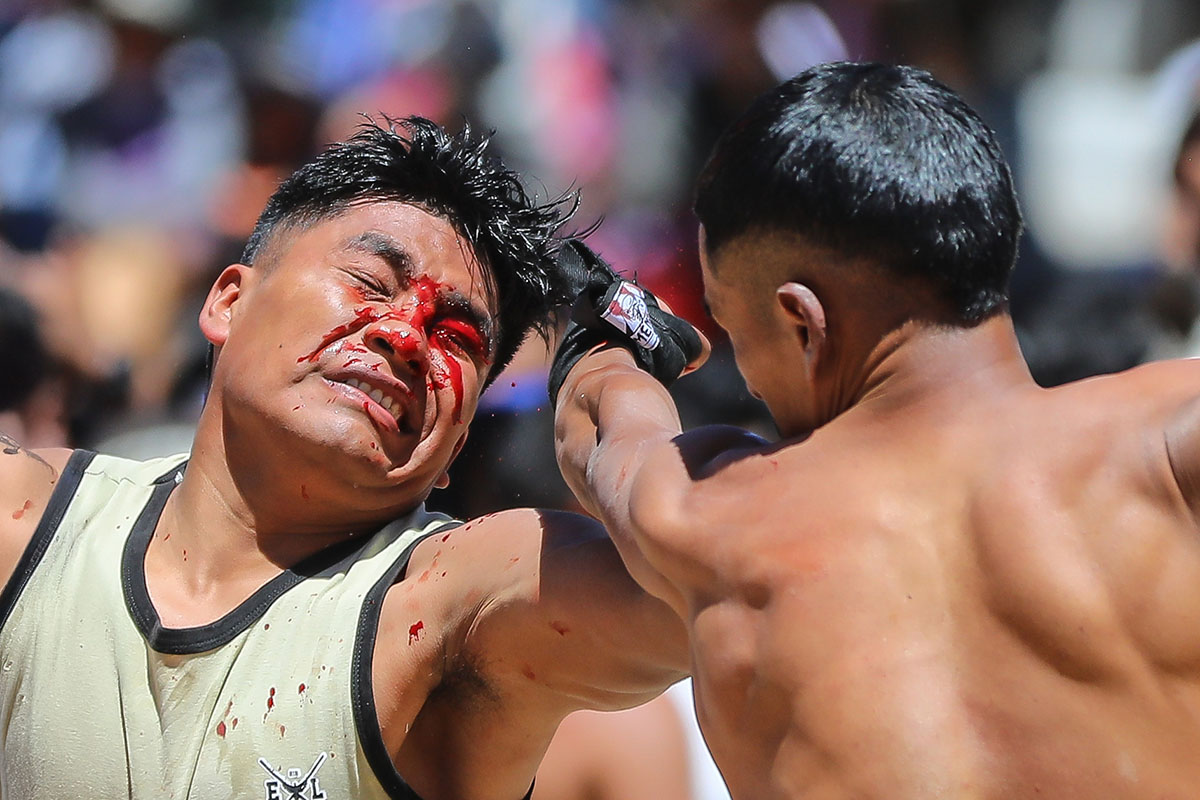
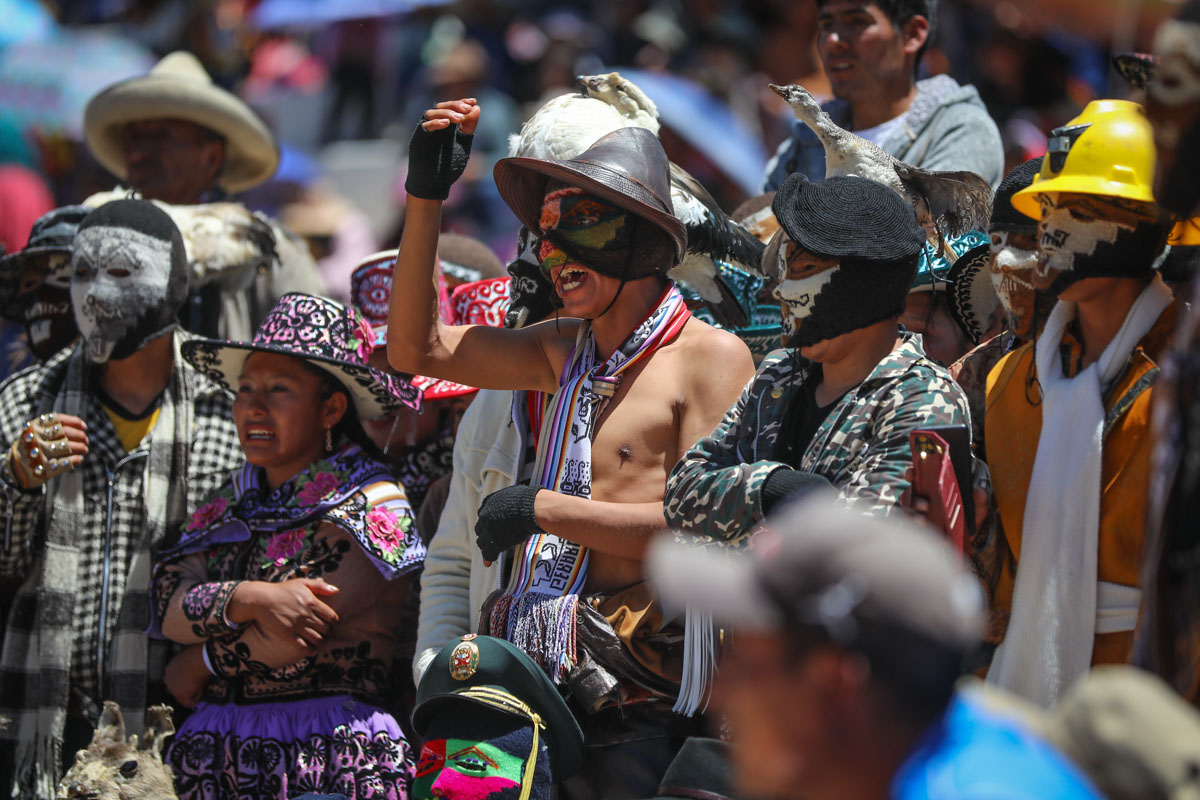
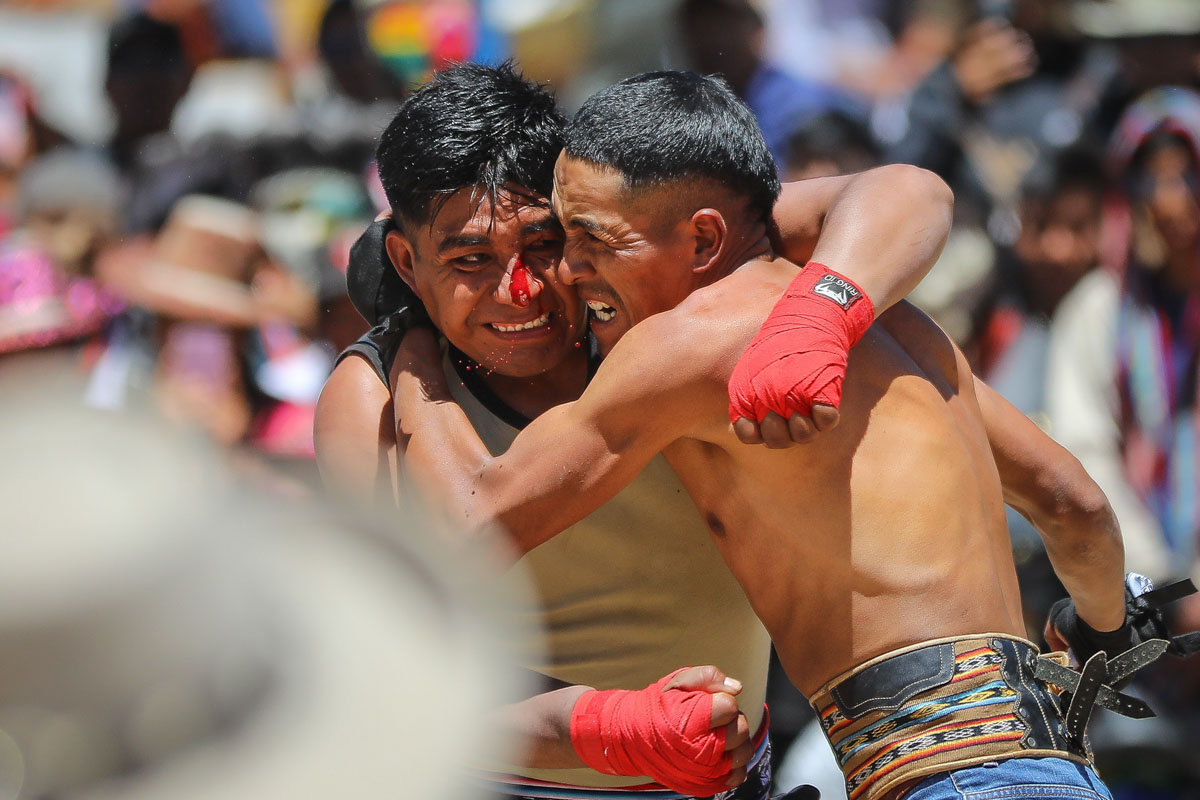
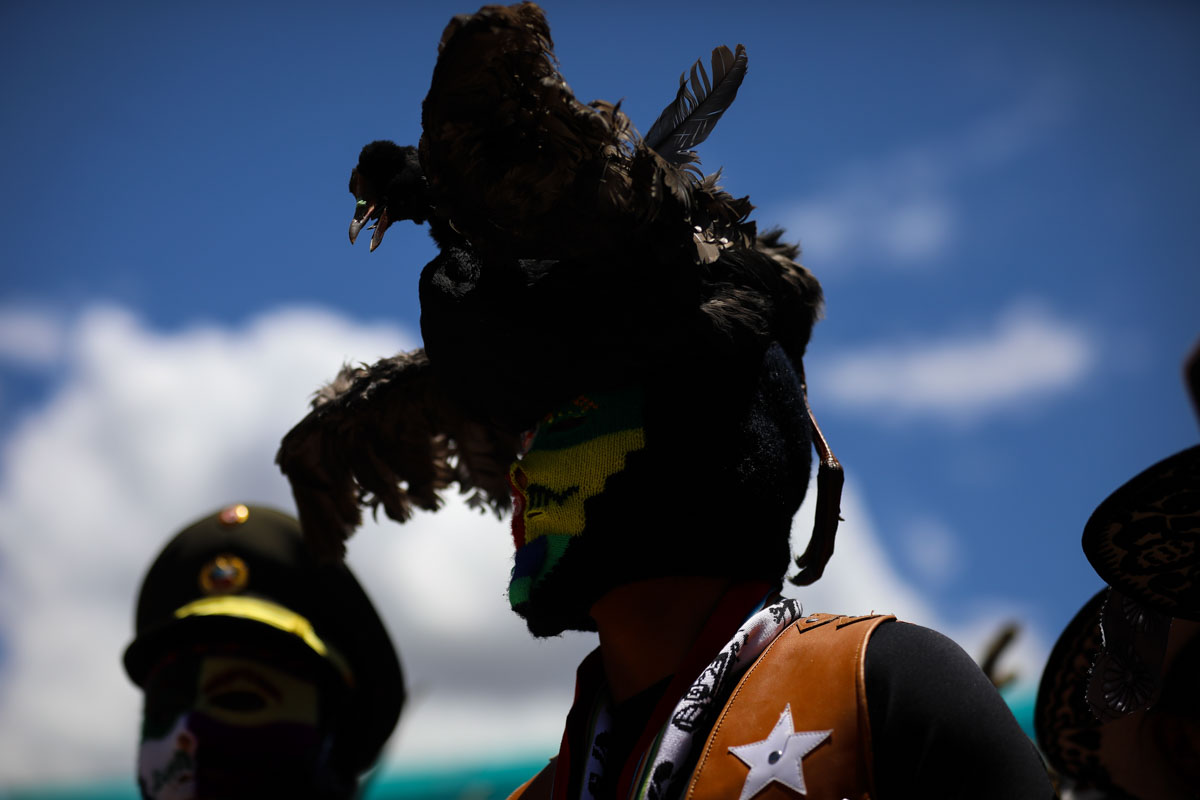
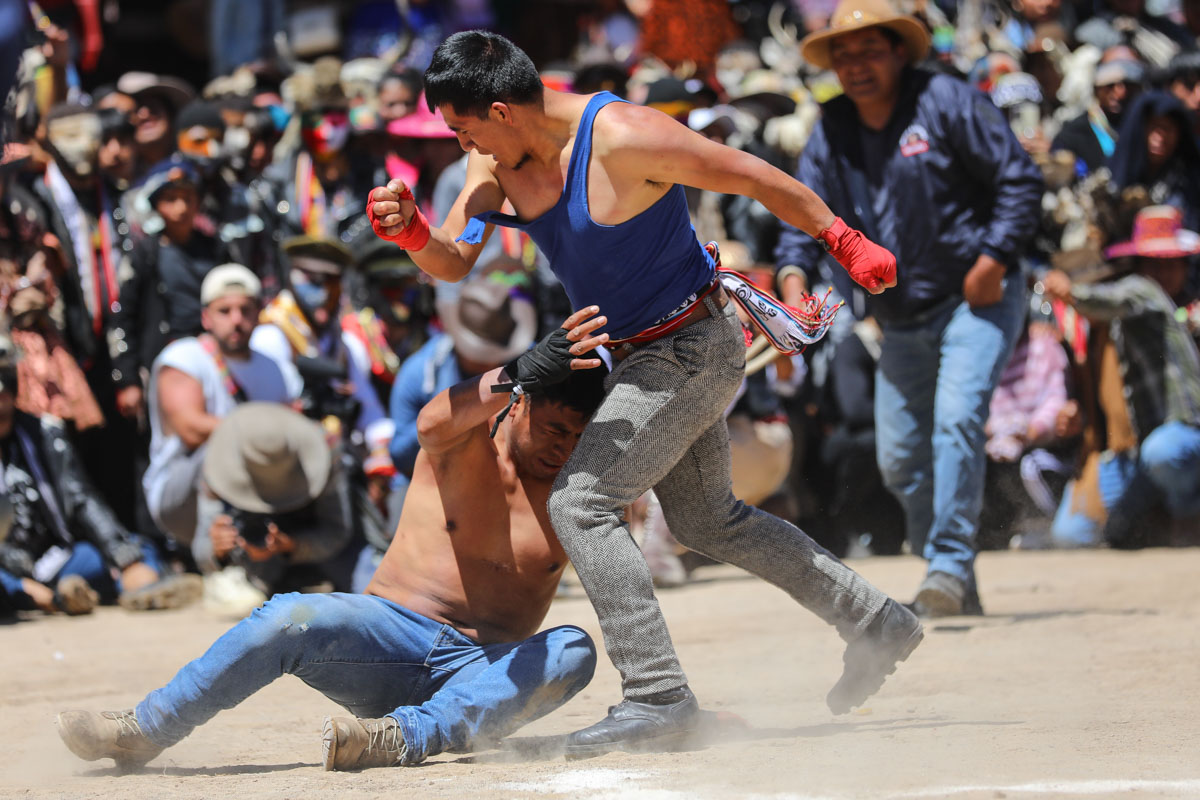
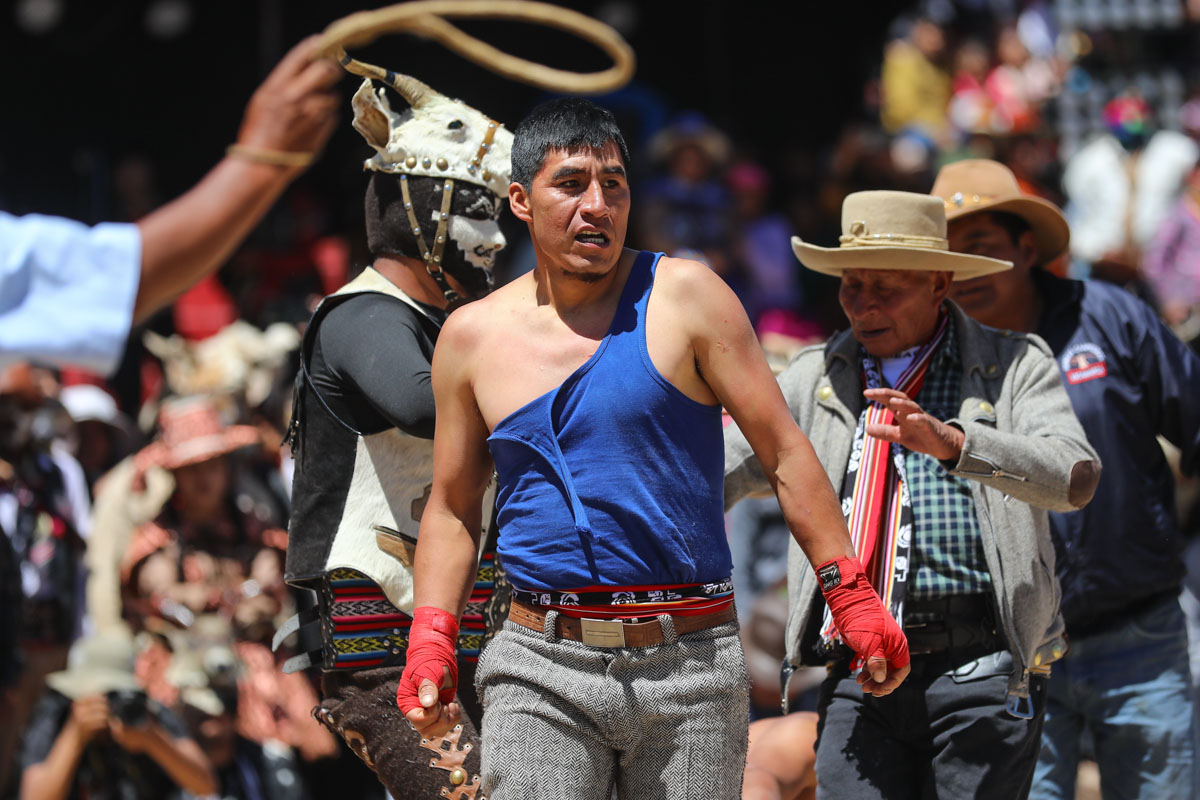
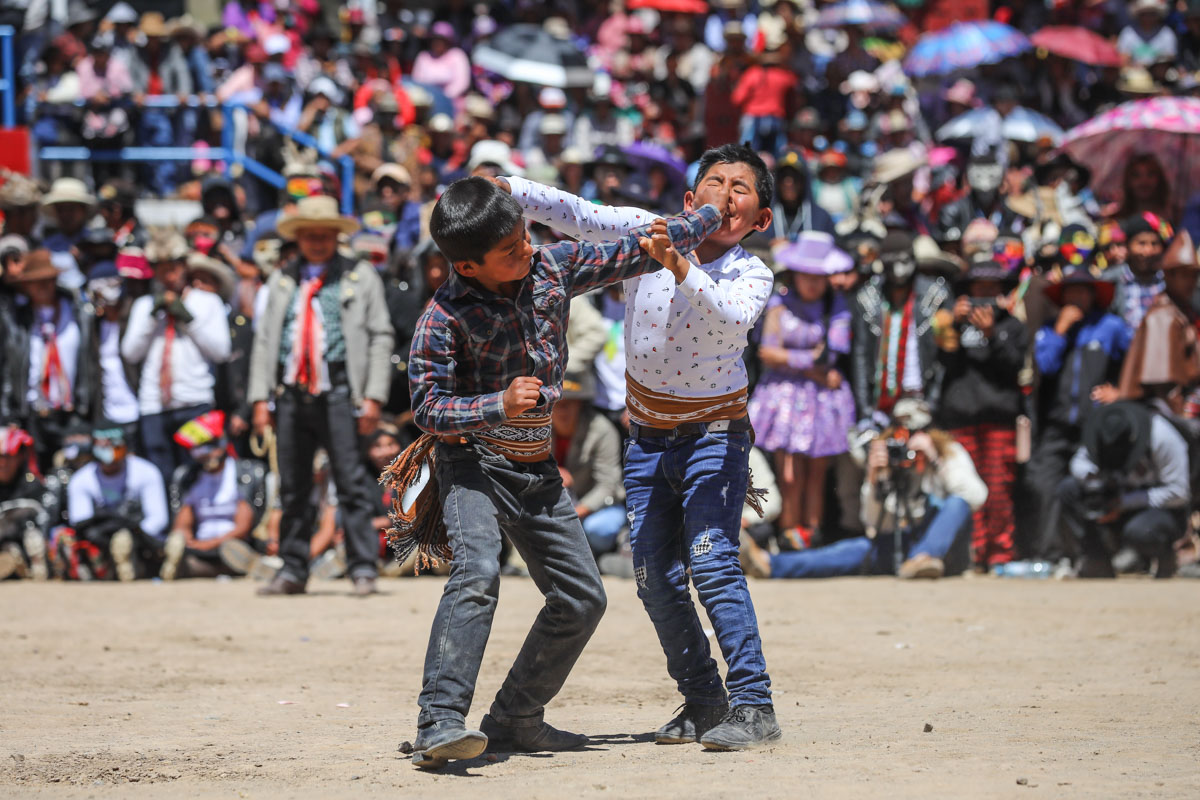
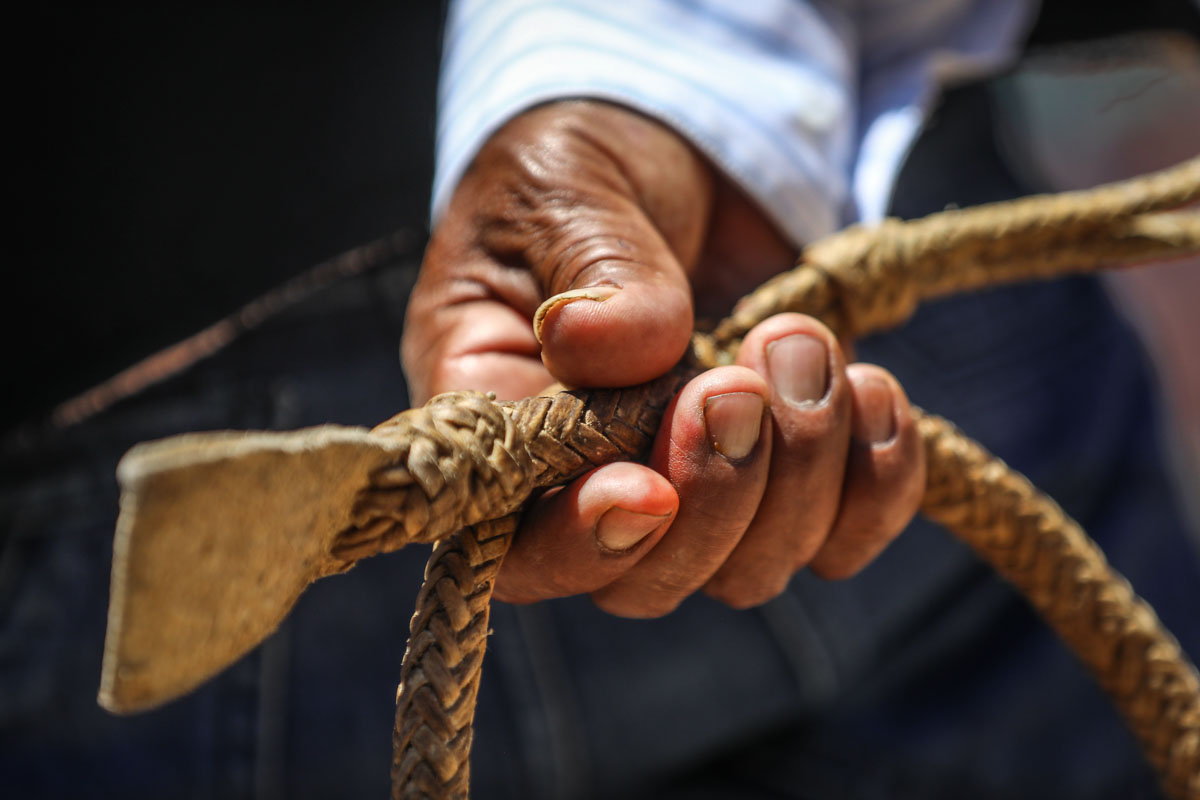
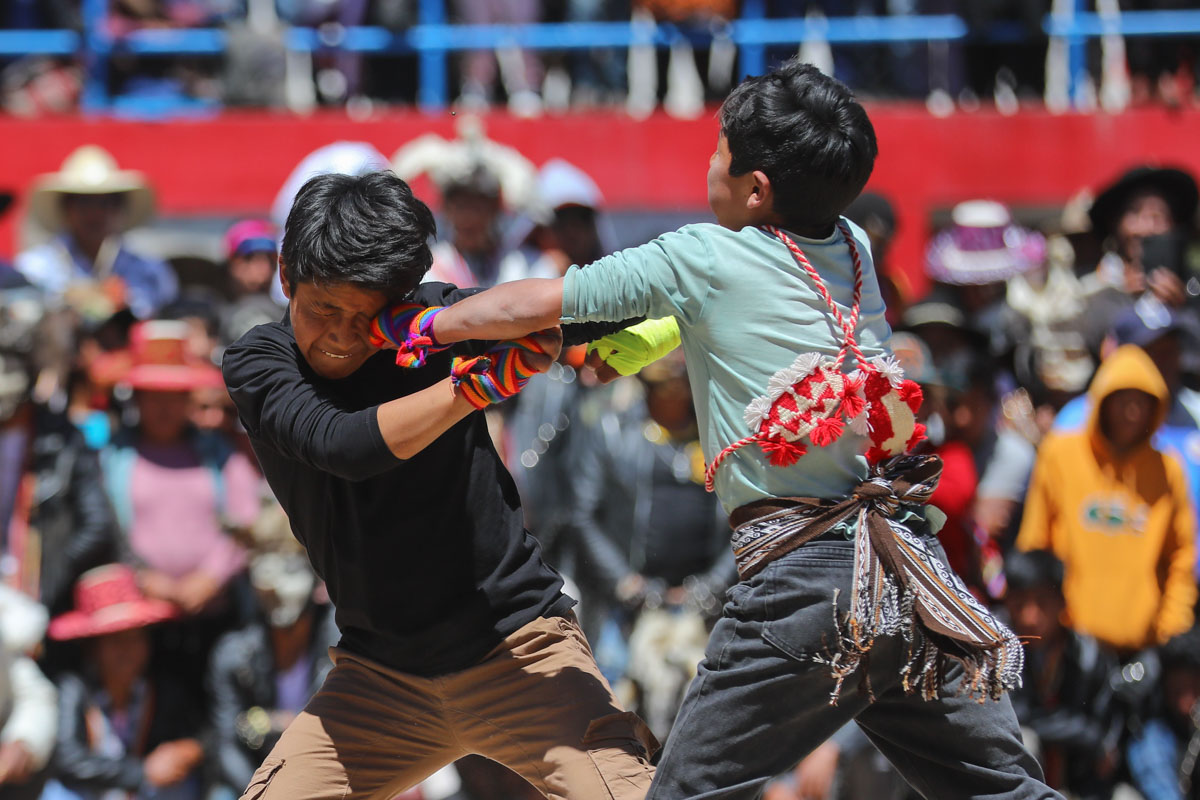
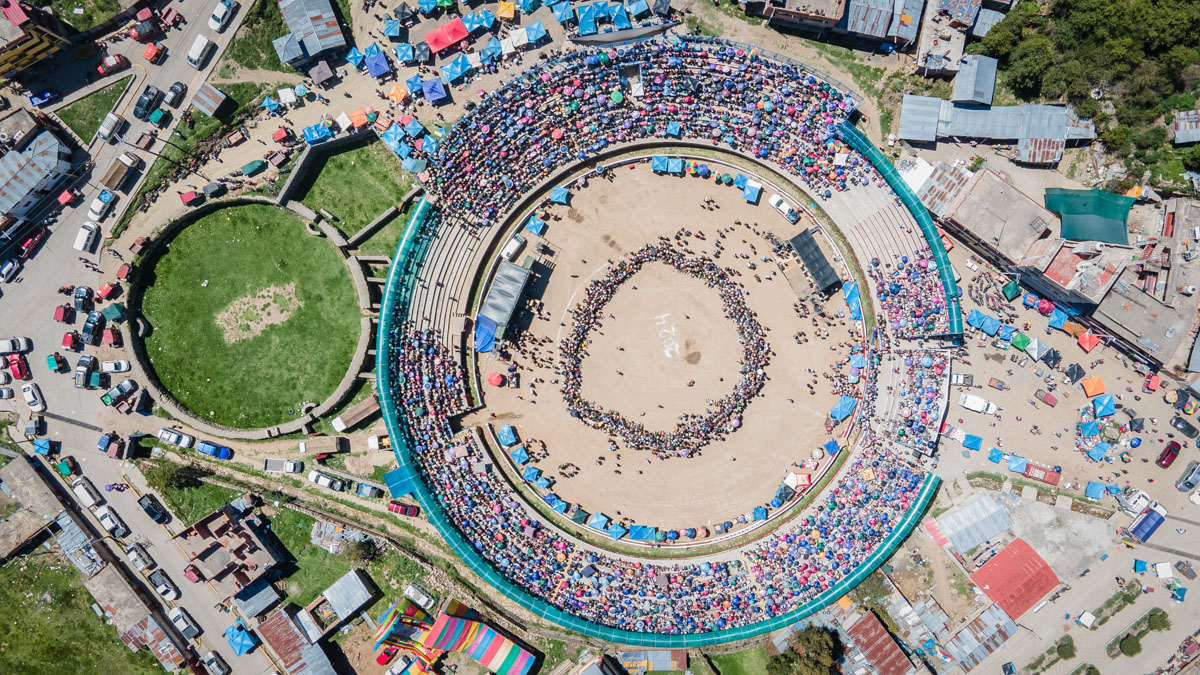
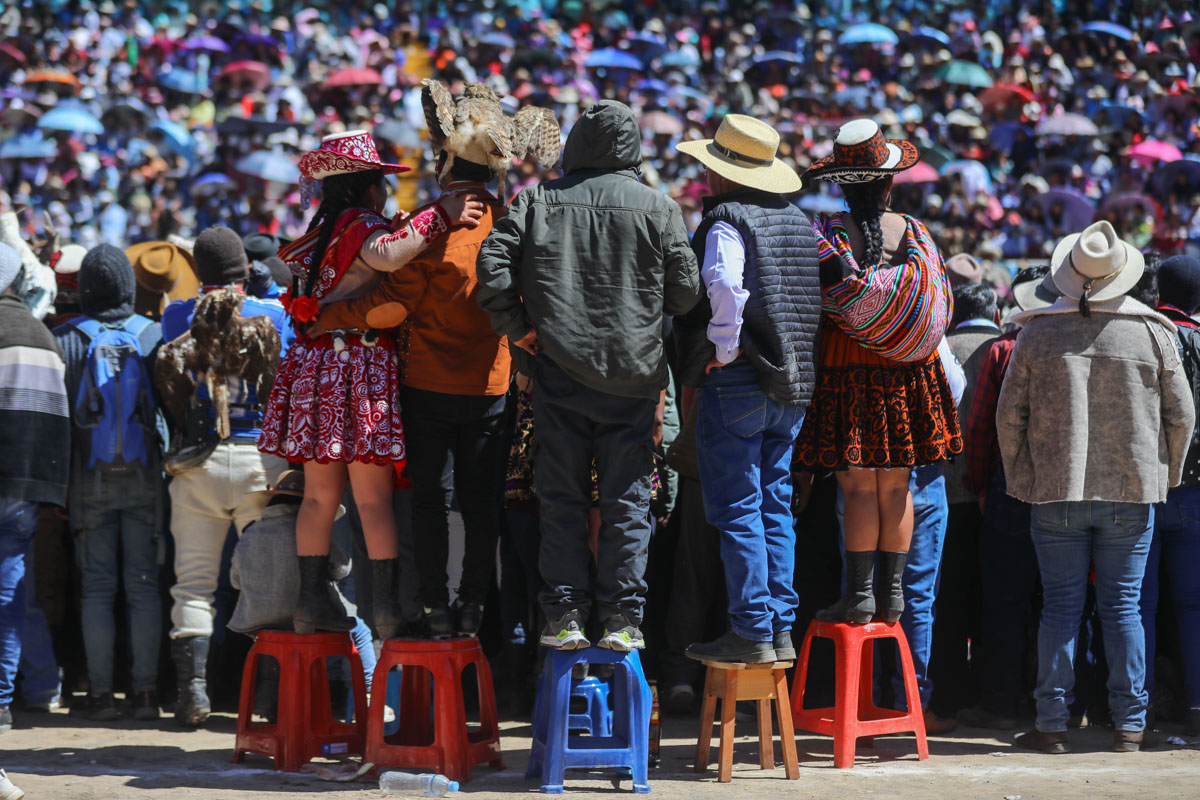
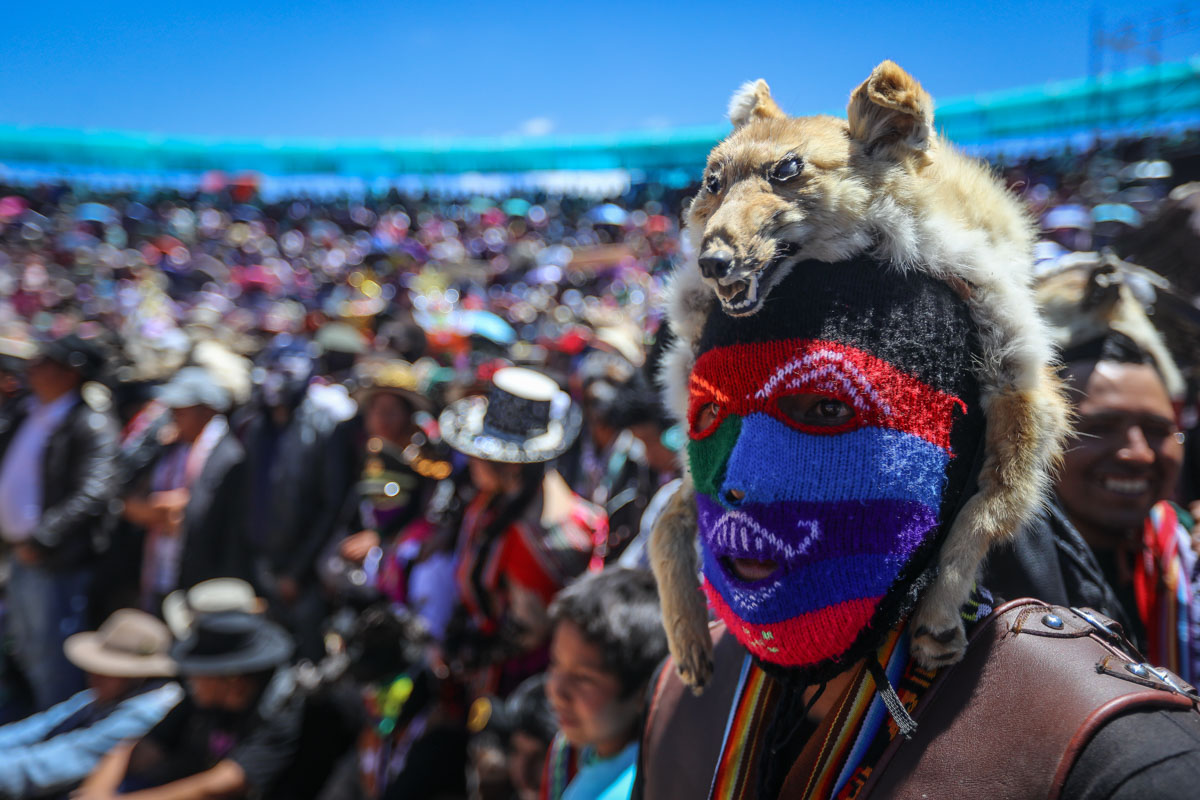
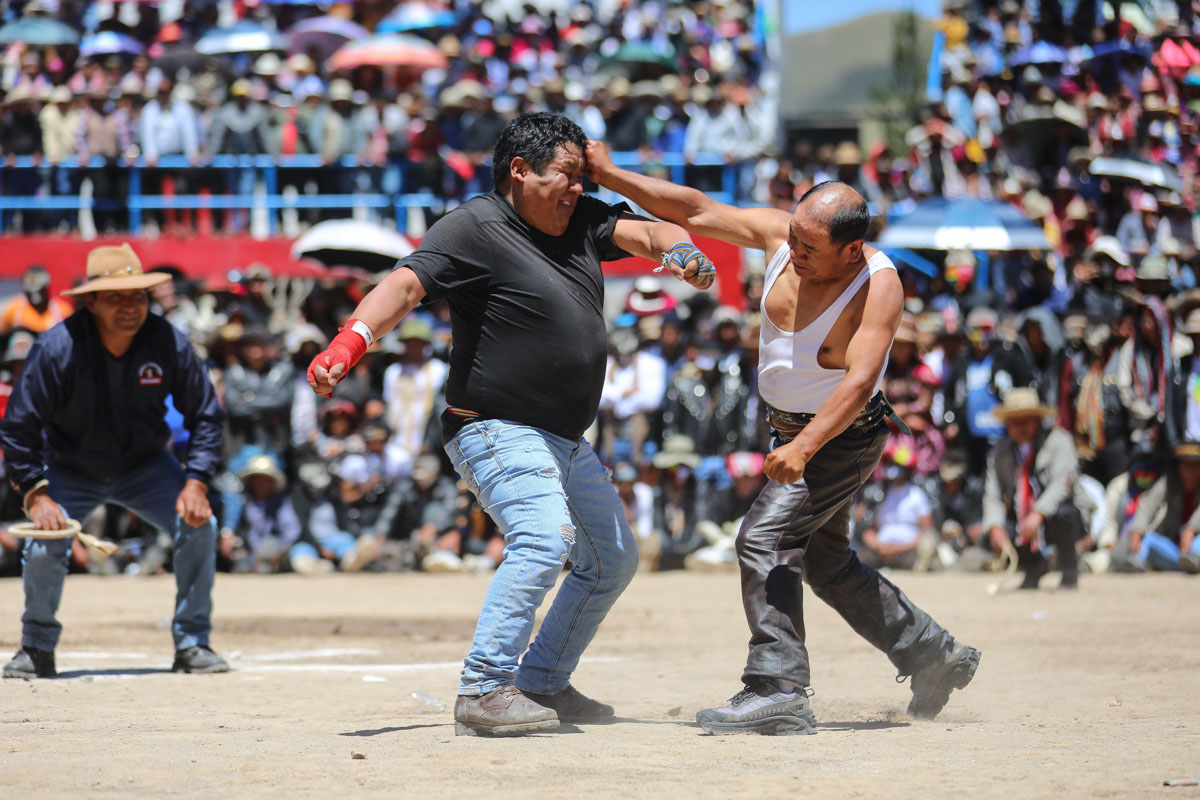
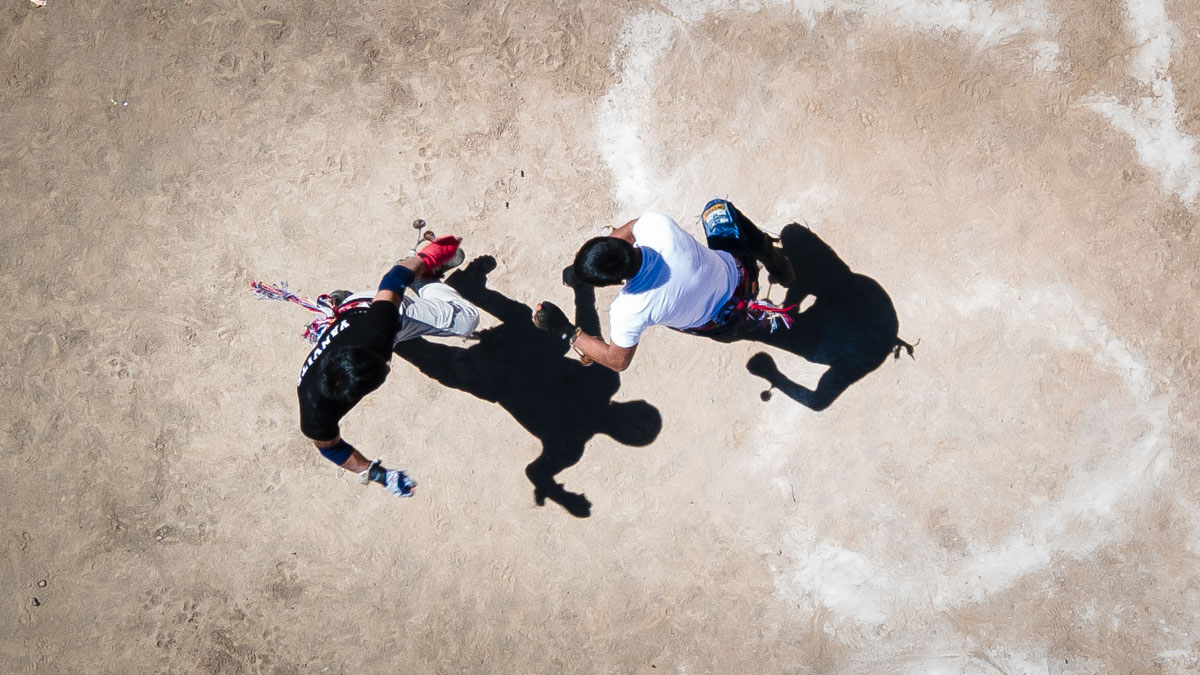
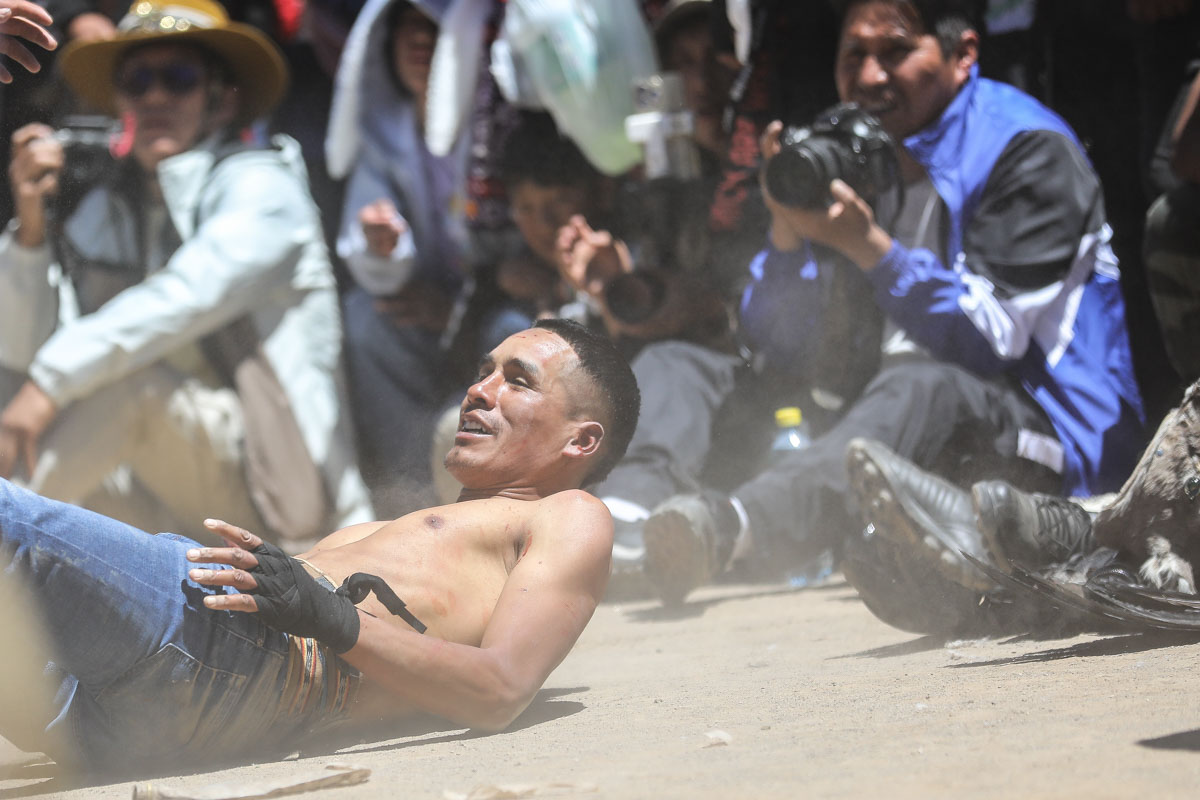
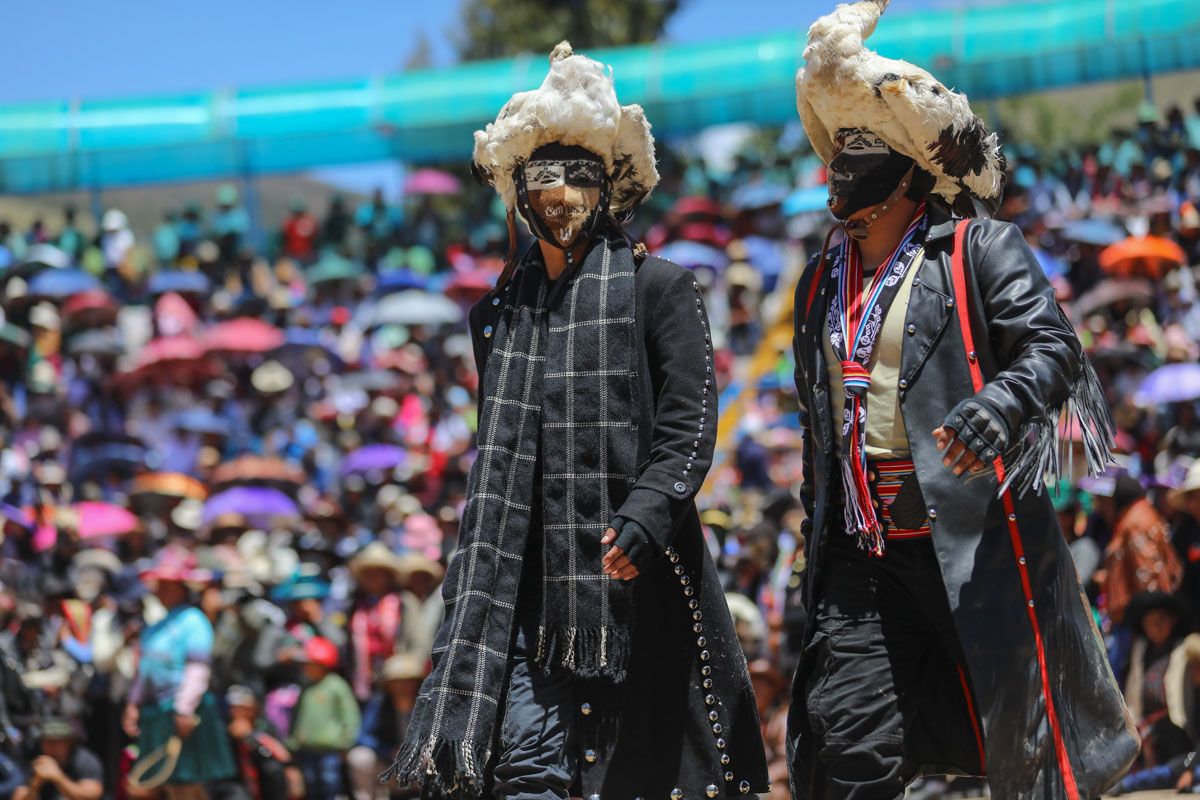
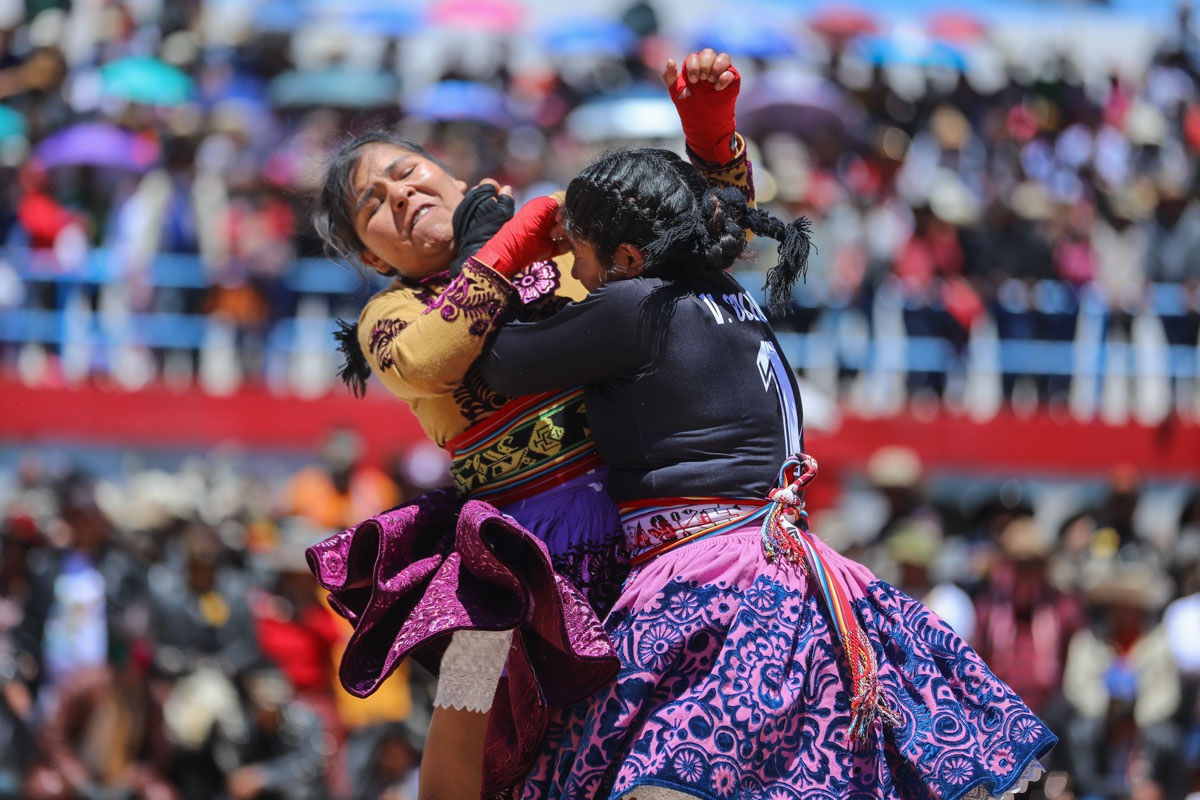
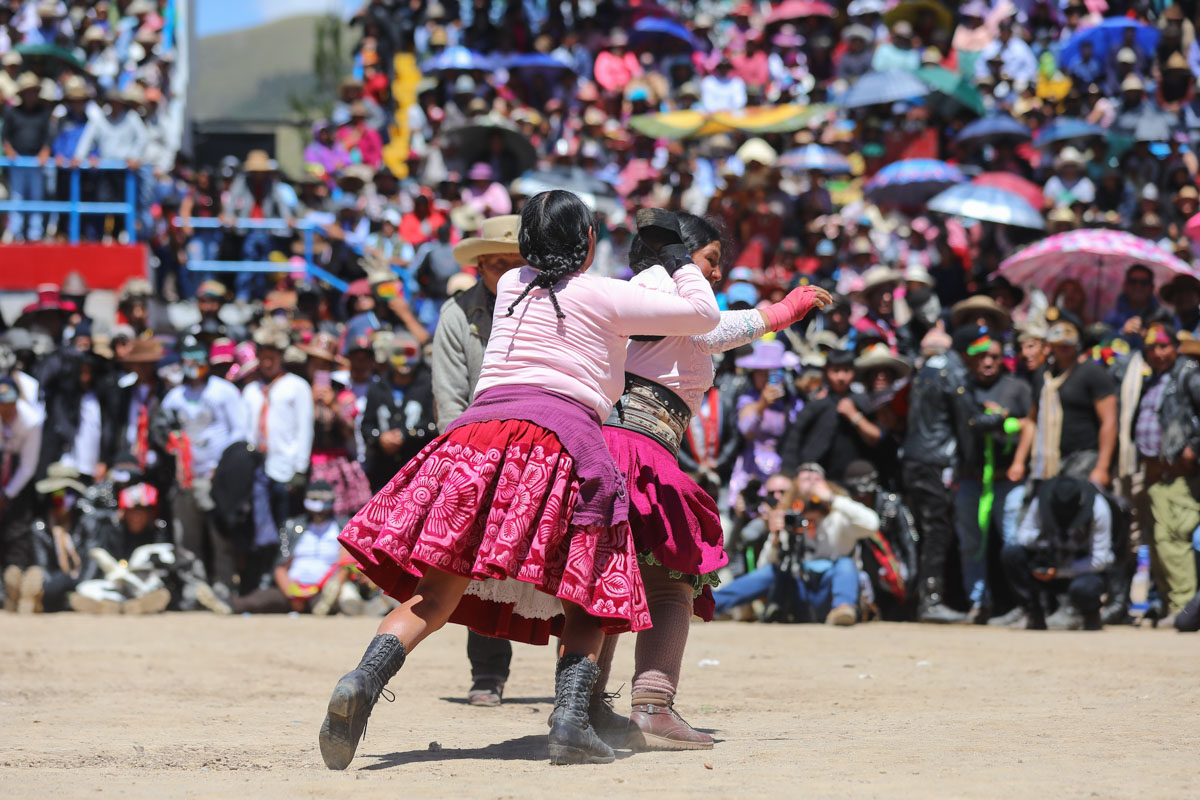
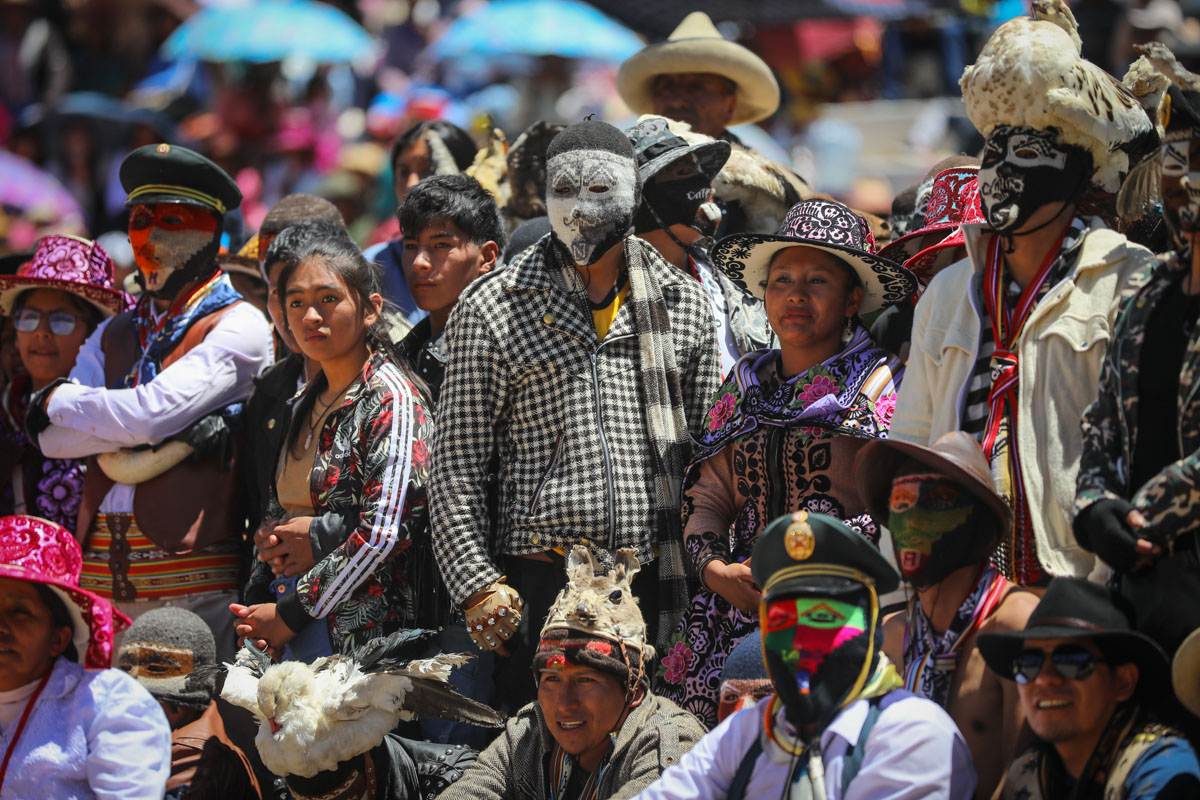
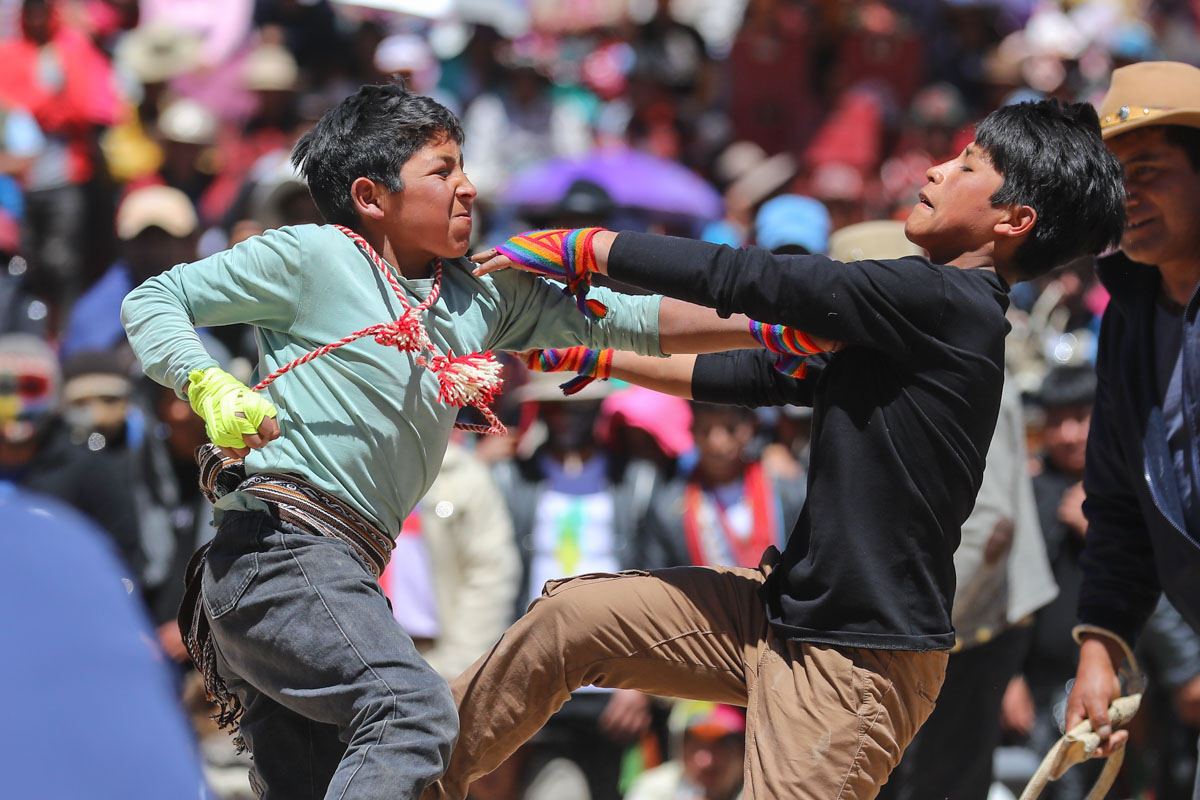
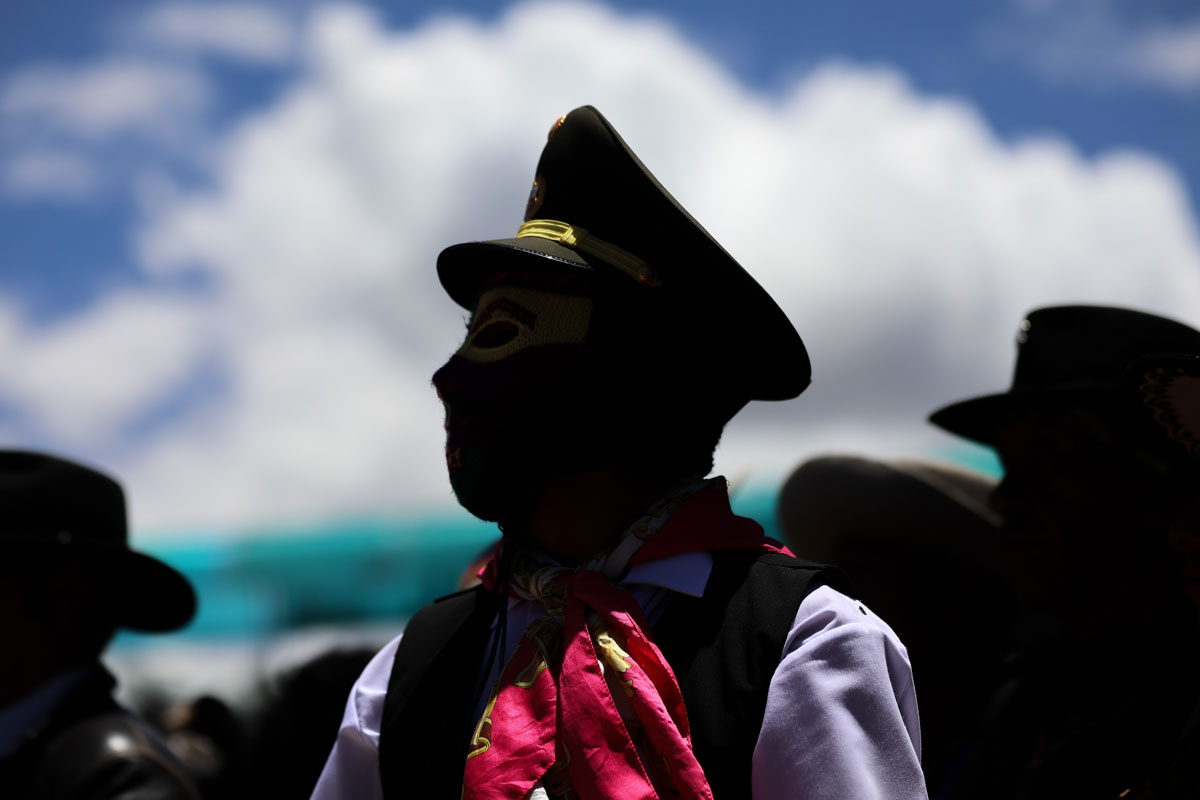
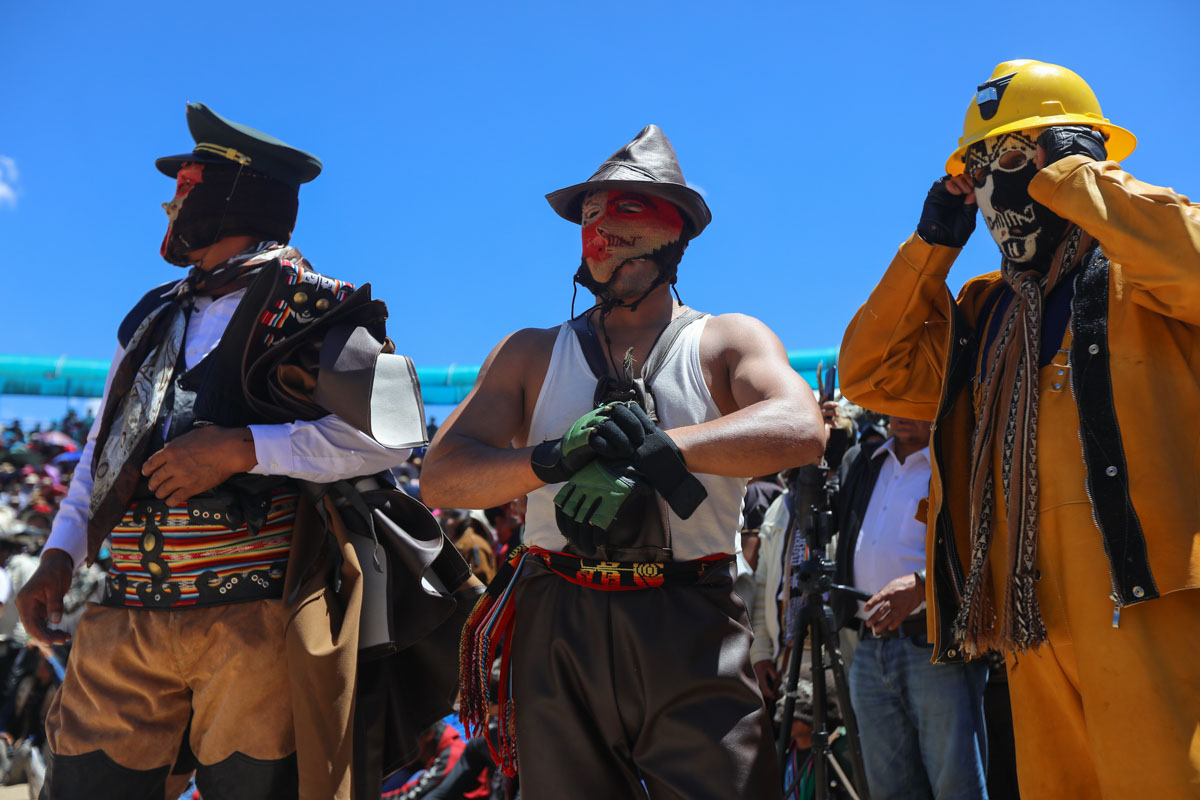
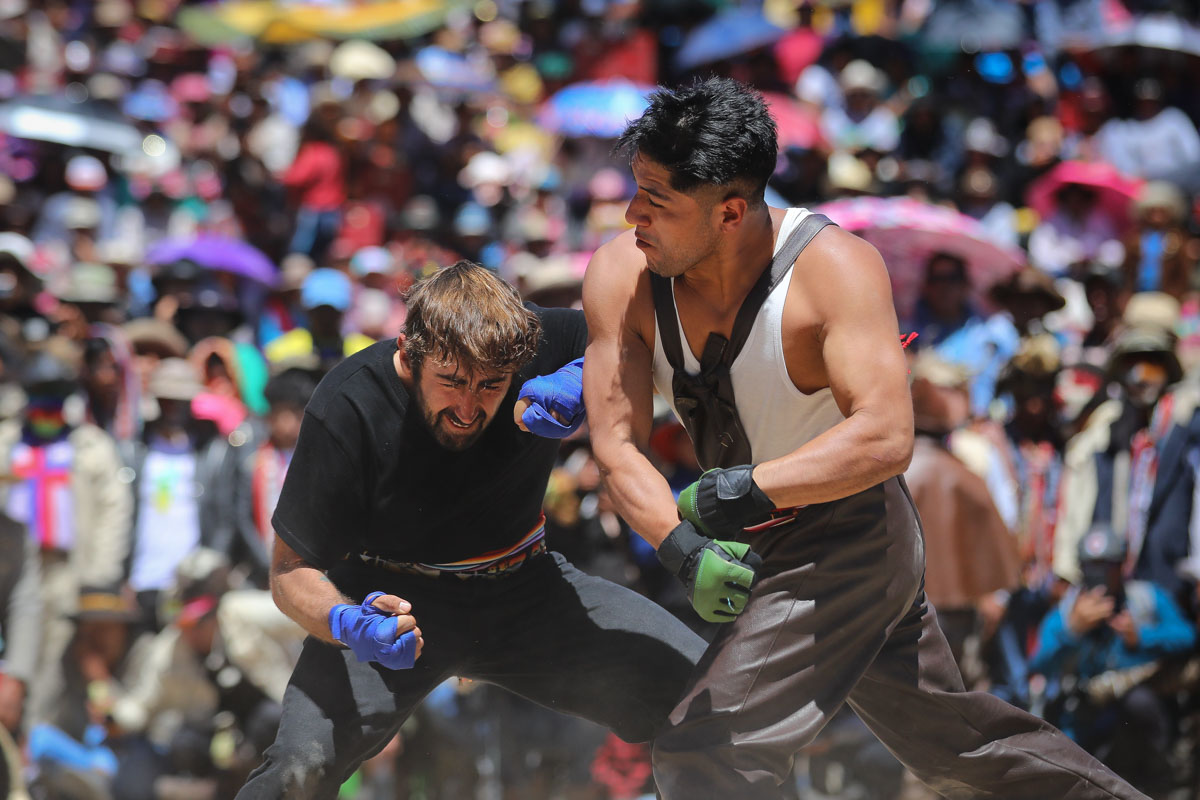
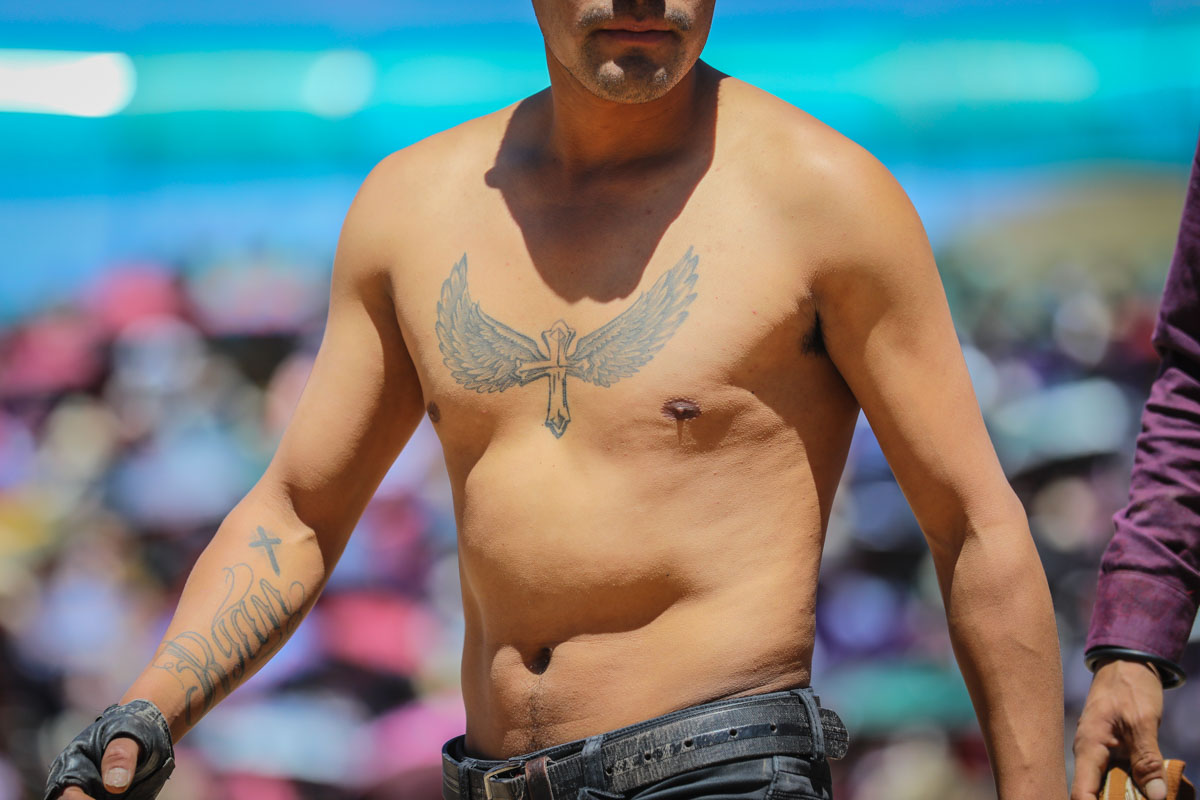
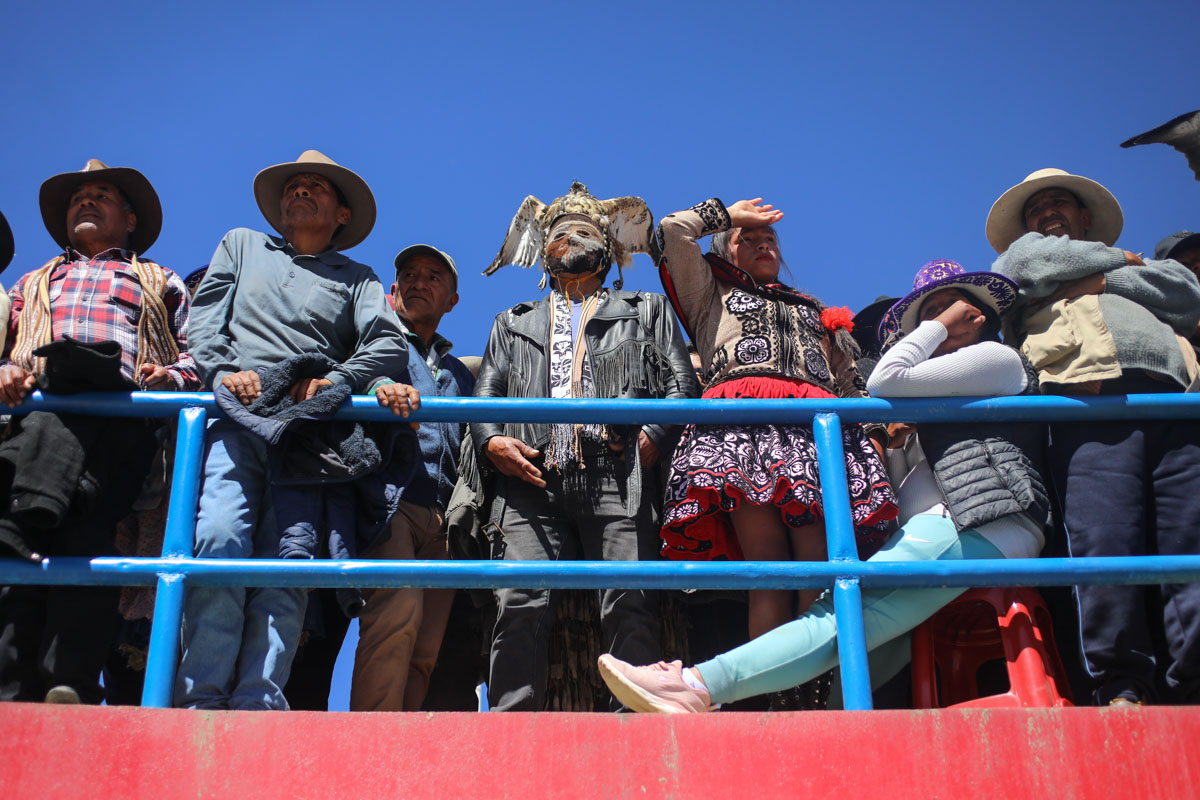
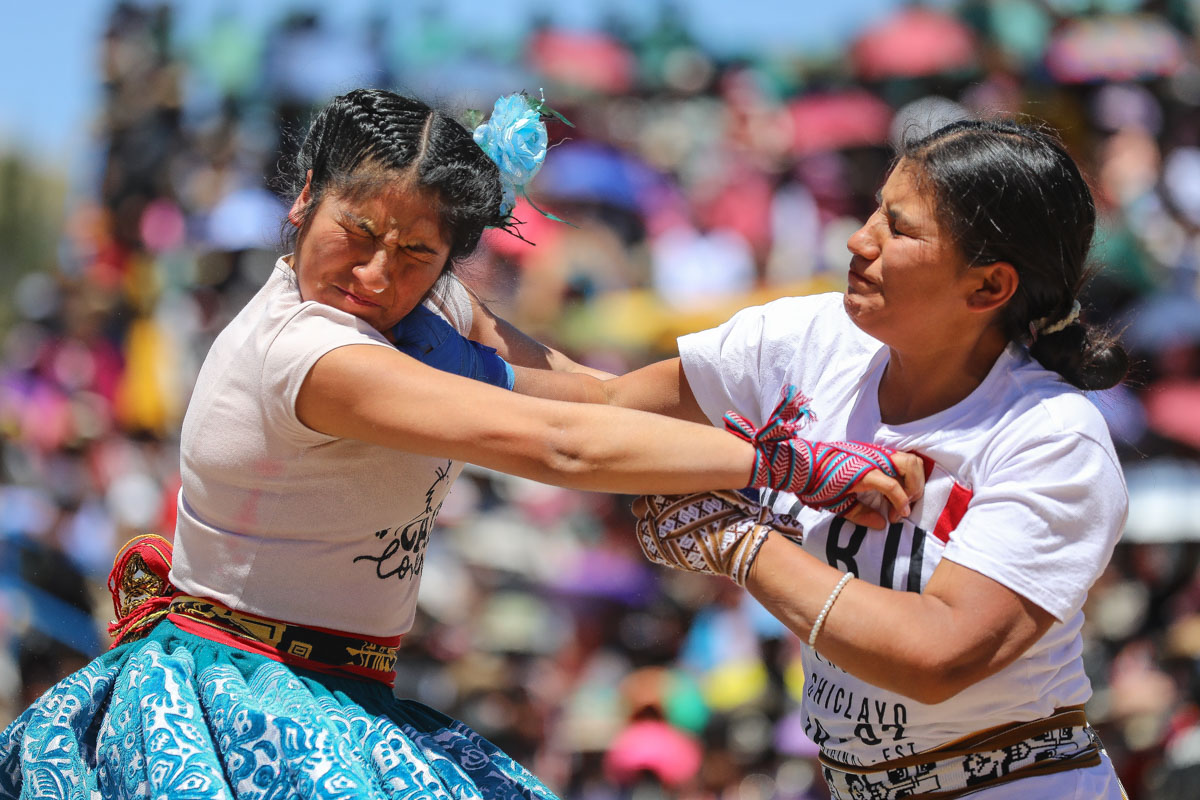
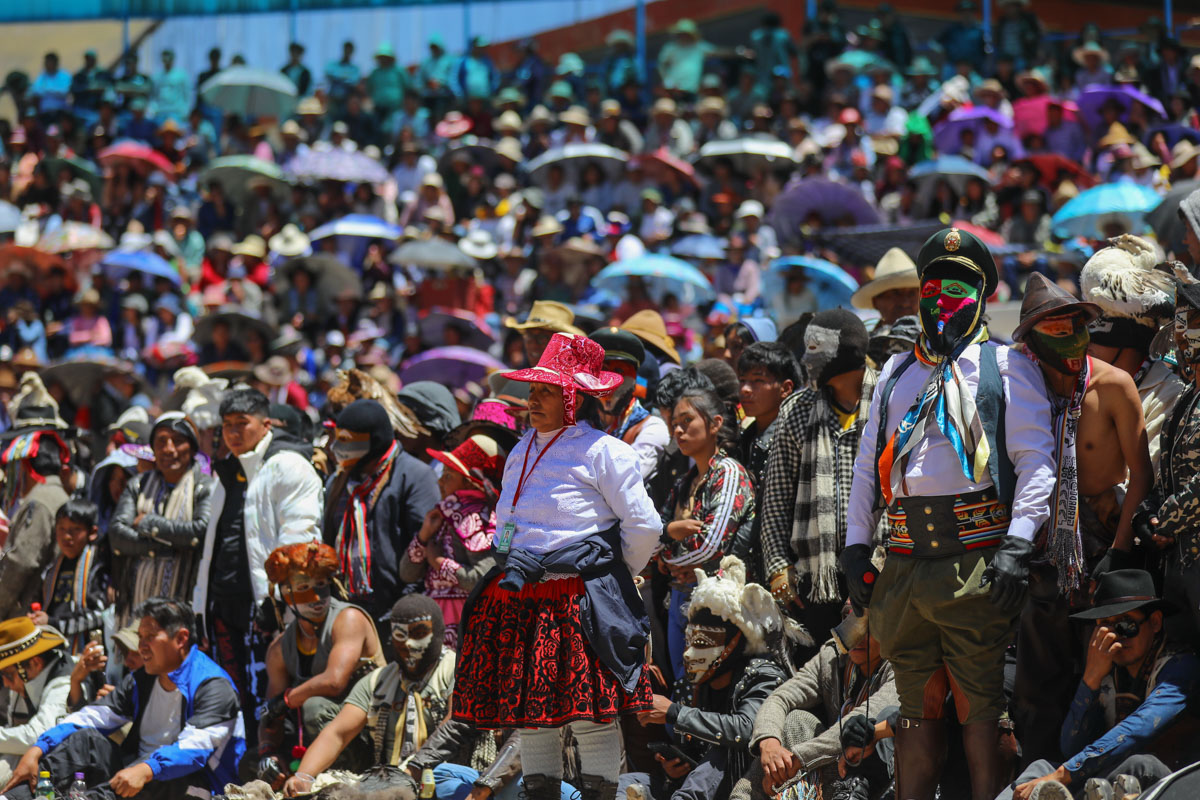
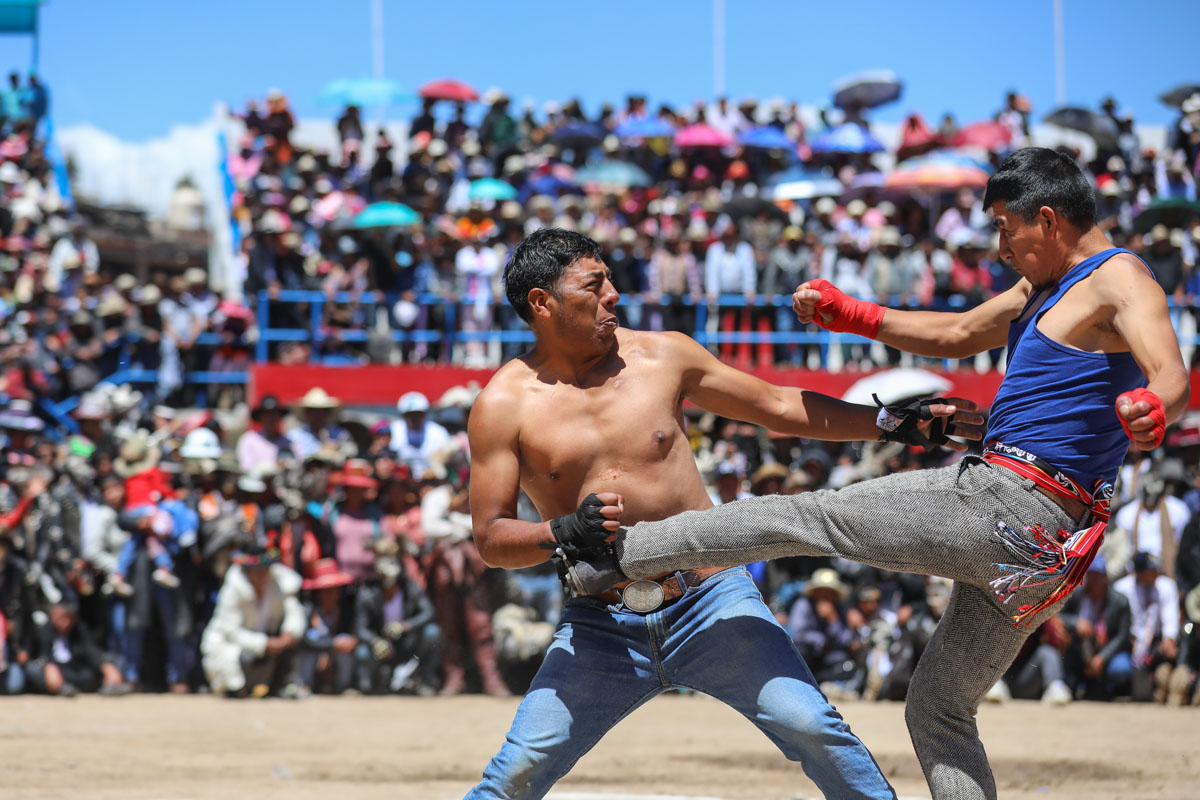
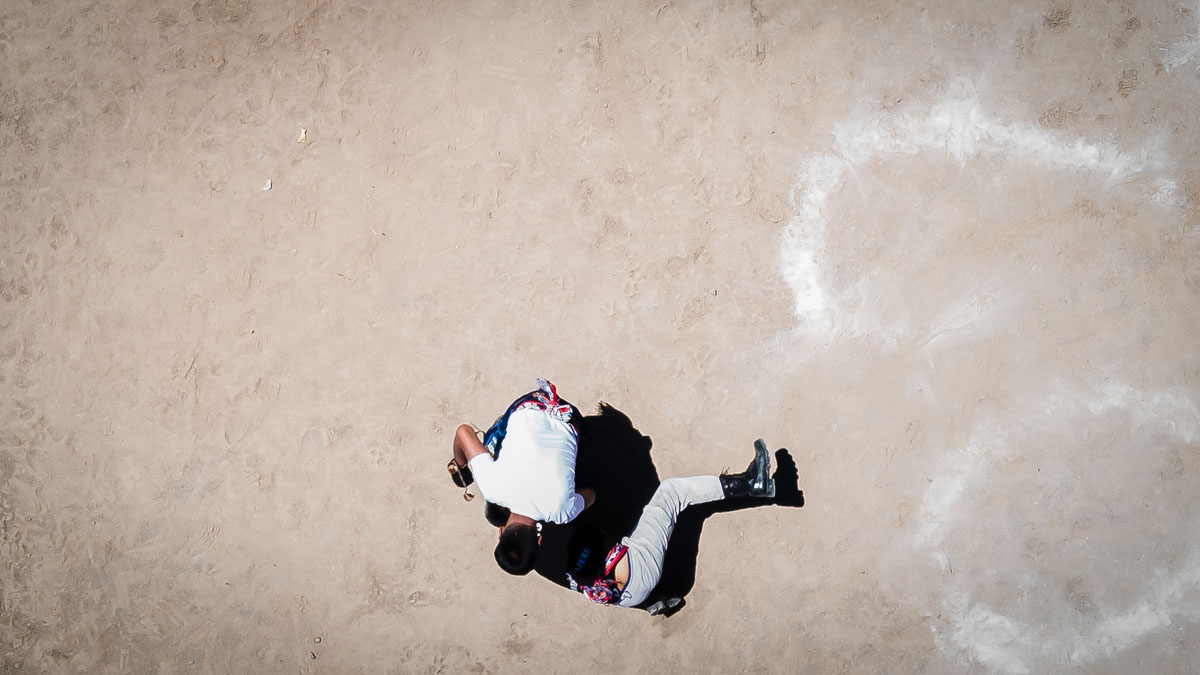
Takanakuy is an ancestral festival celebrated every December 25th, primarily in the various districts of the Chumbivilcas province in the Cusco region. This ancient fighting tradition has spread over time to the provinces of the Apurímac, Huancavelica, and Arequipa departments. The word "Takanakuy" means "to strike with the fist." The tradition originates from the "Taki Unguy," a religious and cultural resistance movement linked to Spanish rule. The fighters are made up of men, women, and children. They warm up with dances and songs called Wayliyas, and their attire consists of ancestral animal masks and leather garments. The duels or fights during Takanakuy are to settle old grudges, conflicts over land or crops, and sometimes problems of love or friendship. They can punch and kick, but it is forbidden to strike an opponent when they are on the ground. The fights can last from 30 seconds to a maximum of 2 minutes. The fight usually takes place on flat ground with space for spectators. It is held within a circle, which opens when someone wants to participate. Anyone can fight. Wearing shoes with steel toes or carrying sharp objects is prohibited. The Ronderos, acting as referees, constantly check people's shoes and hands. They are members of the Rondas Campesinas, self-defense organizations primarily active in rural Peru. Their main role is to stop the fight as soon as they see one person is overpowering the other. It's worth noting that Takanakuy is a community celebration and a display of courage in the middle of a bare-knuckle fighting arena. At the end of the day, the combatants of all ages and genders shake hands, setting an example of respect, forgiveness, and unity.
Hola 👋 contáctar con Jorge L. Cerdán - fotoperiodista...