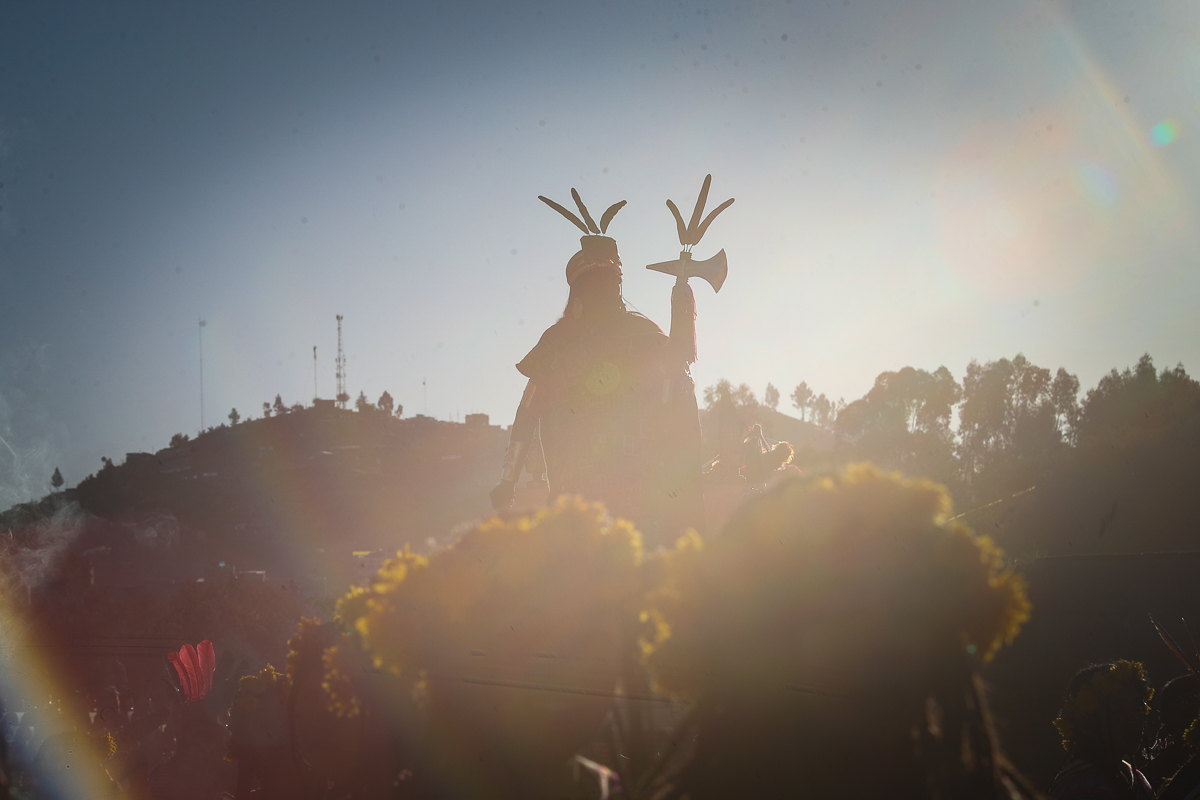
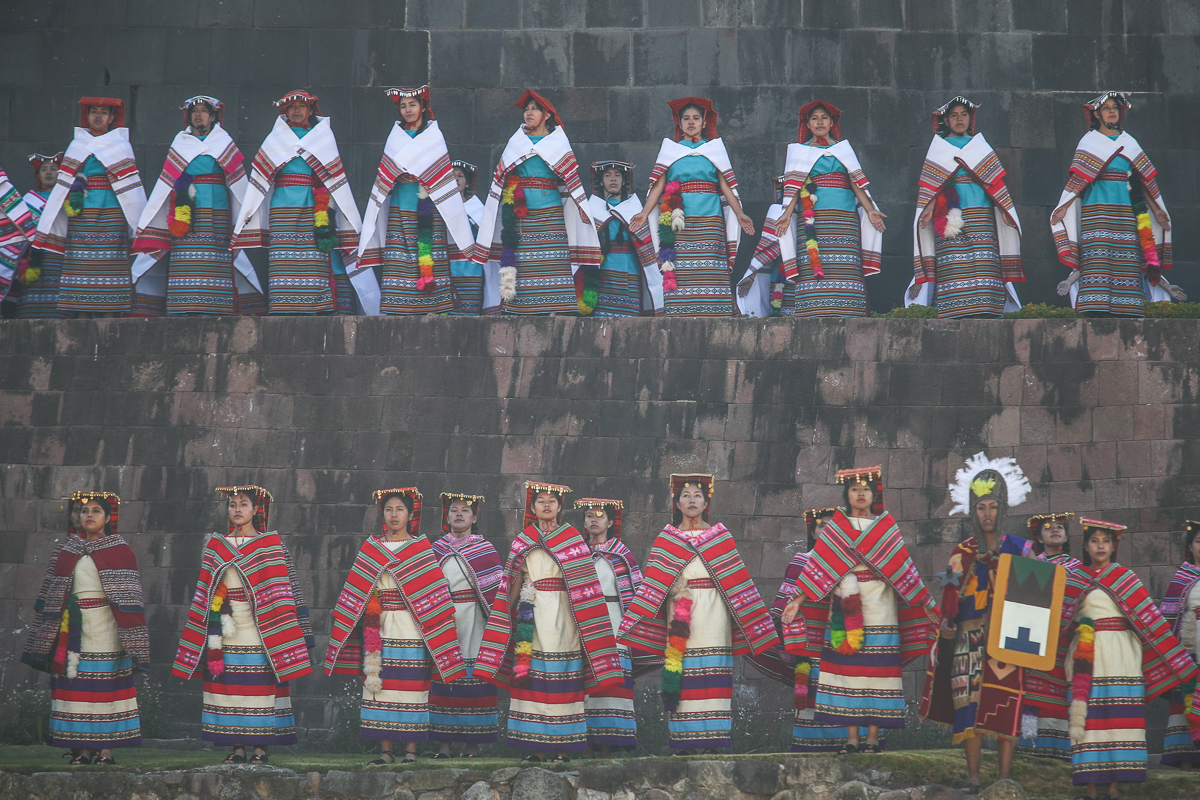
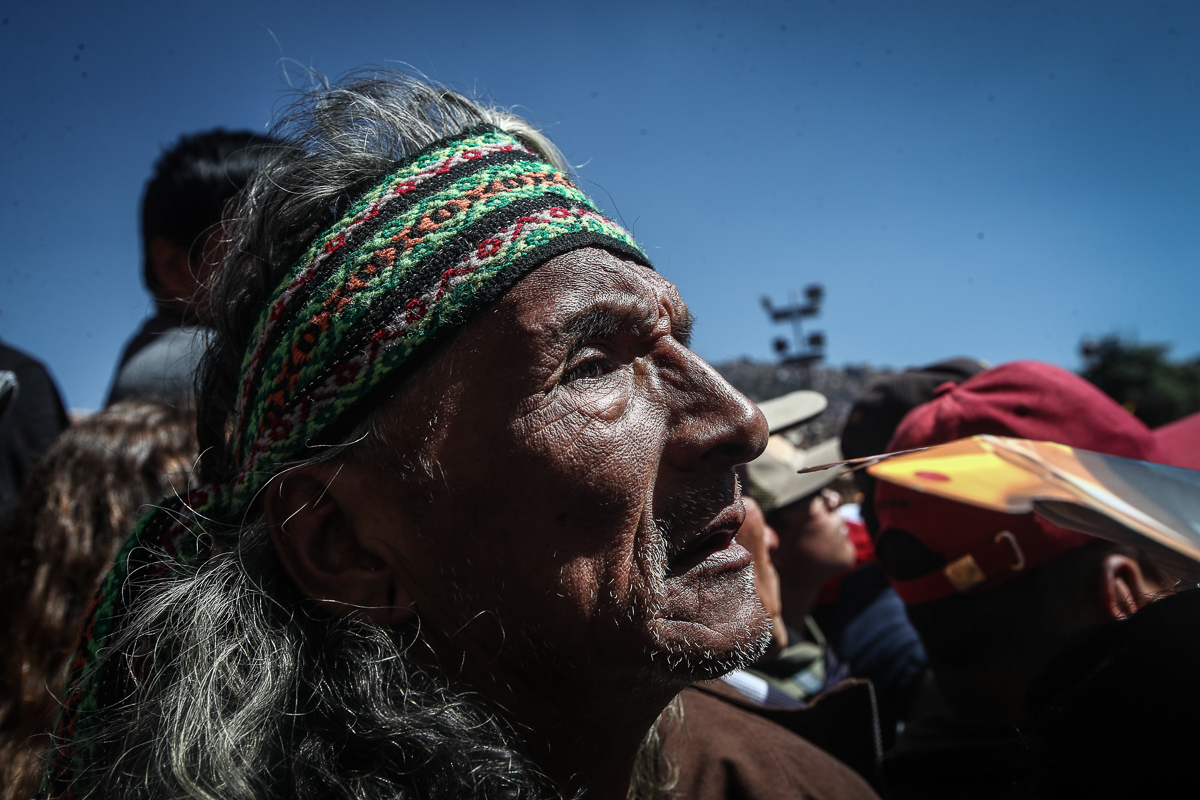
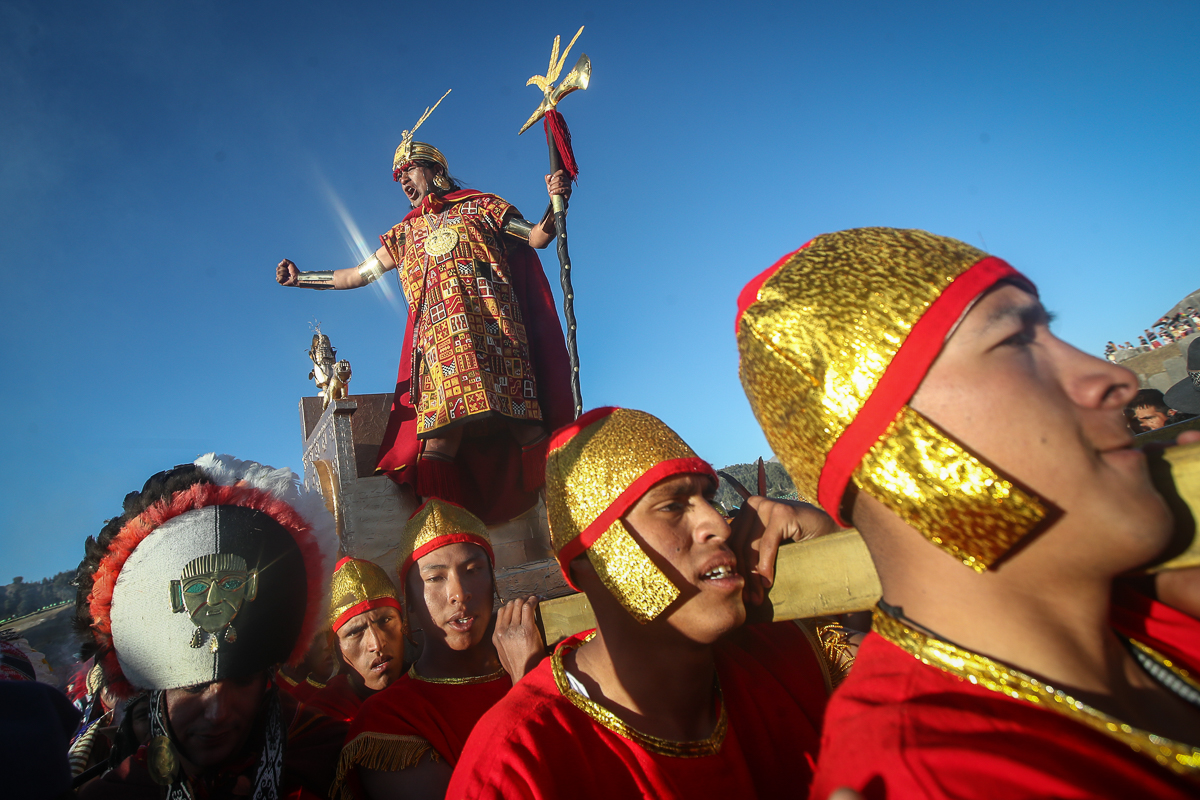
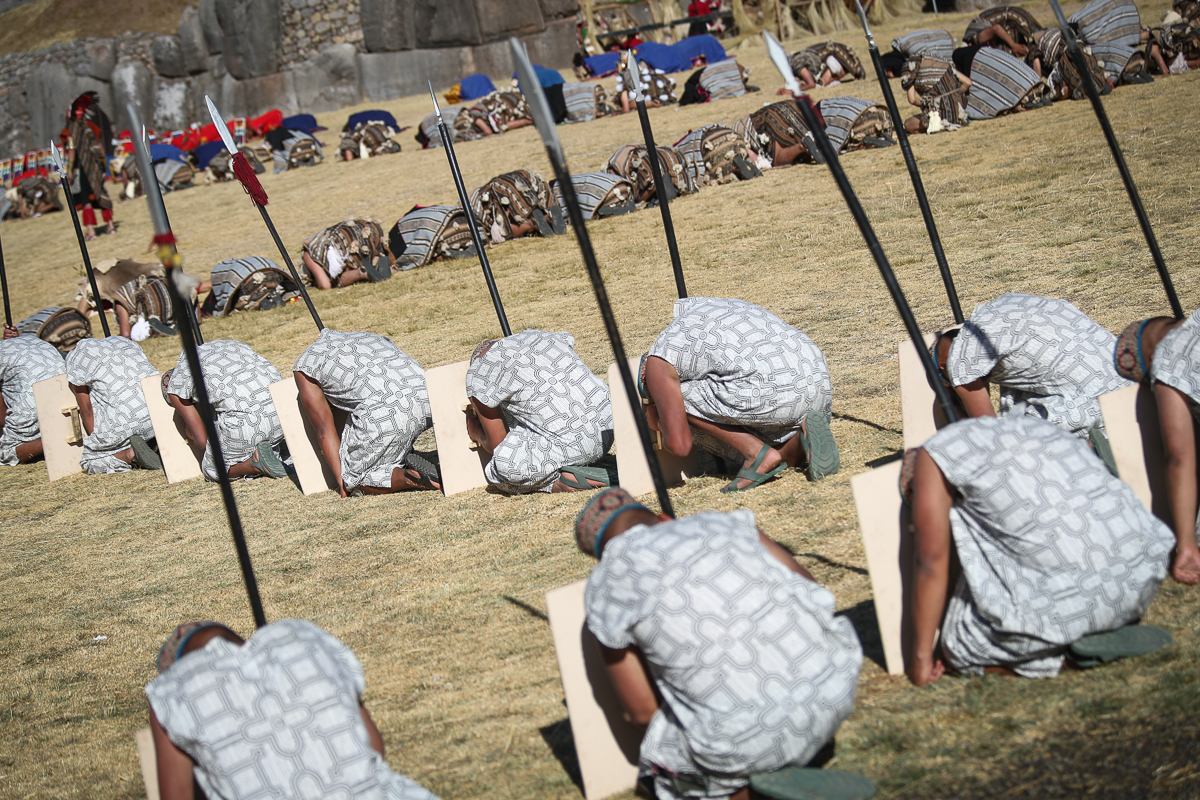
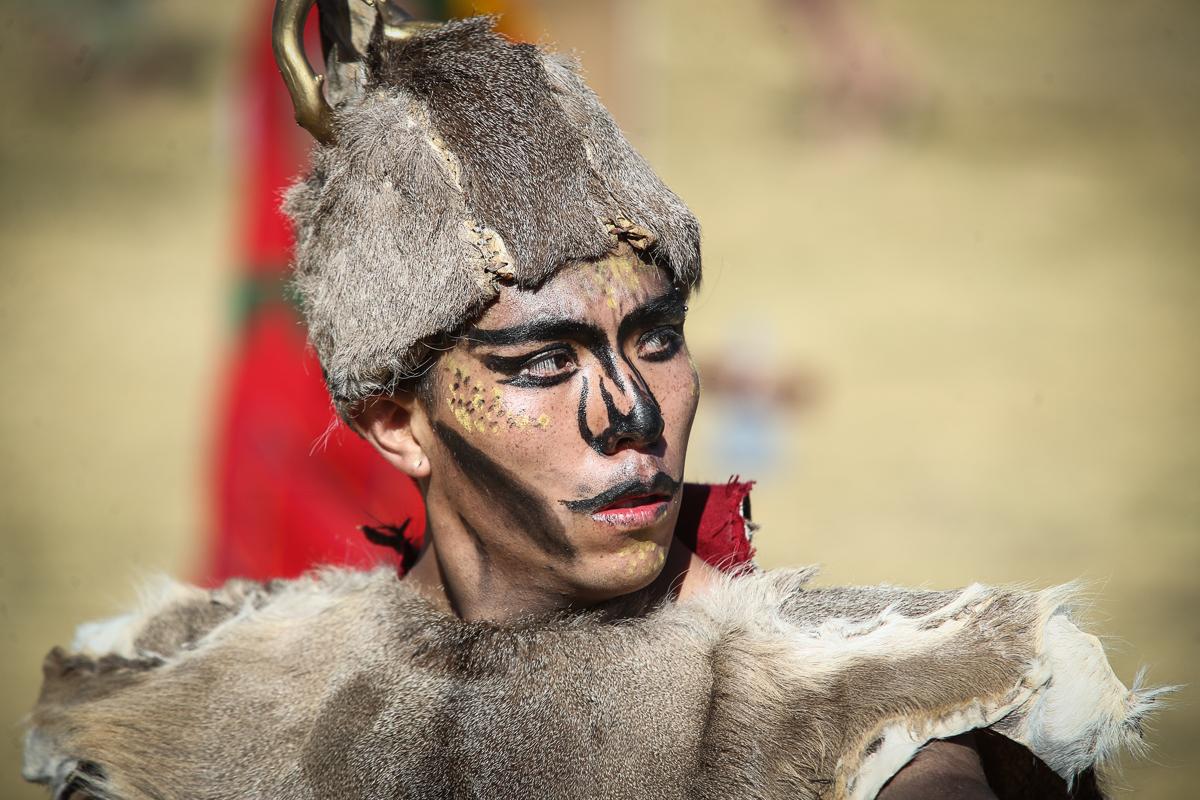
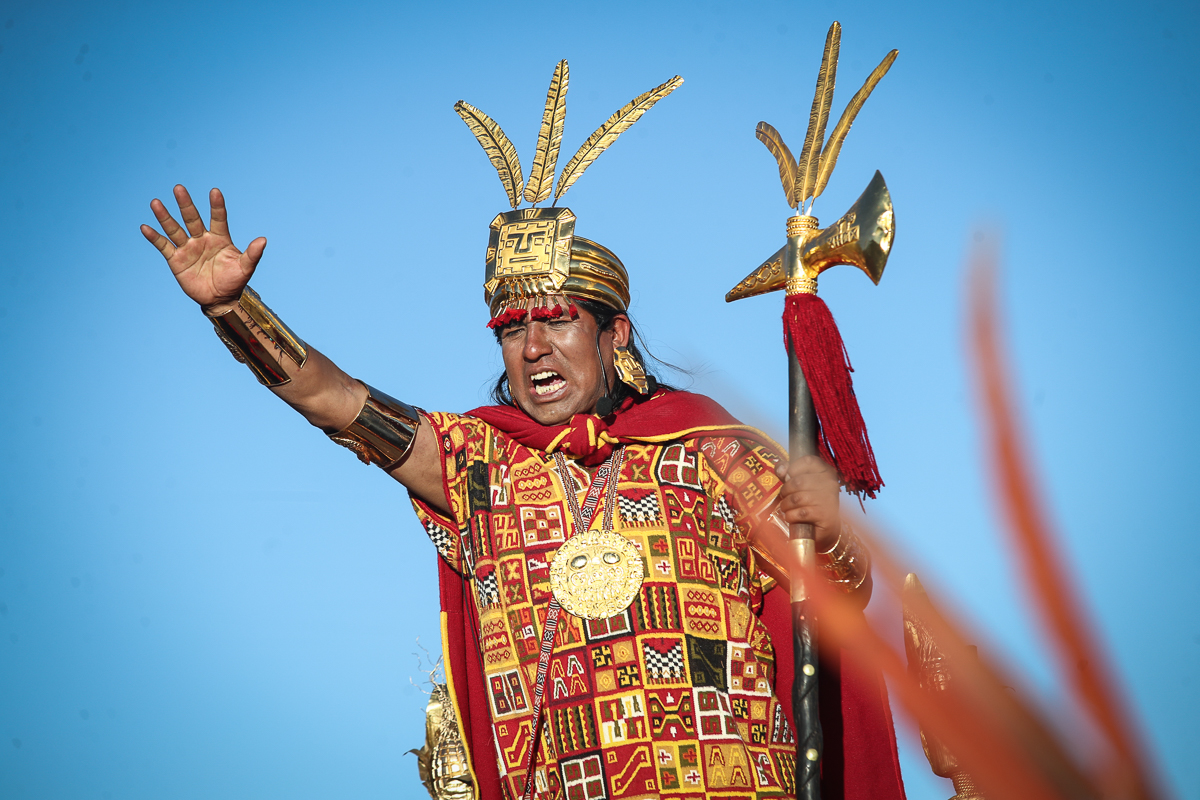
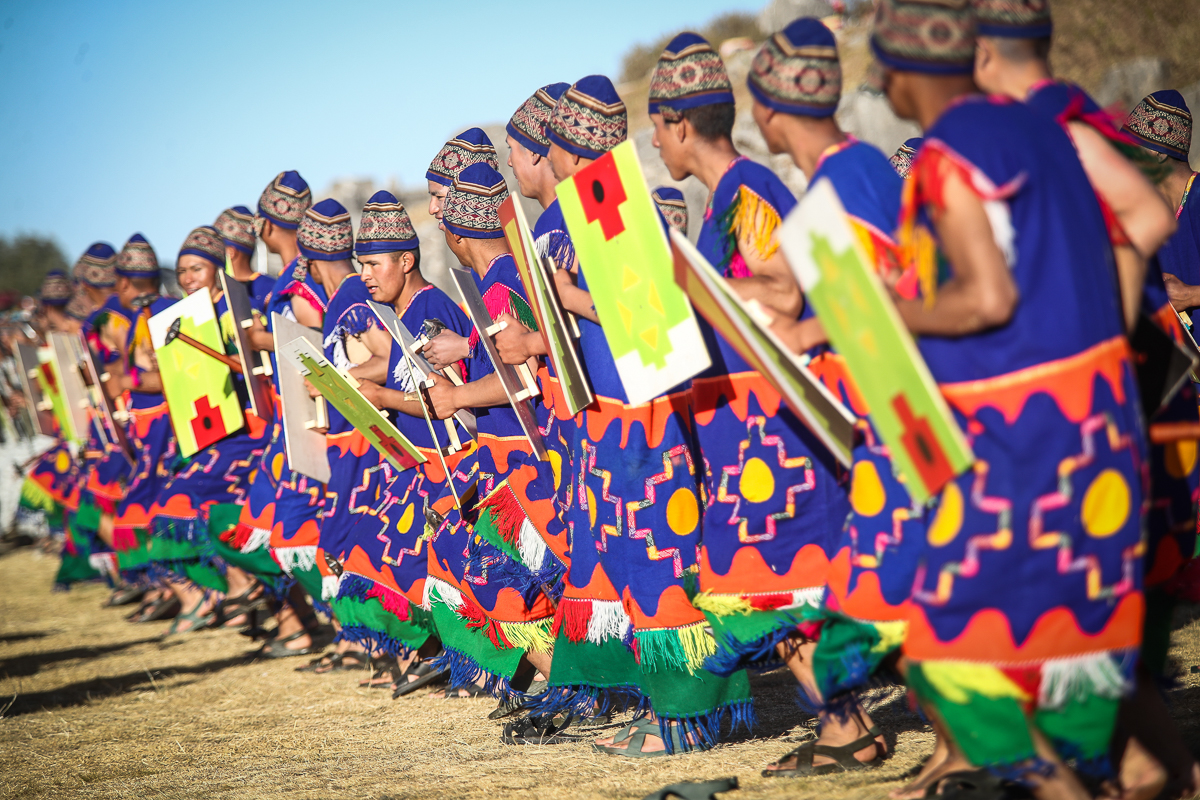
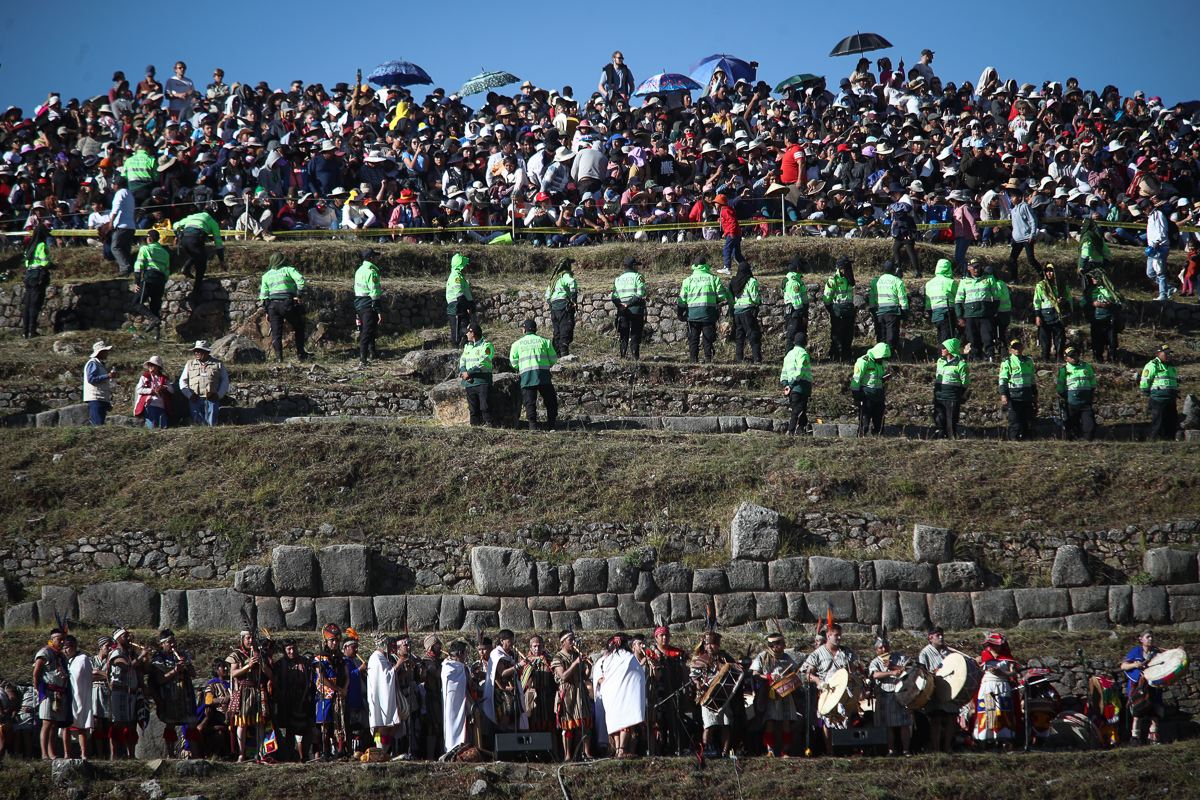
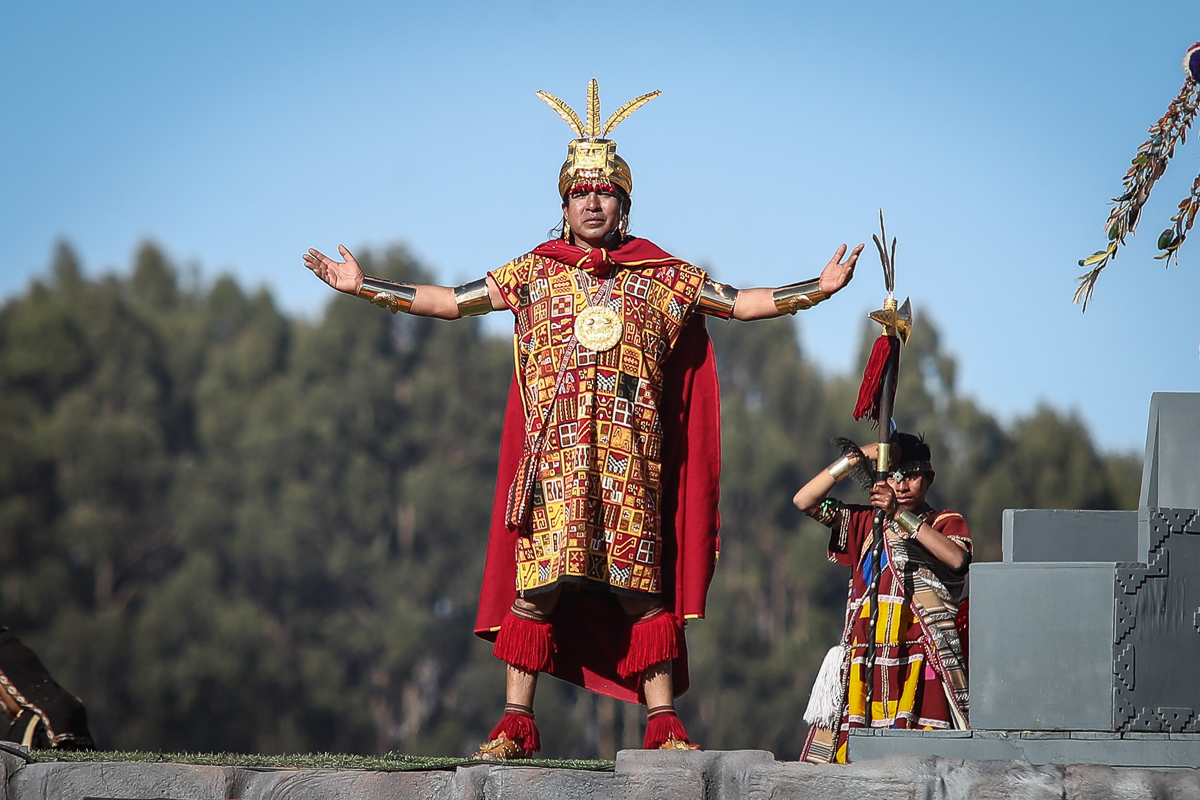
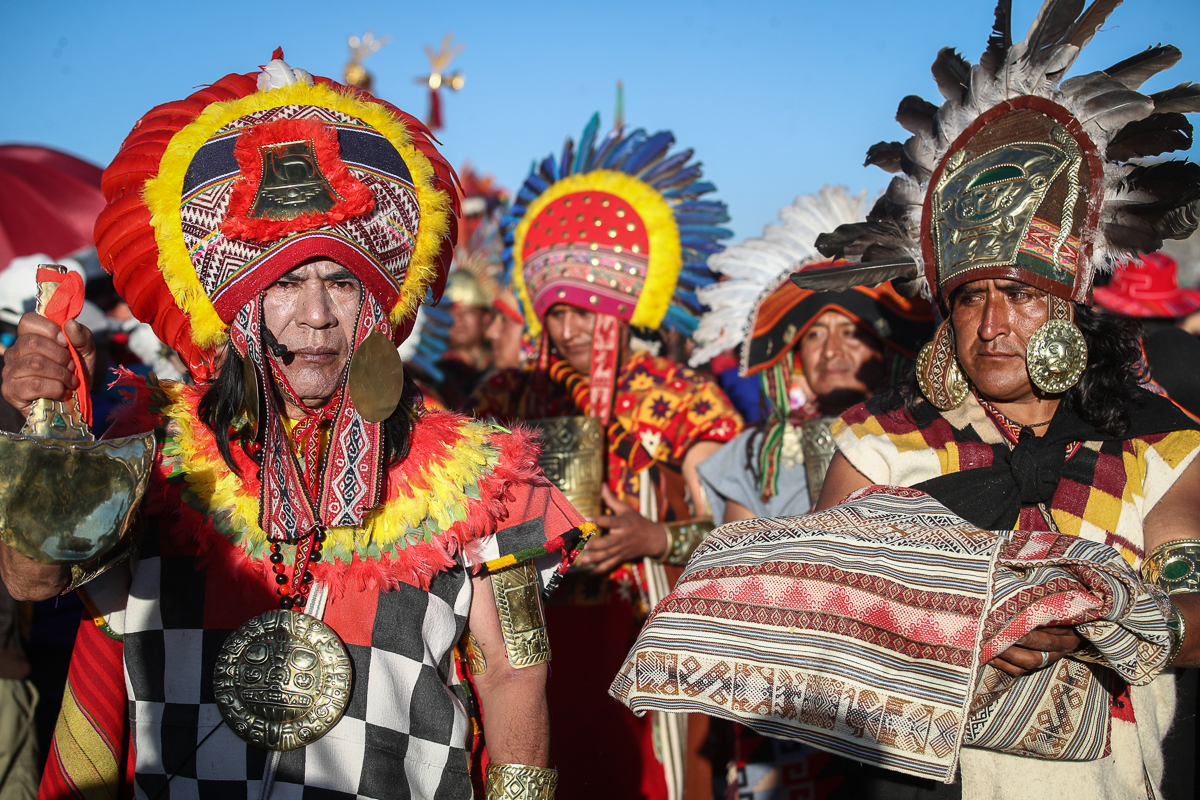
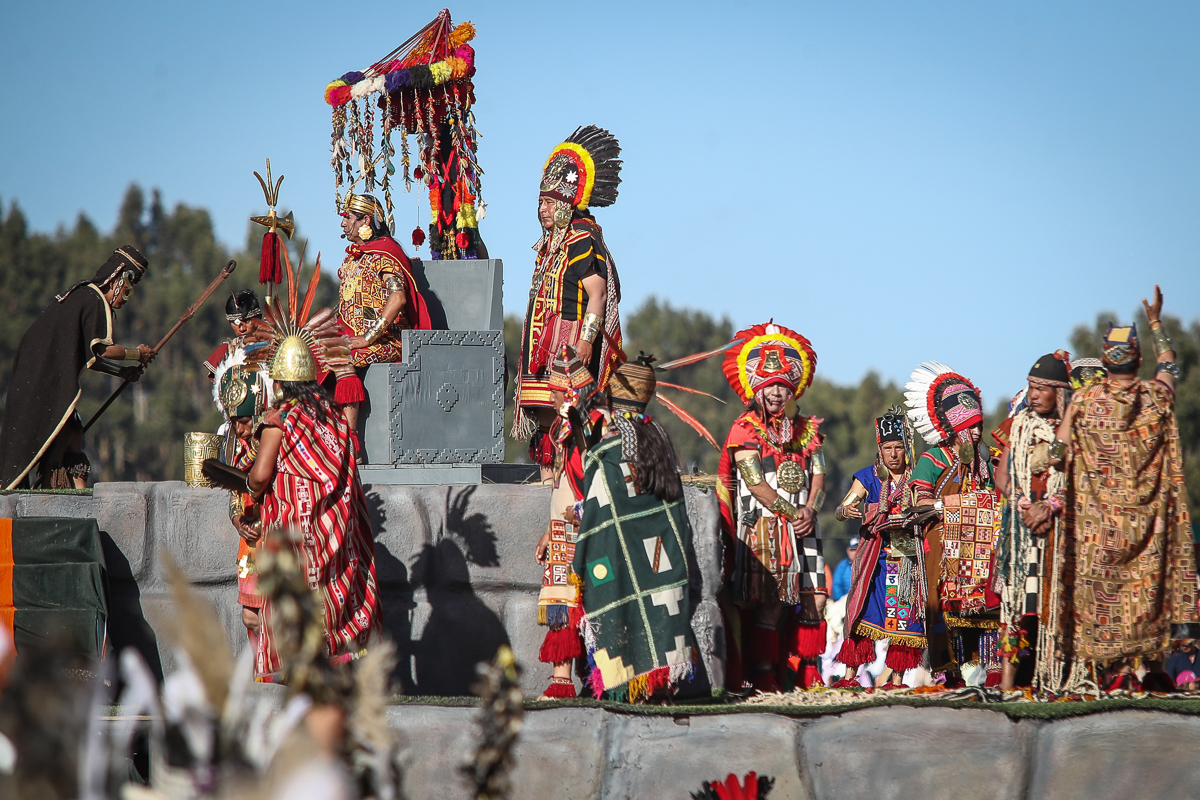
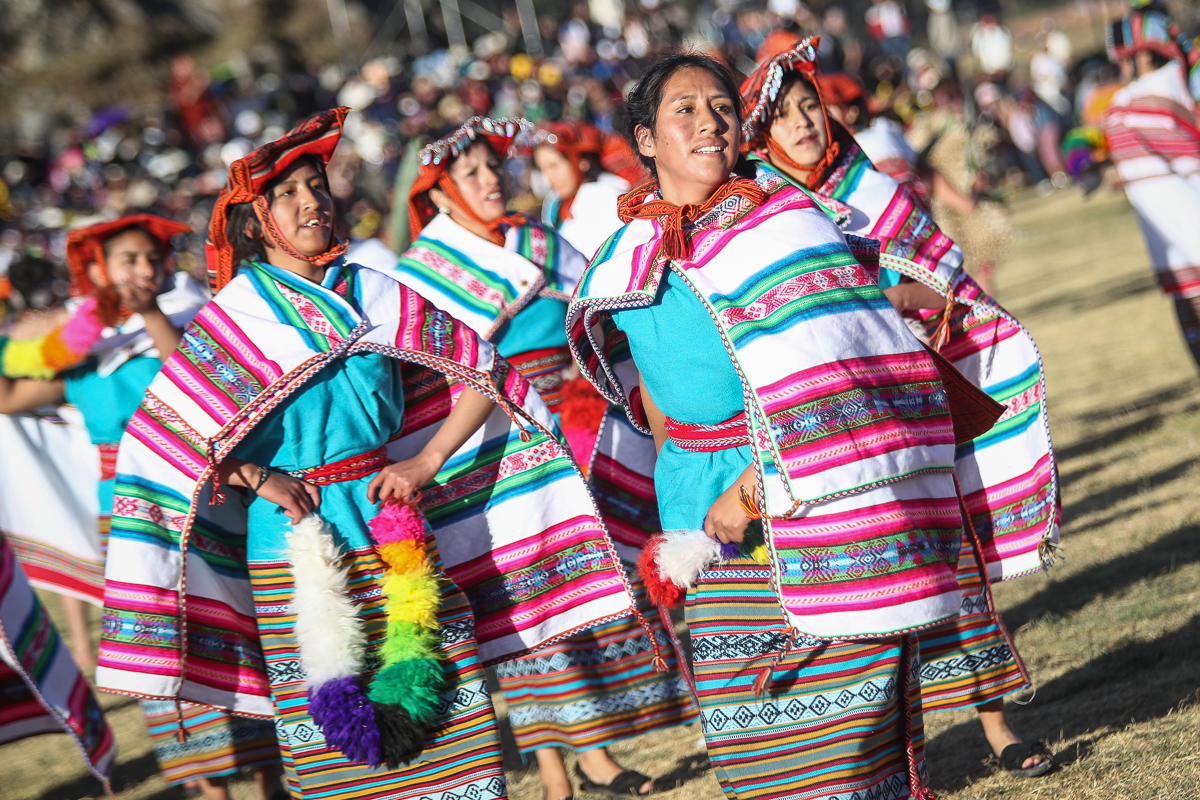
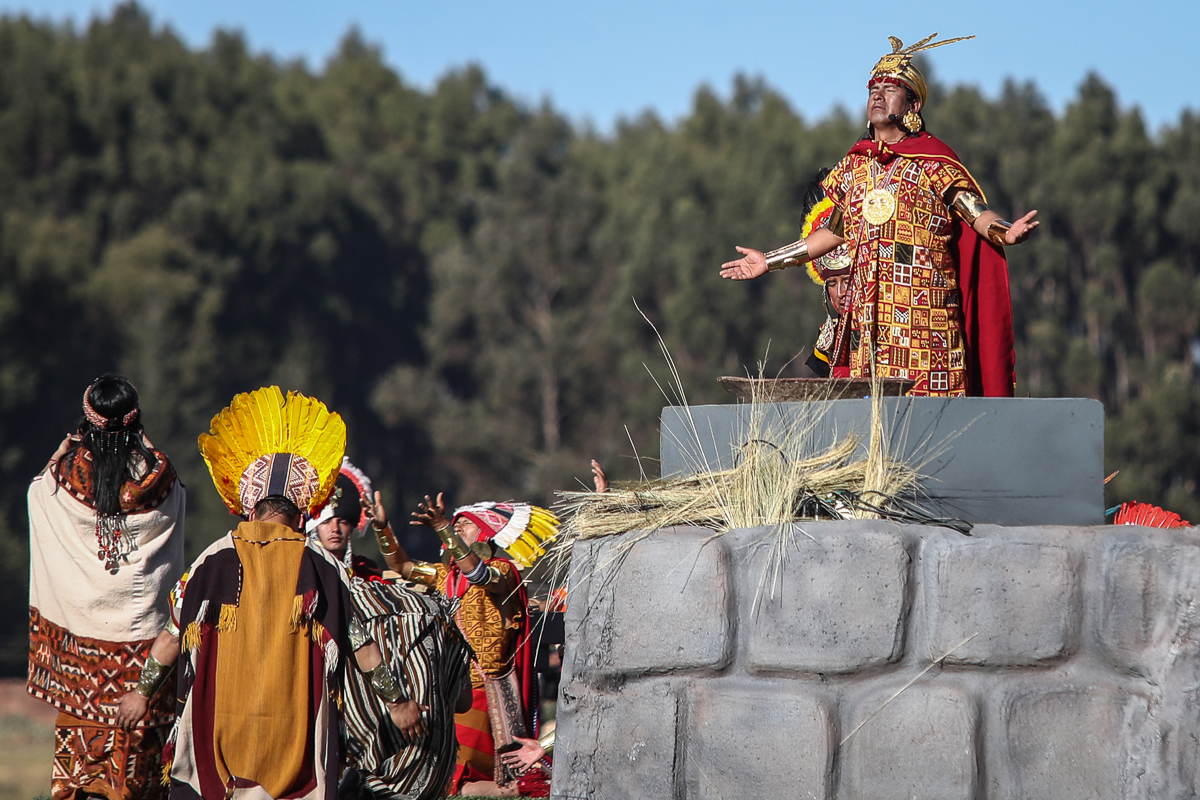
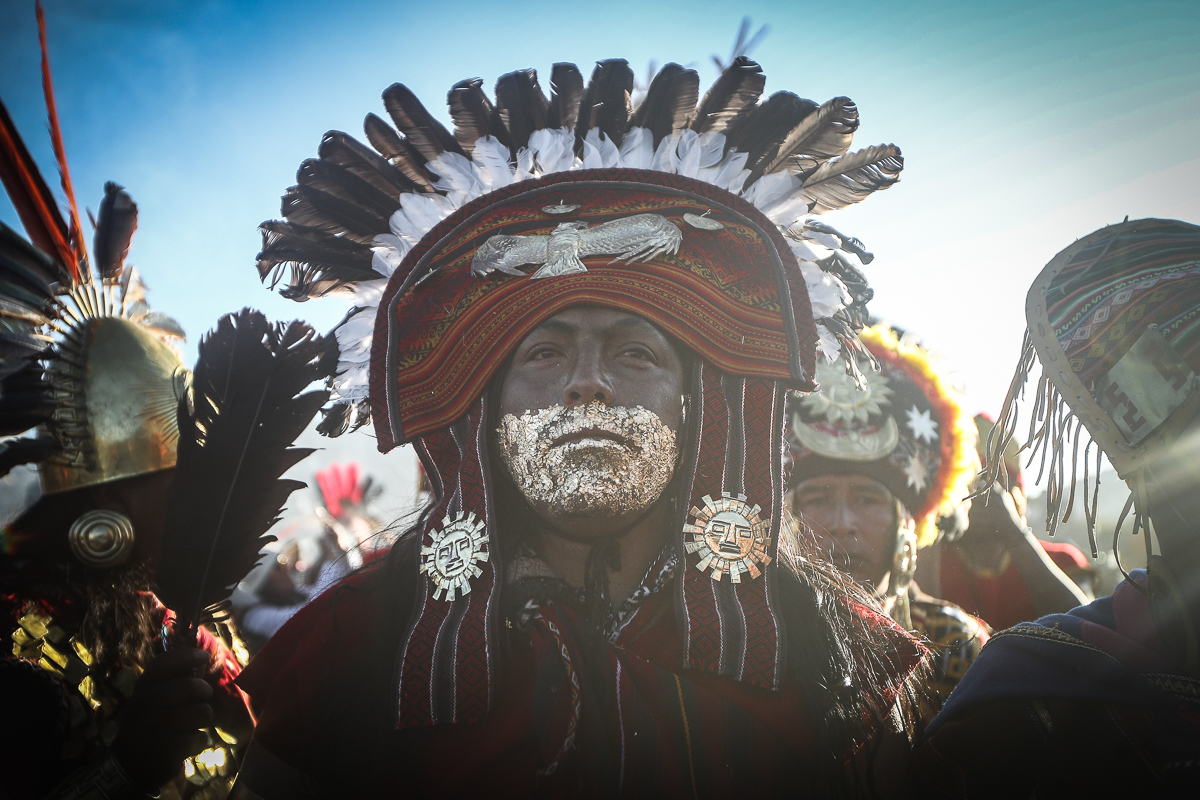
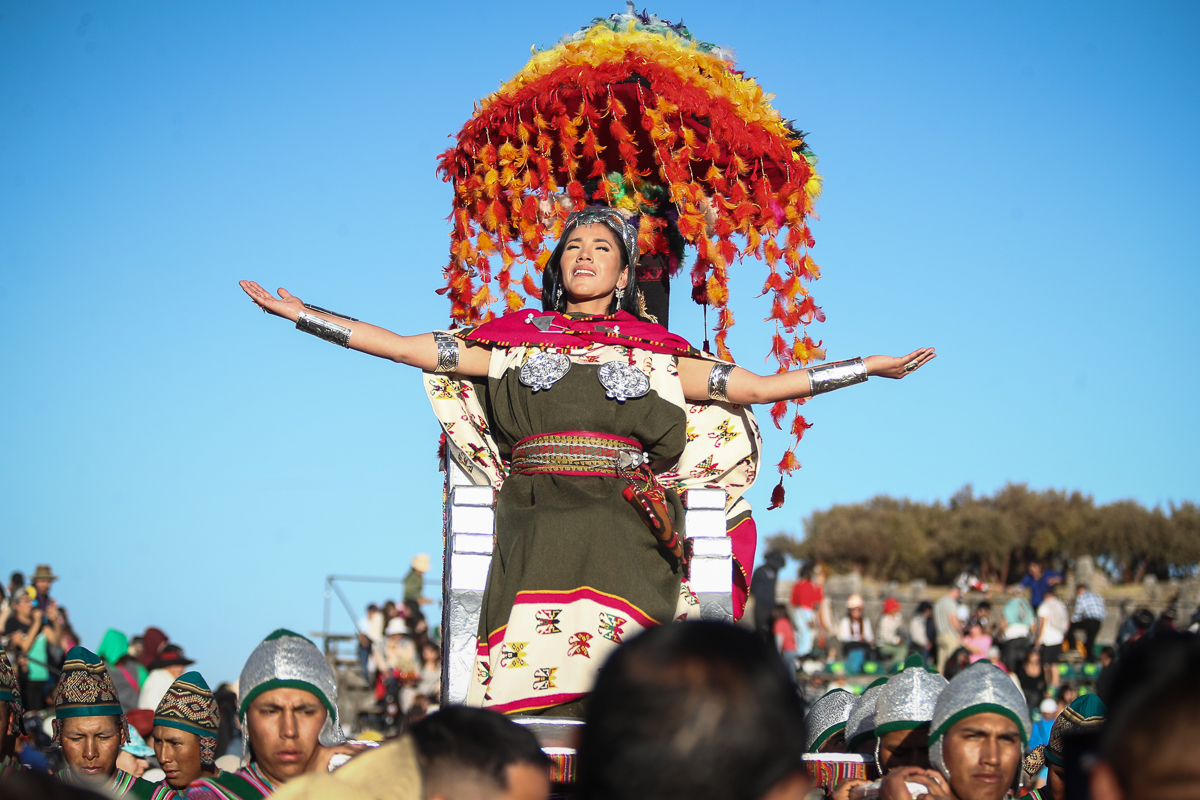
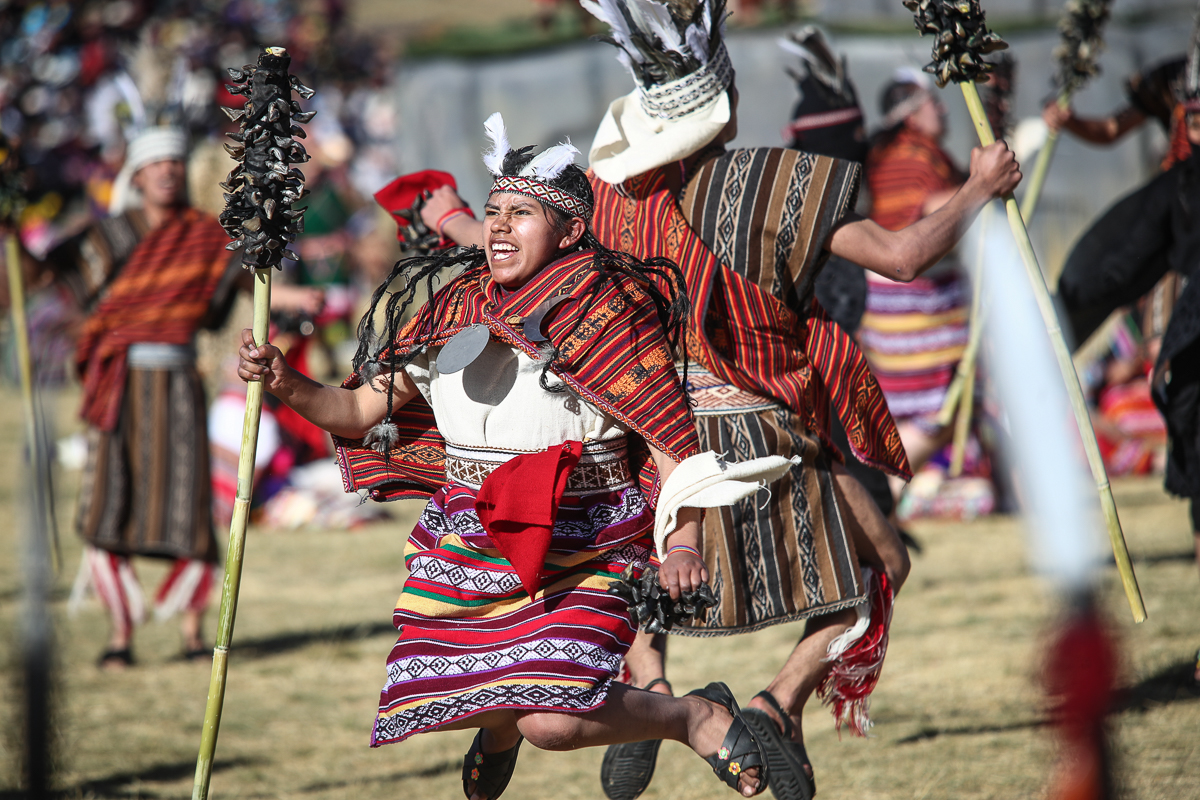
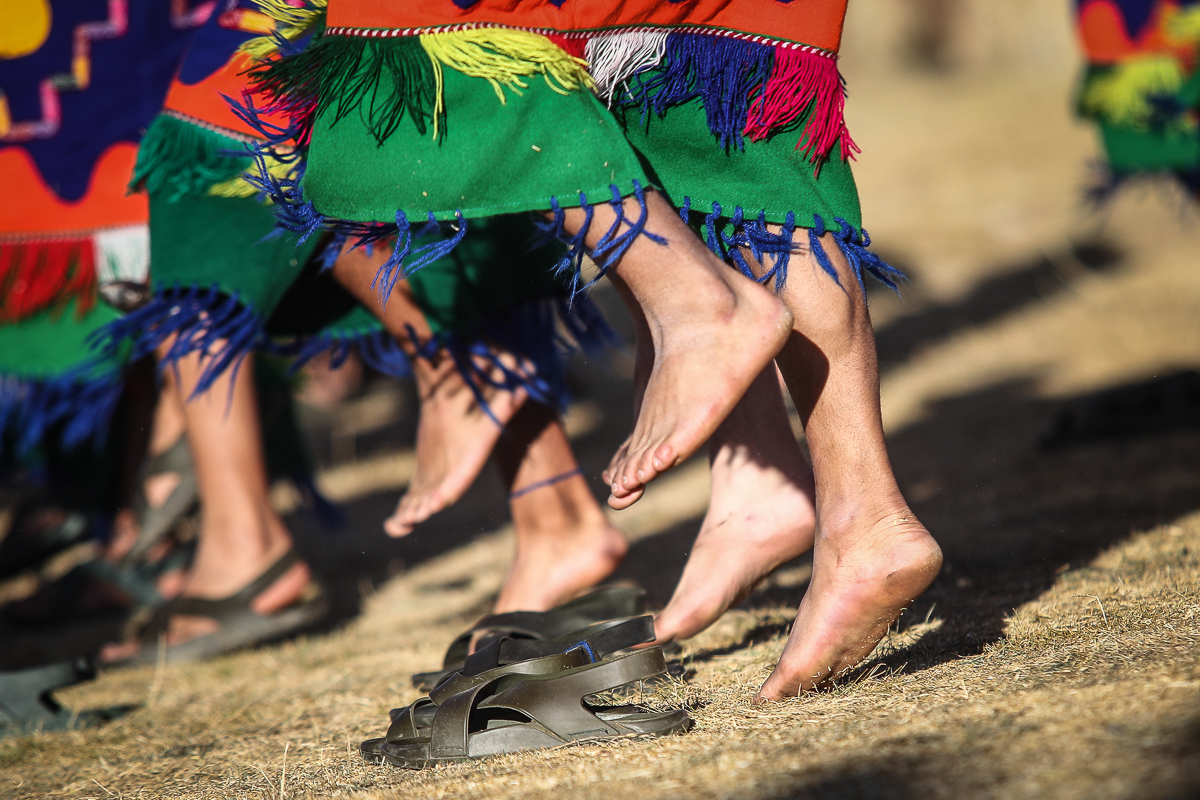
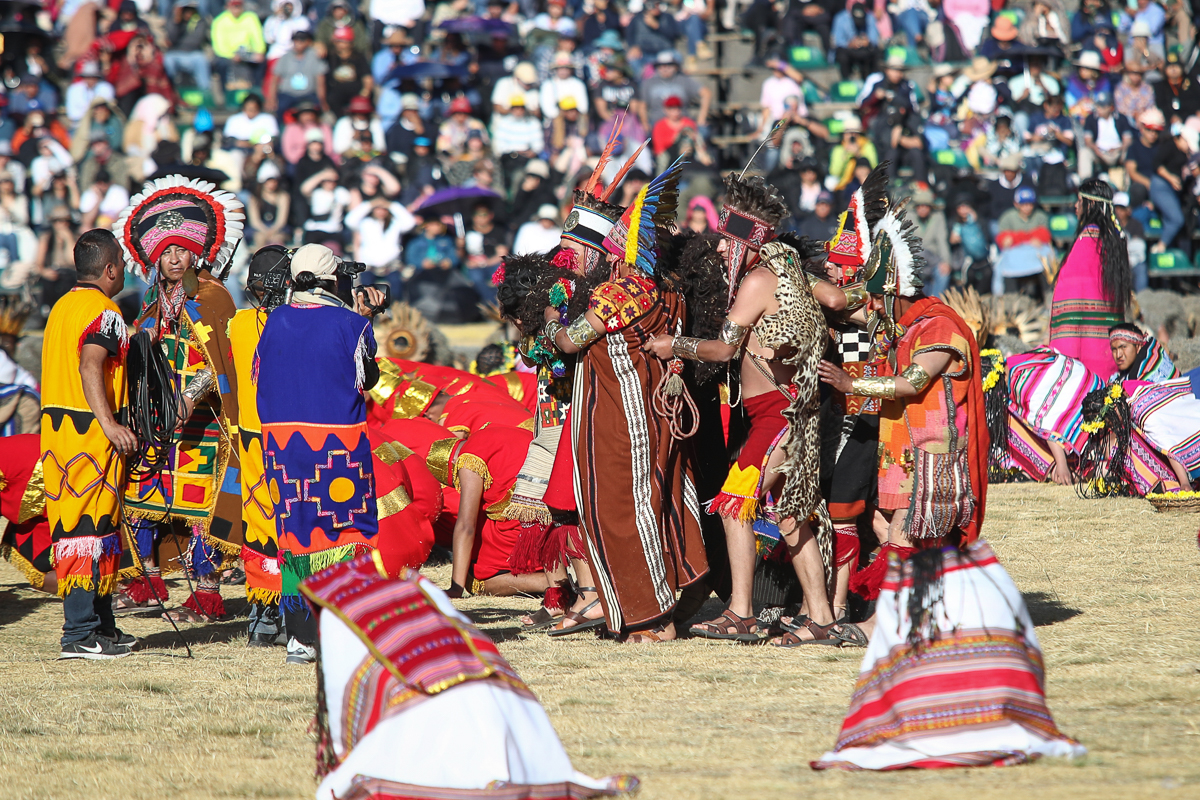
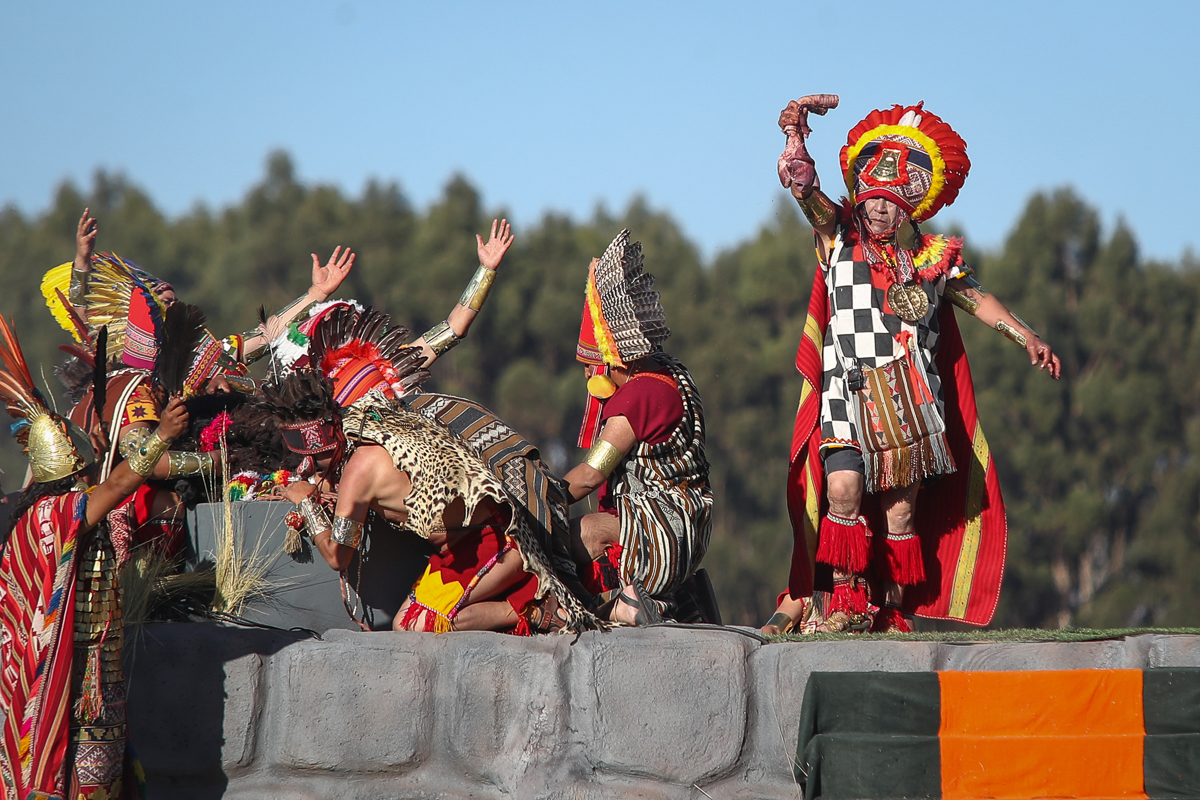
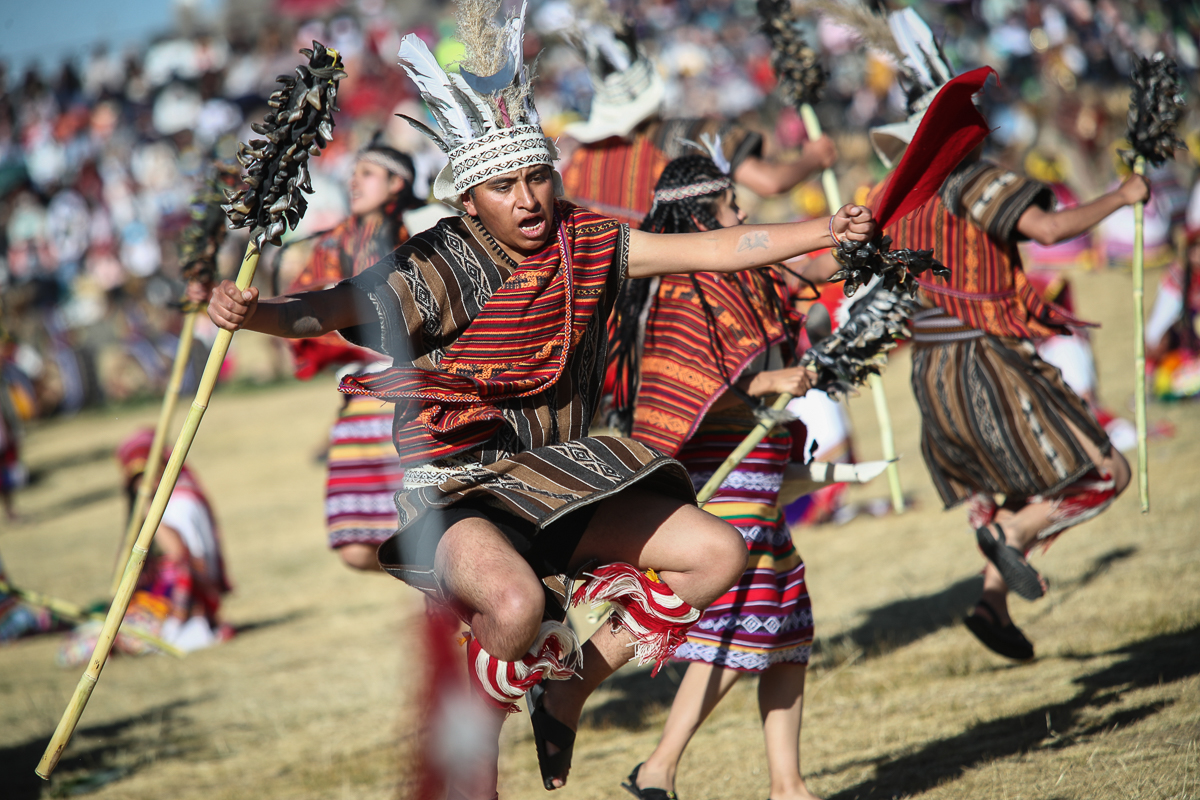
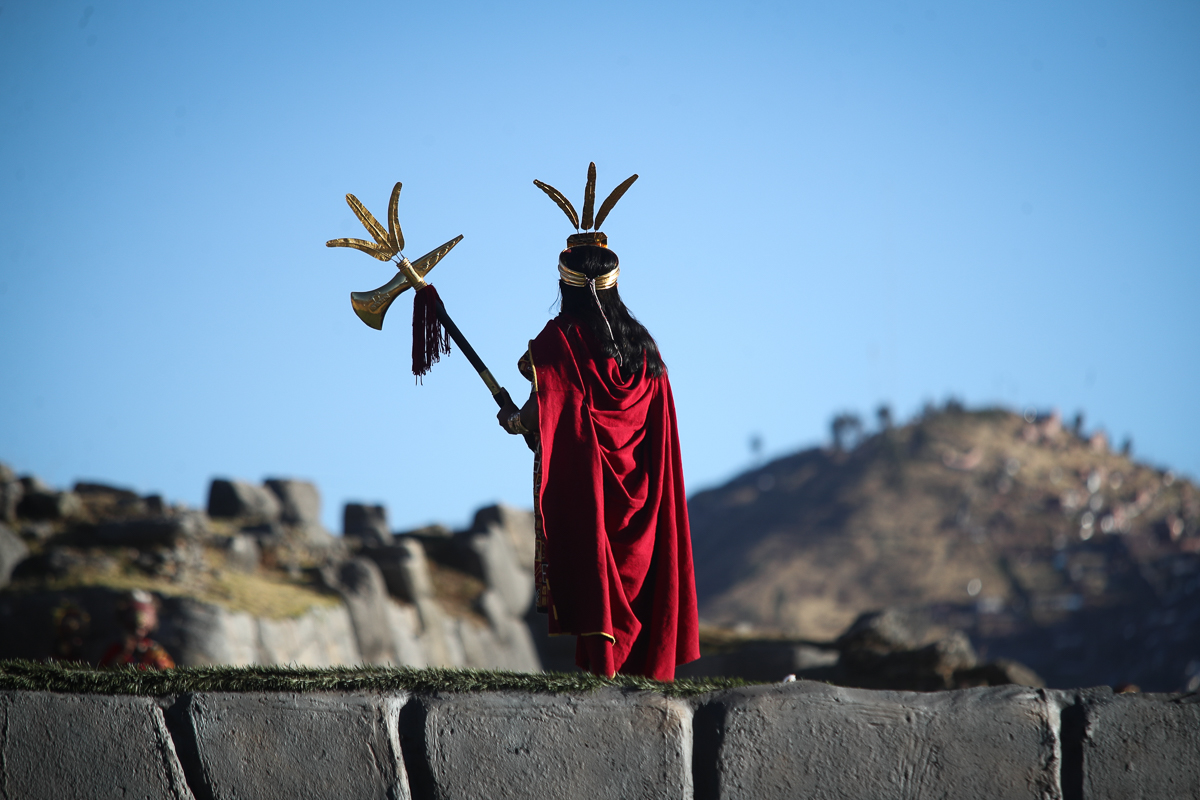
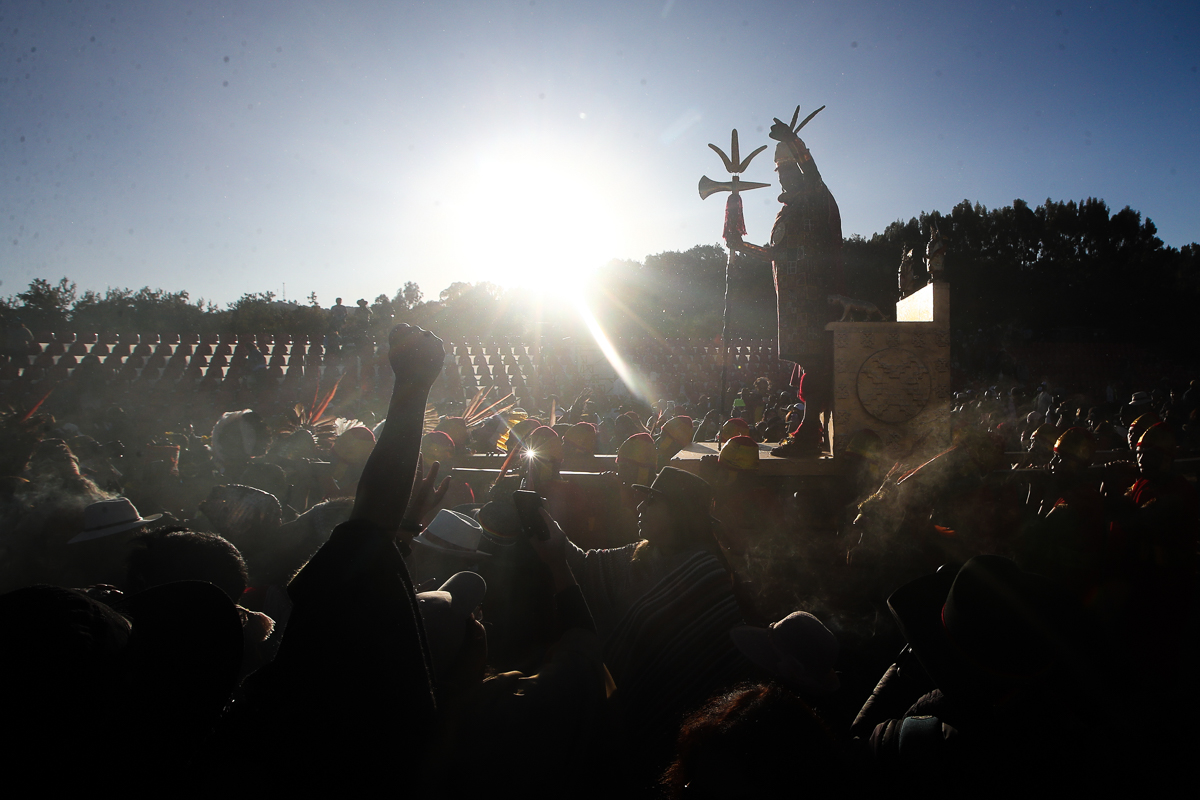
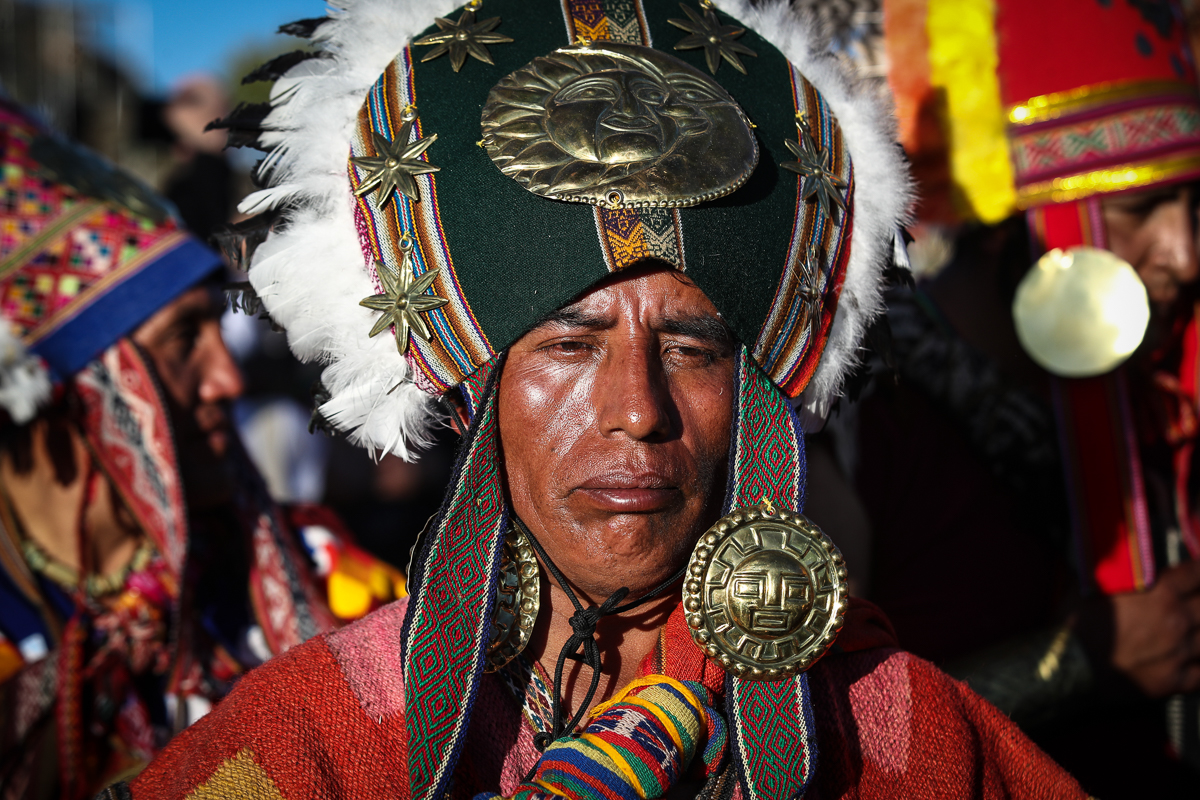
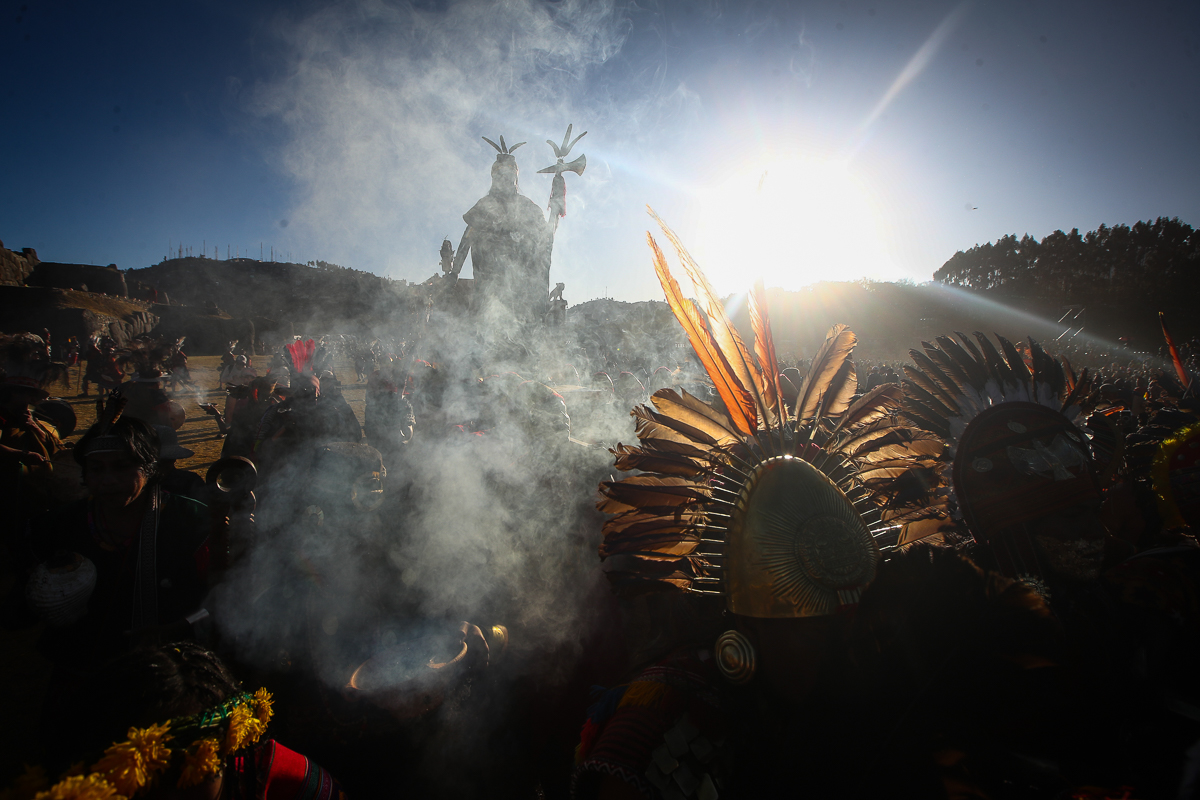
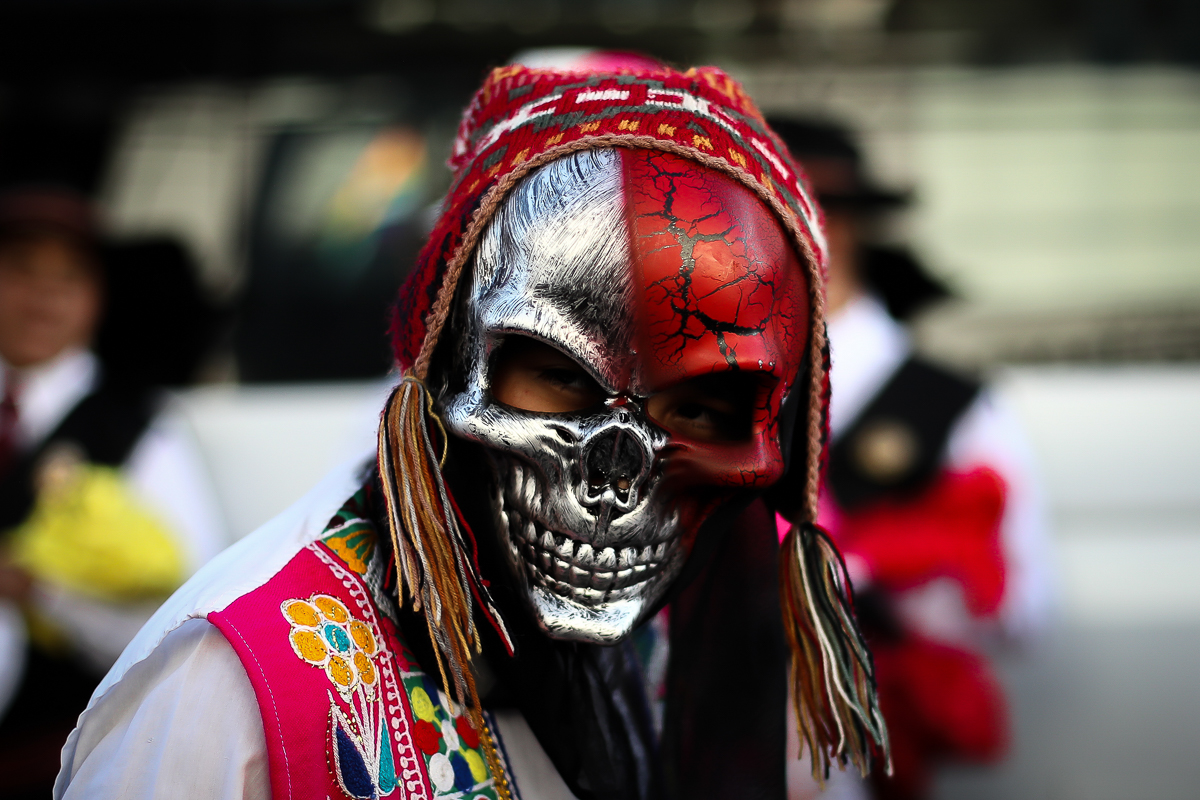
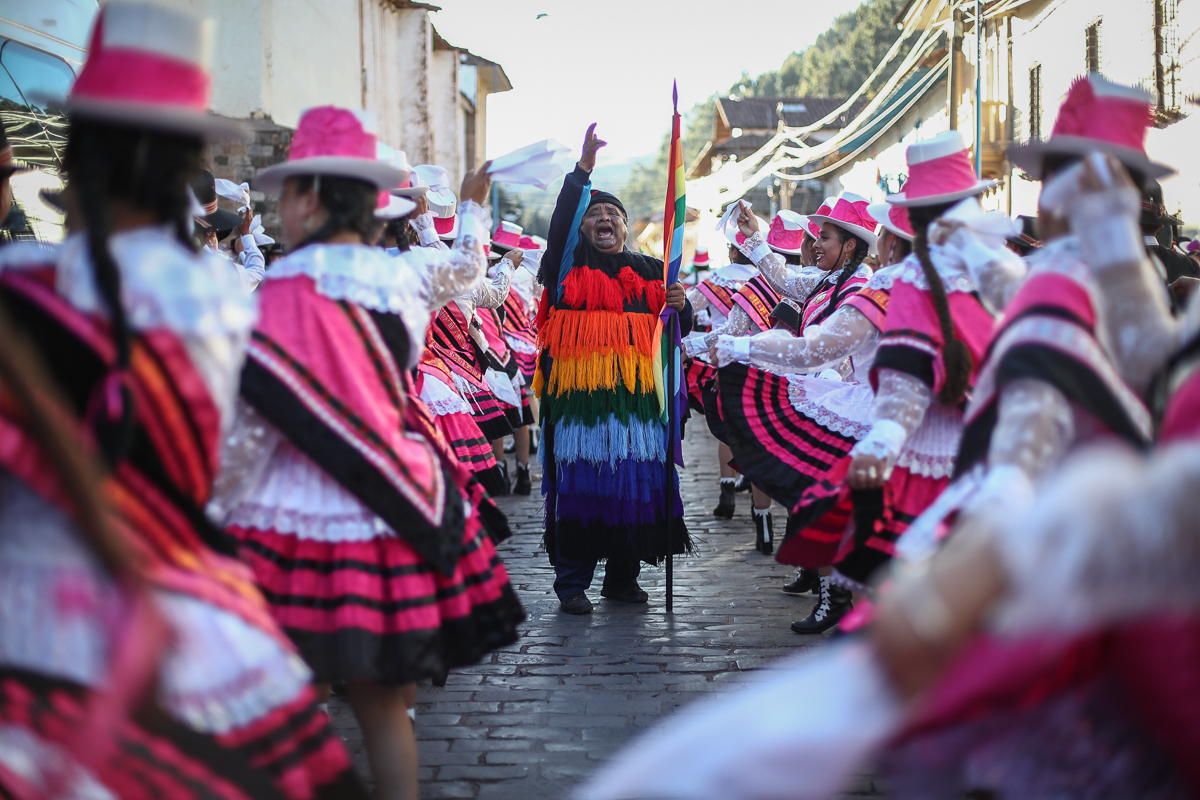
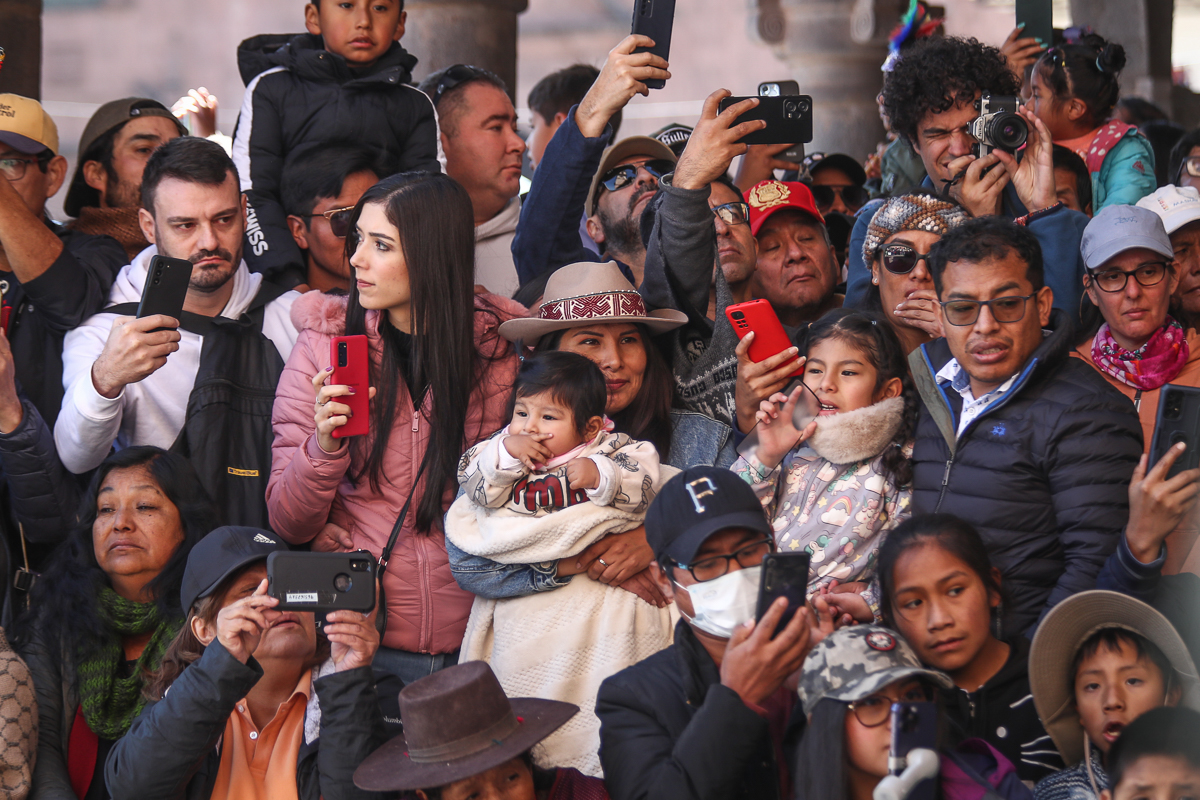
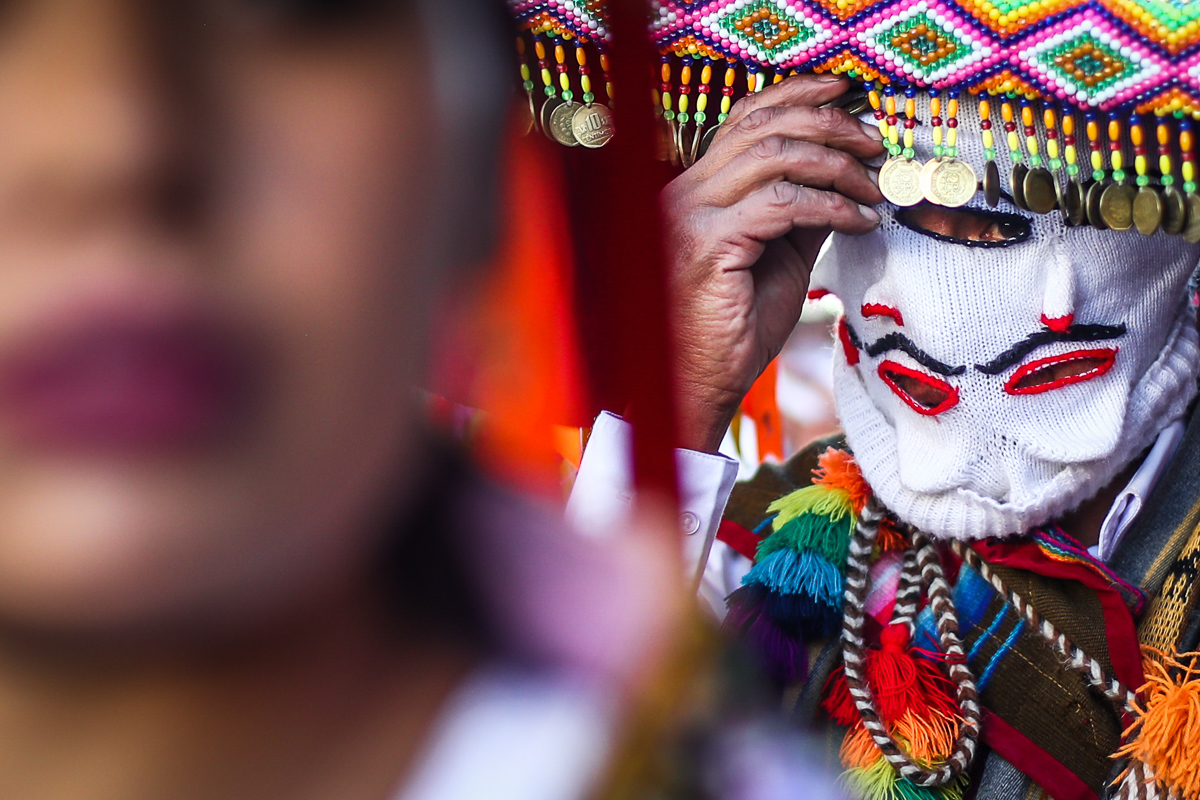
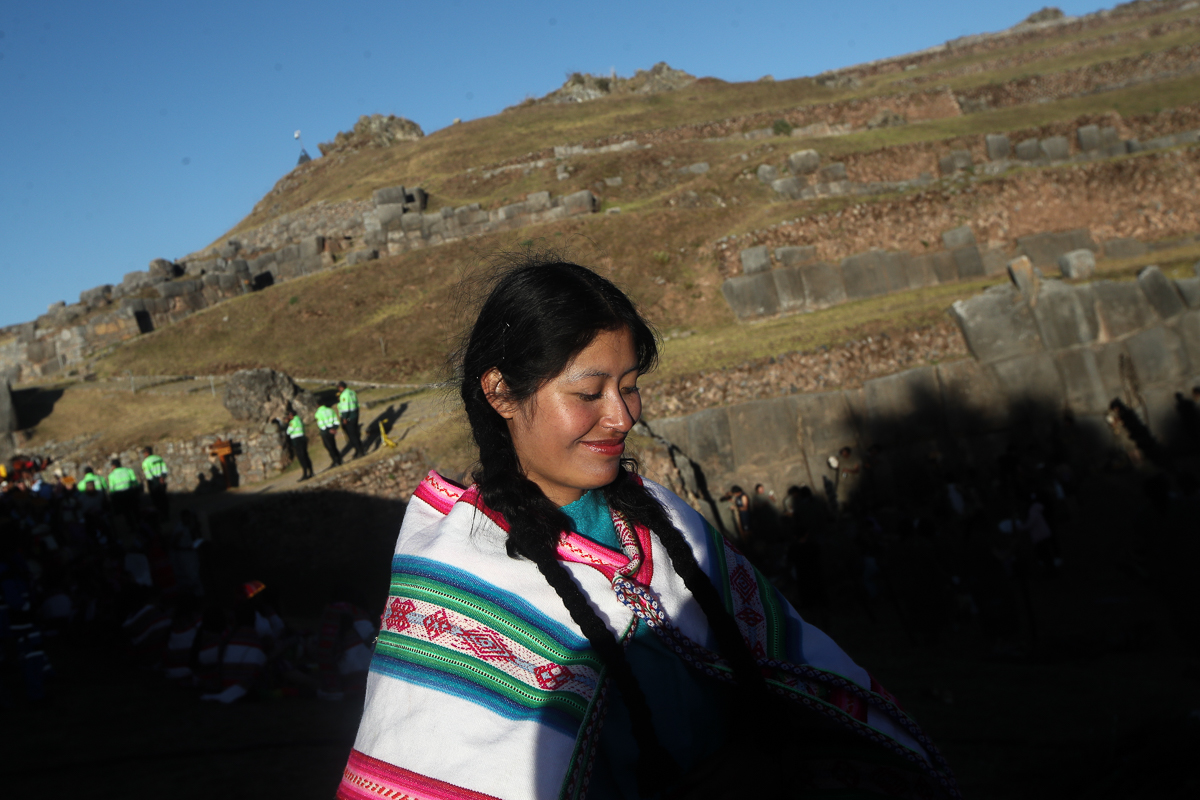
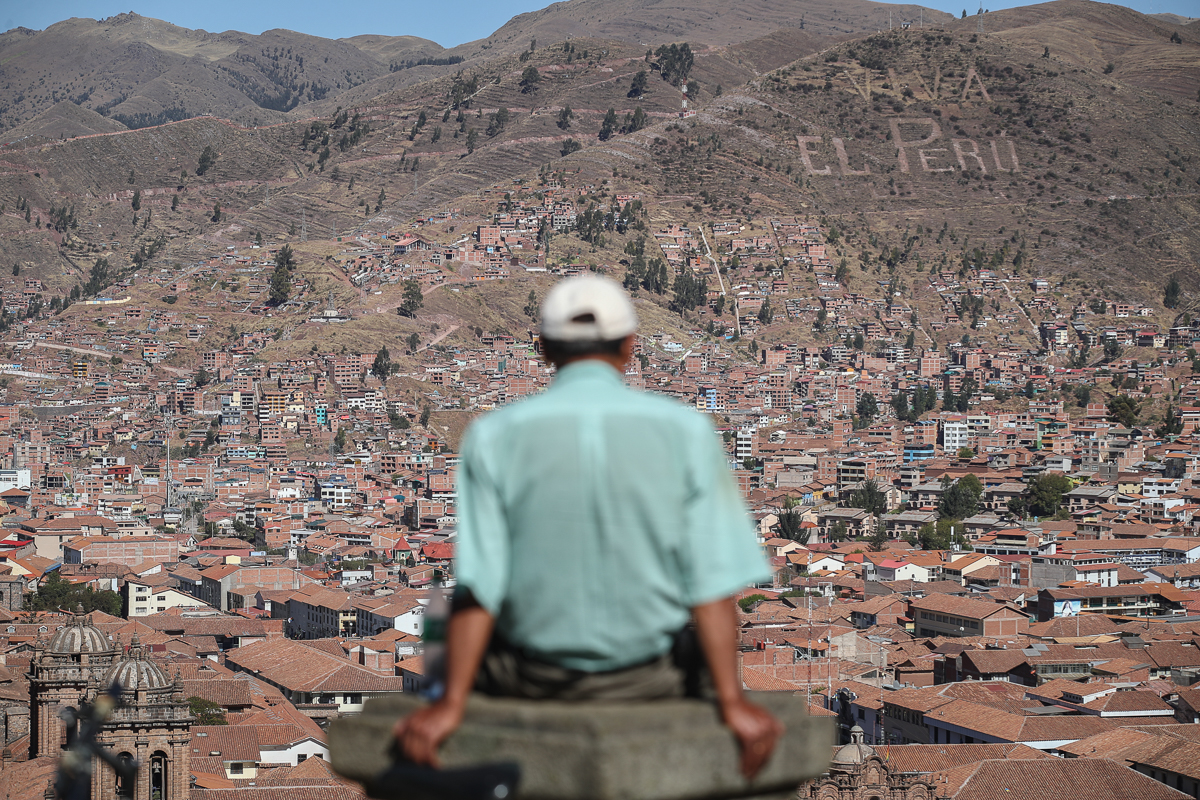
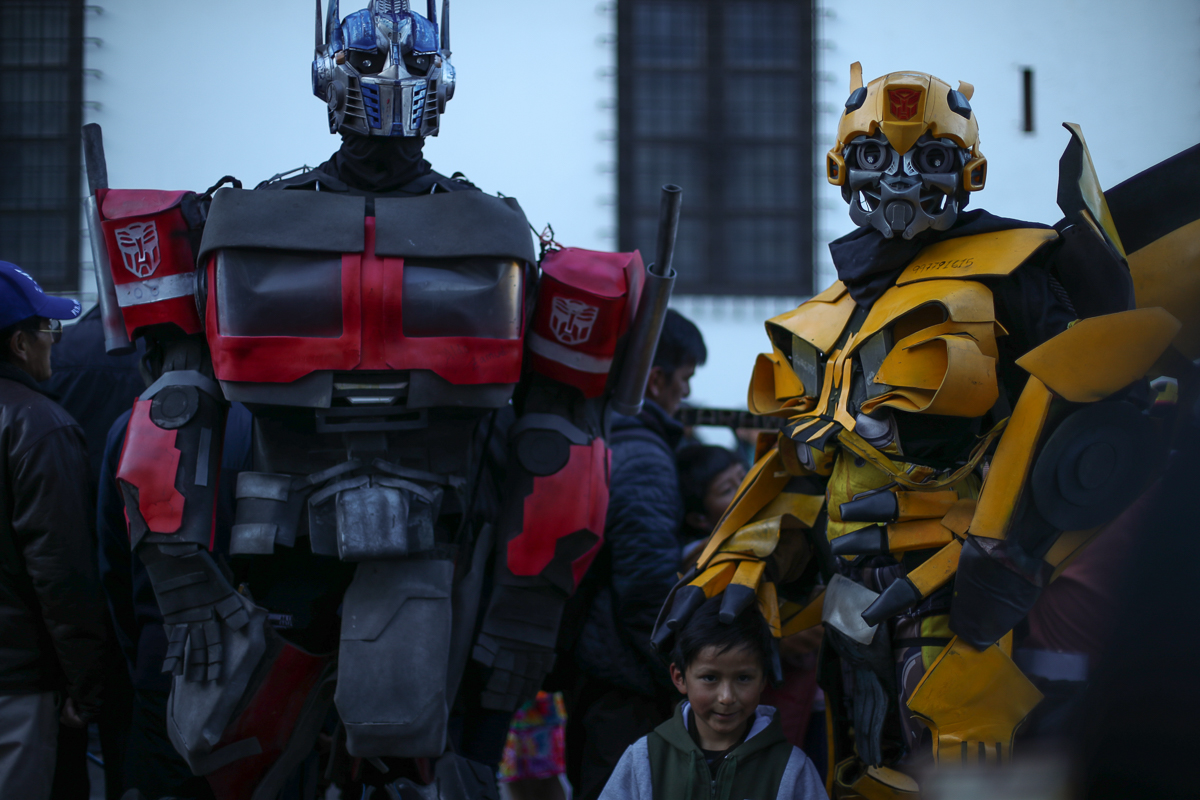
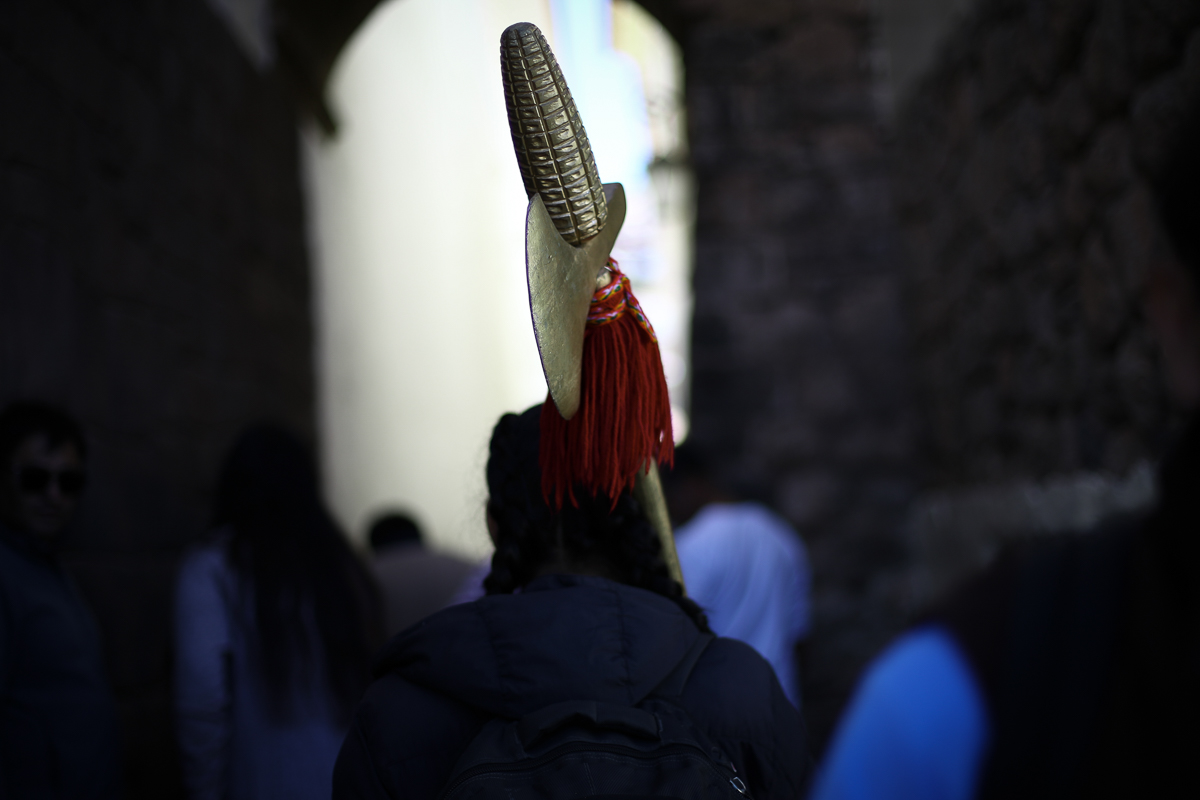
Inti Raymi, which in Quechua means "Festival of the Sun," is an ancestral Inca ceremony honoring Inti, the sun god. It is celebrated every June 24th in Cusco and commemorates the winter solstice. This marks the beginning of a new agricultural cycle, seeking prosperity for the harvest. The modern celebration is a theatrical reenactment involving rituals, dances, and historical figures such as the Inca, who emerges first from the Qorikancha palace accompanied by a large number of actors representing the subjects and citizens of the ancient Tahuantinsuyo Empire. Amidst a multitude of national and international visitors, the Inca begins his procession through the main streets of Cusco. The imposing presence of the ruler of Tahuantinsuyo is admired by visitors who wait from the early hours of the morning to witness this cultural event. Accompanying the Inca is his wife, the Coya, who, always smiling, is carried on a litter through the imperial city. The final act takes place on the esplanade of the Sacsayhuamán fortress. The Inca enters and presents himself to his people. Drums resound in the ears of his subjects, who immediately dance to honor the god Inti. The Inca speaks the words commemorating the beginning of the new year and sacrifices a llama in honor of Pachamama, Mother Earth. With this final act, the Inca is carried on a litter. He raises his hands directly to the sun and asks for good fortune for the coming years. The Inca bids farewell as the sun sets and heads back to the imperial city, where he disappears amidst the jubilation of the citizens. June is considered a sacred and festive month throughout the Cusco region. The traditions and fusion of world cultures in Cusco have been incorporated, resulting in a cosmopolitan society. This is done with the aim of developing sustainable and responsible tourism and continuing to strengthen social ties worldwide, without losing its cultural essence, its Andean heritage.
Hola 👋 contáctar con Jorge L. Cerdán - fotoperiodista...